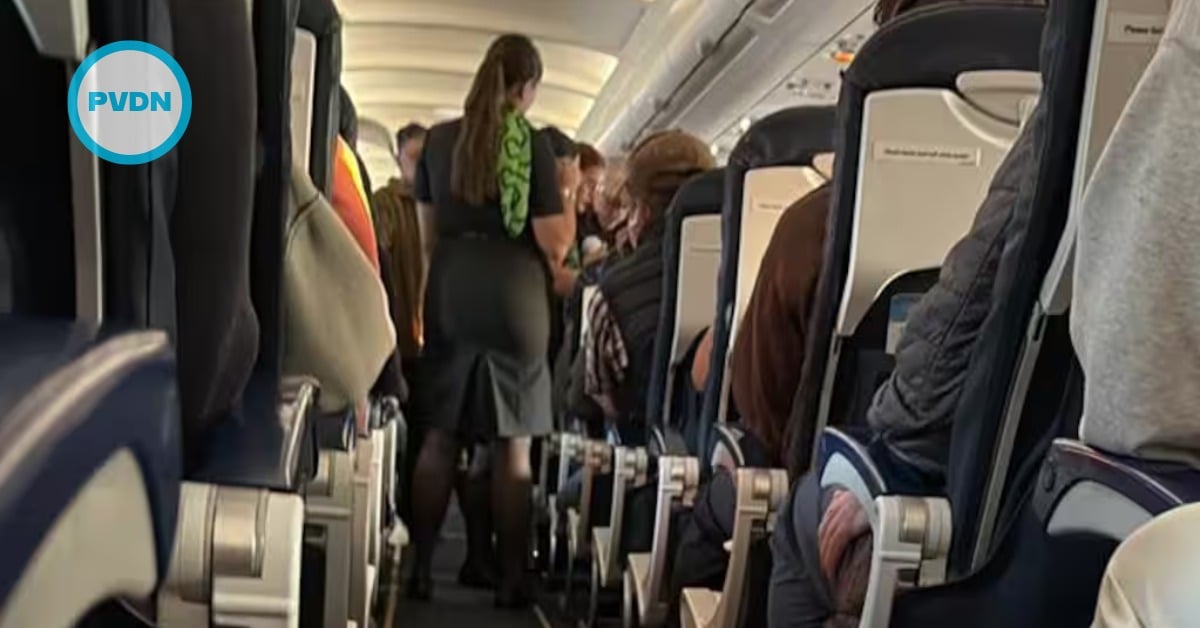
The Friday morning flight from Monterrey to Los Cabos was already boarded and waiting for clearance when the mood in the cabin changed in an instant. On Viva’s flight 4324, an older male passenger began to feel unwell just before 7 a.m., according to eyewitness accounts. Within moments, his discomfort turned into convulsions, and he lost consciousness in his seat as rows around him froze in shock.
The aircraft, still on the ground at Monterrey International Airport, became an emergency room on standby. Cabin crew shouted for space, unbuckled the man, and moved him into the aisle. Passengers who minutes earlier were stowing bags now found themselves watching chest compressions and urgent commands instead of the usual safety demo.
Witnesses say the cabin grew quiet, except for the crew’s instructions and the hum of equipment as oxygen and first-aid kits were brought out. The man showed signs of a suspected heart event, a scenario crews train for but hope never to face. With the aircraft doors still connected to the jet bridge, airport paramedics were called and rushed toward the plane while flight attendants began cardiopulmonary resuscitation.
Seconds that felt like hours
For those seated nearby, the next few minutes stretched. Flight attendants took turns performing CPR, using their training to keep blood flowing while help arrived. On the ground, time works in their favor; access to paramedics and hospital care is much faster than in the air.
Medical teams boarded with equipment and took over in the aisle, continuing resuscitation and advanced support. According to airport reports, the man was stabilized on board, then carefully moved off the aircraft and transported to a nearby hospital for further treatment. Authorities indicated he arrived alive and under medical care, though no detailed public update on his condition had been released by the time this article was written.
The medical emergency forced the airline to hold the departure as personnel worked around the patient. The flight reportedly left roughly an hour later than its scheduled time once the cabin was cleared and authorities allowed operations to resume. For travelers headed to the beaches of Baja California Sur, the delay was inconvenient. But many who watched the rescue unfold later described it as a sobering reminder that a ticket and a boarding pass do not guarantee an uneventful trip.
Incidents like this are rare but not unheard of. Recent research on commercial aviation suggests that roughly one in every 200 flights experiences a medical event, most of them minor. Only a small fraction involves life-threatening problems such as seizures, chest pain, or cardiac arrest, and an even smaller number requires diversions or intensive intervention on board.
Monterrey Los Cabos flight
Behind the scenes, episodes like the one on this Monterrey Los Cabos flight are the reason airlines invest heavily in medical training for crew. International aviation guidelines call for cabin staff to be prepared for a wide range of emergencies, including recognizing cardiac arrest, performing CPR, and using on-board medical equipment such as oxygen and automated external defibrillators. That training is refreshed regularly and audited by regulators and industry groups.
Health experts say those first minutes are everything. The accepted “chain of survival” for sudden cardiac arrest starts with quick recognition of a collapse, an immediate call for help, early CPR, and rapid defibrillation when needed. Each step buys time until advanced care can take over. Without CPR, survival chances fall dramatically with each passing minute. With CPR and defibrillation, they can rise sharply, especially when the patient is still on the ground with fast access to paramedics and hospital care.
Studies of medical emergencies in airports and on planes underline the difference a trained responder can make. Data from cardiac arrests in airport terminals show survival rates many times higher when bystanders or trained staff start CPR early and use defibrillators before emergency services arrive. On board an aircraft, where space is tight and equipment is limited, outcomes are still better when crews are confident and practiced.
Passengers rarely see that preparation. Most interactions with flight attendants revolve around seat belts, snacks, and routine announcements. Yet their primary role is safety, and that includes medical response. For crews based in Monterrey or working routes like Monterrey–Los Cabos, that responsibility travels with them on every leg, regardless of the destination’s vacation appeal.
Friday’s emergency also highlights the emotional weight these events carry. People who watched the scene in the cabin will likely remember the sight of a fellow traveler lying in the aisle far longer than they remember the views of landing in Los Cabos. For some, it will be a story they tell about how “the crew saved a man’s life” on what was supposed to be a simple beach flight. For the staff involved, it is another reminder that their work sits at the intersection of hospitality and emergency services.
The incident raises questions for anyone who flies regularly. How many of us know the basics of CPR or how to recognize the signs of a severe medical crisis? Would we freeze in our seats, or move aside quickly to make room for responders? And do we understand that when a flight is delayed for a medical reason, the minutes on the departure board may be someone’s only chance to spend more time in their own life?
On this Monterrey Los Cabos flight, the story ended with a man stabilized and on his way to a hospital, rather than a worst-case headline. The trip to the Baja coastline resumed, and most of those on board likely stepped into the sun in Los Cabos a little quieter, a little more thoughtful, and perhaps a little more grateful for the people in green uniforms who practiced those drills again and again for the moment when seconds really mattered.