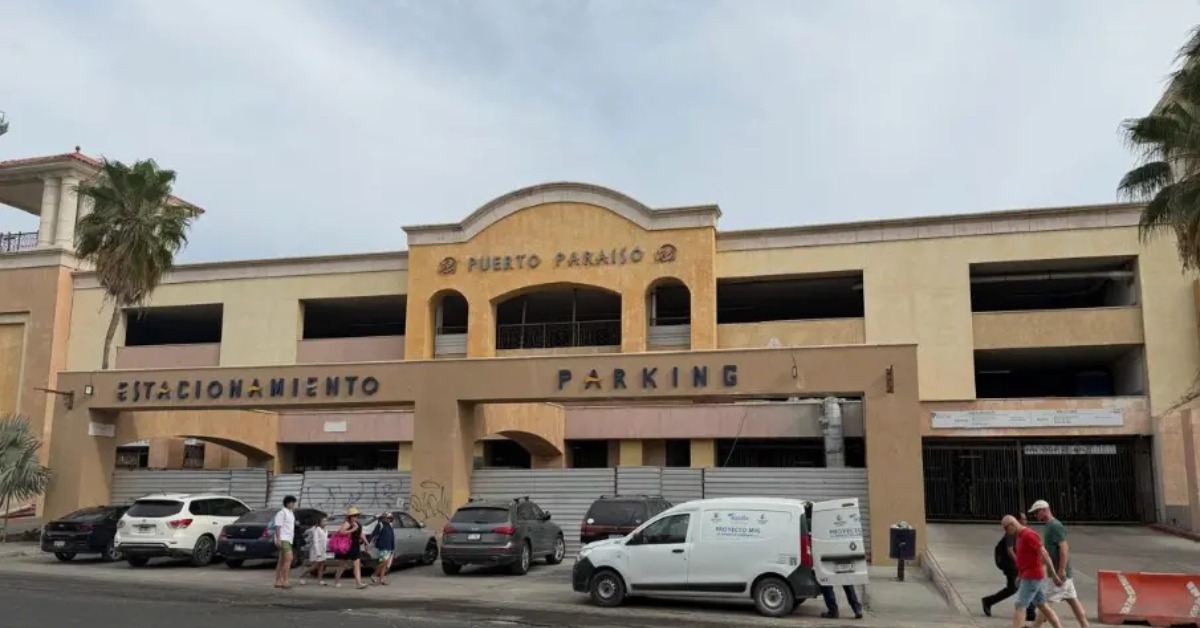
Puerto Paraíso is one of the most visible commercial properties in Cabo San Lucas, so its closure quickly became bigger than a mall story. Local business leaders say authorities were right to shut it down, but they also warn that merchants and workers should not carry the full cost of infrastructure failures they did not create. The case now raises wider questions about commercial safety enforcement, tenant protections, and how fast one of Cabo’s busiest visitor zones can recover.
Why CANACO backed the closure
The Chamber of Commerce, Services, and Tourism of Los Cabos, better known as CANACO, publicly supported the temporary closure of Plaza Puerto Paraíso after a series of safety incidents pushed local authorities to suspend operations. The chamber’s message was direct. It said the shutdown was justified on safety grounds, but it also said the response cannot stop at locking the doors. Merchants, employees, and other workers tied to the plaza now face lost income, ongoing rent pressure, and uncertainty over how long the disruption could last.
That position matters because Puerto Paraíso is not a minor neighborhood plaza. It sits in a central, marina-front section of Cabo San Lucas and serves both residents and visitors. When a property in that location closes, the impact extends beyond a single landlord and a few storefronts. It touches tourism, daily commerce, and the wider image of a destination that depends heavily on people feeling safe in its busiest public spaces.
What led to the shutdown
The closure followed a fast-moving chain of events rather than one isolated incident. On April 7, authorities responded to what was first reported as an explosion inside the plaza. Initial inspections later found a rupture in a pressurized water line. The failure caused flooding, interior damage, and a partial ceiling collapse. Some businesses were evacuated, and officials called for a structural assessment and a broader review of the plaza’s hydraulic system before authorizing a full return to normal operations.
Then, on April 8, emergency crews returned after a report of a possible gas leak inside the complex. That leak was not confirmed in the food court area during the inspection. But while first responders were still at the site, an electrical vault or street-side registry near the main access area exploded. That second emergency changed the tone of the case. What had already looked like a maintenance and infrastructure problem began to look like a pattern. After that sequence, municipal authorities moved to suspend activities across the plaza as a preventive measure.
What officials say was wrong
The municipal government said a technical inspection found structural deficiencies and problems with the plaza’s emergency protocols. The local fire chief also said the fire protection system was inoperable, which is especially serious in a high-traffic commercial property. Officials further said the site had logged multiple incidents in April, reinforcing the decision to intervene before a more serious emergency occurred.
At this stage, authorities say the goal is compliance rather than punishment. They indicated there would be no immediate fines or administrative sanctions while the process remains focused on corrective action. Instead, municipal and civil protection officials said they would work through inspections, advisories, and required repairs. The plaza is expected to remain closed until the necessary safety measures are completed and the site can be certified as fit to reopen.
Why the chamber’s response matters
What makes this story more than a standard closure notice is CANACO’s position. Business groups often resist shutdowns because closures can destroy sales, interrupt payroll, and damage long-standing tenant relationships. Here, the chamber did something more nuanced. It backed the closure itself while insisting that tenants and workers should receive support. That distinction is important.
The businesses operating inside the plaza may collect revenue there, but they do not necessarily control the building’s electrical, hydraulic, gas, or fire systems. In many commercial disputes, tenants end up bearing risks arising from ownership, management, or delayed maintenance. CANACO’s argument points to that gap. If the closure was necessary because the building was unsafe, then the people renting space inside it should not be treated as if they caused the problem. For international readers, that is the real heart of the story. This is not only about one shopping center. It is also about who bears the cost when a major commercial property fails to meet basic safety standards.
What comes next for tenants and visitors
The next phase will depend on repairs, inspections, and documentation. Authorities have already signaled that reopening will require more than a simple cleanup. They want verified corrections to the systems that triggered the shutdown, along with proof that the plaza meets operating standards. That means the timeline may depend not only on physical repairs, but also on how quickly management can produce the technical reports and certifications officials are demanding.
For tenants, the immediate issue is survival during downtime. For workers, it is continuity of income. For visitors, the case is a reminder that even prominent tourism-facing properties can be suspended when repeated incidents suggest a broader risk. And for Los Cabos, the story is a test of whether authorities can show that safety enforcement is real while also protecting the businesses caught in the middle. The shutdown may be temporary, but the larger questions it raises about oversight, maintenance, and tenant protection are likely to last much longer.