Cancún is not hosting a World Cup match, but its airport is being pulled into the tournament anyway. New automated migration gates, more traditional document filters, and staff training are meant to keep arriving passengers moving before June traffic builds. The upgrades answer one problem inside the terminal. Other issues, from sargassum to informal transport services, still await outside the doors, where the summer travel season will be judged in smaller, messier moments, too.
Cancún airport adds speed before kickoff
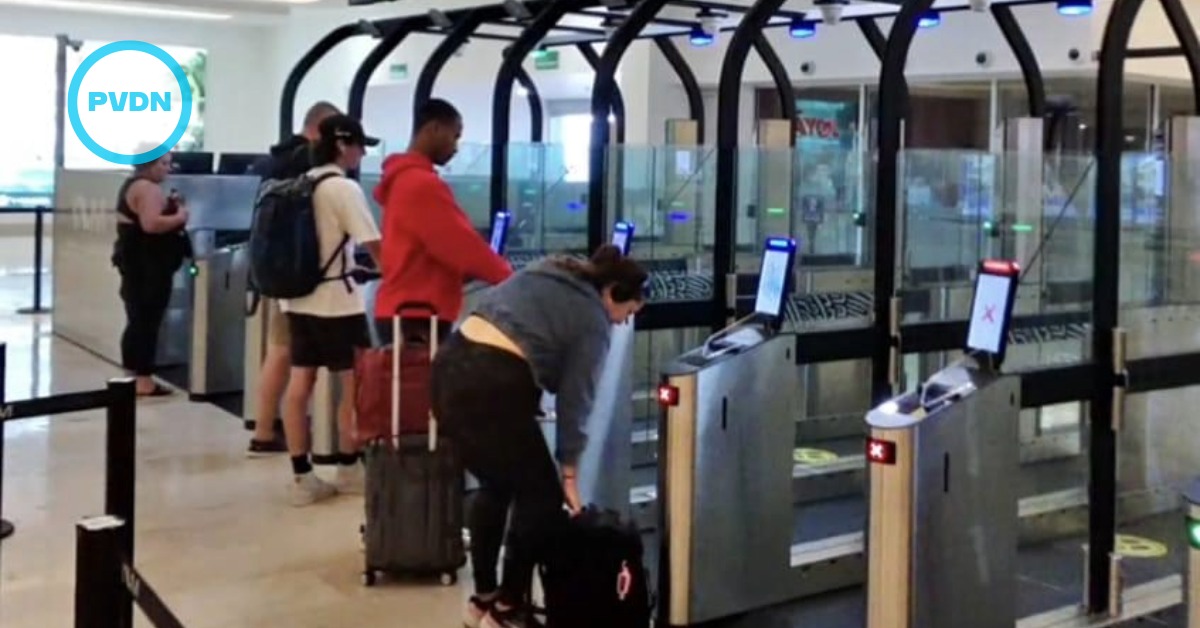
Cancún International Airport is speeding up immigration processing ahead of World Cup travel to Mexico in June.
The airport now has 40 automated migration filters and 54 traditional modules. On April 3, Quintana Roo state officials described the rollout as 20 e-gates in Terminal 3 and 20 in Terminal 4. Regular filters were also set to grow from 48 to 54.
Cancún is not staging a match. Airport lines, however, do not follow the host-city map. The FIFA schedule starts June 11, and Mexico is preparing for millions of foreign visitors during the tournament.
Migration lines get the first repair
The airport push was already visible in December. Vallarta Daily reported on airport processing agreements that officials said had reduced migration wait times to 24 minutes. More e-gates and clearer transport rules were still on the table.
Sergio González Rubiera, president of the Mexican Association of Receptive Tourism Agencies, said the changes came from staff training and operating adjustments. He pointed to work by the National Migration Institute, customs agents, and airport operator ASUR.
These are not glamorous fixes. Nobody books a beach trip because a document counter learned to move faster. Still, foreign residents, tourists, and World Cup travelers often first encounter Mexico in that migration hall. A slow line can sour the trip before baggage claim.
Staff training and document checks
The National Migration Institute has also been training more than 900 officials from its 32 regional offices for World Cup work. That federal program covers staff assigned to 17 international airports. It is tied to an estimate of more than 5.5 million international visitors during the tournament.
Document handling is part of the same pressure test. The INM program cites faster entry procedures and simpler document checks. Cancún’s local upgrades rely on biometric gates for travelers eligible for automated processing.
Problems do not stop at migration
Other problems wait outside the migration hall. There are worries in the hotel sector over sargassum and reduced airline seats. González Rubiera also said informal transport services and airport touts still create problems, even though the conflict has eased.
Sargassum is already part of the summer backdrop. The 2026 season arrived early, with greater intensity along the Mexican Caribbean. Football schedules do not move seaweed.
Quintana Roo’s World Cup role also runs through team logistics. Uruguay is expected to use Playa del Carmen as its tournament base, with Mayakoba serving as its training center, a move previously covered by Vallarta Daily. That puts another piece of tournament traffic near Cancún’s airport.
For now, the measurable change is at the counter: 40 automated filters, 54 traditional modules, and a staff training push aimed at keeping passengers moving. The messier part starts after arrival, where transport order, seaweed cleanup, and summer seat supply remain part of the same travel season.
Follow 2026 World Cup news in Mexico on PVDN