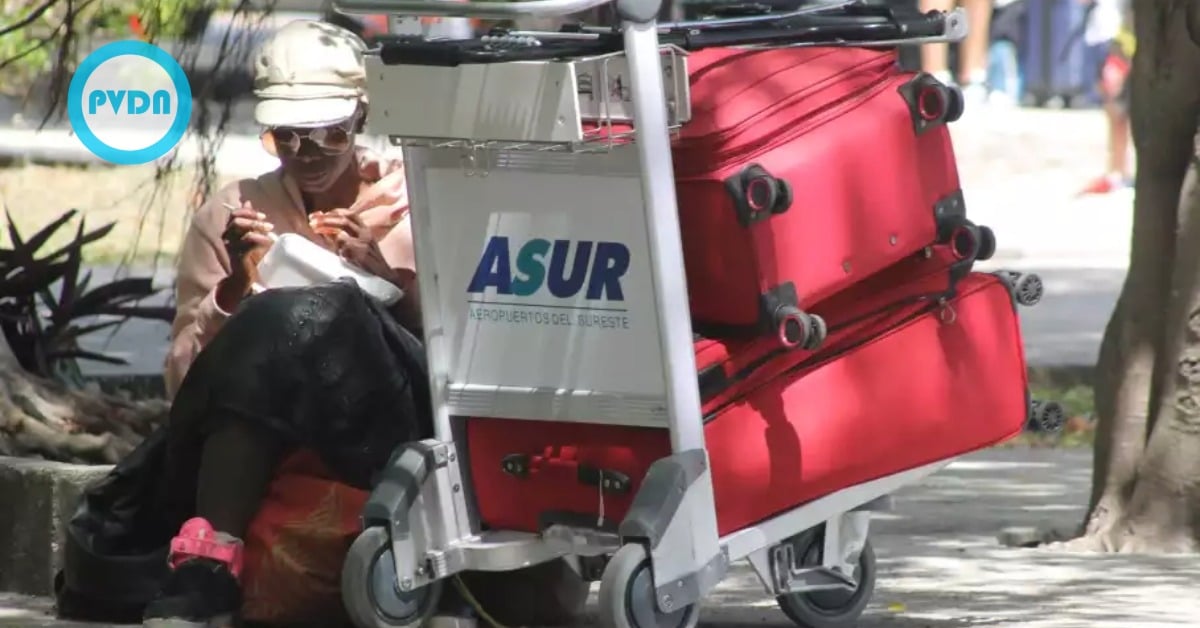
For more than 300 days, “Laure” has been living in Cancún International Airport’s Terminal 2. Airport employees say they’ve watched her lose weight, drift into isolation, and cycle through brief flashes of hope that never last. Mexico’s immigration law offers a path on paper. In practice, her case has sat at the intersection of bureaucracy, unclear jurisdiction, and a traveler running out of stamina.
Cancún airport traveler
Por Esto! has followed Laure’s ordeal since December 2024, when she became stranded without valid documents and no clear way forward. In its latest report on October 10, 2025, the newspaper describes worsening physical and mental health after roughly ten months in Terminal 2, with airline and cleaning staff increasingly alarmed about her condition. The outlet’s previous stories detail how she sleeps in public areas, eats when strangers or workers share food, and endures tropical heat and fluorescent nights in a space designed for layovers, not lives.
Laure’s own accounts, documented earlier this year, sketch a maze with no exits. She explored asylum and third-country options tied to family heritage, only to be told her U.S. passport disqualified her from European consular protection. When she contacted U.S. diplomats, she says she was told to find her way to Mexico City—impossible without money or documents. Meanwhile, Mexico’s National Migration Institute practices—and the airlines’ gatekeeping over who boards flights—left her suspended between desks.
On the margins, other outlets amplified her plight. In January, the travel trade site Reportur summarized Por Esto!’s early reporting as videos circulated locally. As spring turned to summer, regional and international media picked up the thread, underscoring the same core facts: months in Terminal 2, declining health, no durable solution. None of it moved her case.
What the rules say
Mexico’s own framework isn’t the primary obstacle on paper. When a tourist overstays, authorities typically impose an administrative fine; once paid and processed, the traveler can depart. That is what Quintana Roo reporters reiterated back in January, stressing that an expired stay is a finable infraction, not a crime. Yet paying a fine requires identity, paperwork, and logistics that a person in airport limbo may no longer control—especially if personal effects were lost or stolen months earlier.
Airports aren’t built for long-term human shelter, and staff can only improvise for so long. Por Esto!’s October piece captures their worry: ad-hoc meals from workers, occasional check-ins, and the creeping fear that something irreversible could happen on their watch. That fear isn’t unfounded. Prolonged terminal stays—famous in fiction, rare in real life—can erode mental health and immune resilience. In Cancún this week, the facts are stark: after 300+ days, the Cancún airport traveler is weaker, not closer to going home.
The story also collides with a broader moment at the Caribbean hub. This year, Cancún’s admission numbers reportedly fell as procedures tightened, even as scattered cases of harsh or confusing experiences at the border surfaced elsewhere in Mexico’s airports. None of that explains Laure’s endurance test, but it shows how policy shifts, airline discretion, and consular boundaries can create edge cases that fall between every safety net.
What can change? Realistically, any solution starts with coordinated action: an identity and welfare assessment by local authorities, a clear route to settle fines or secure humanitarian paperwork, airline cooperation on travel logistics, and consular engagement that doesn’t hinge on a self-funded trip to the capital. Until those pieces align, Terminal 2 will continue to serve as a shelter it was never intended to be. And a woman known to baggage handlers and baristas—by a first name only—will face another fluorescent night.