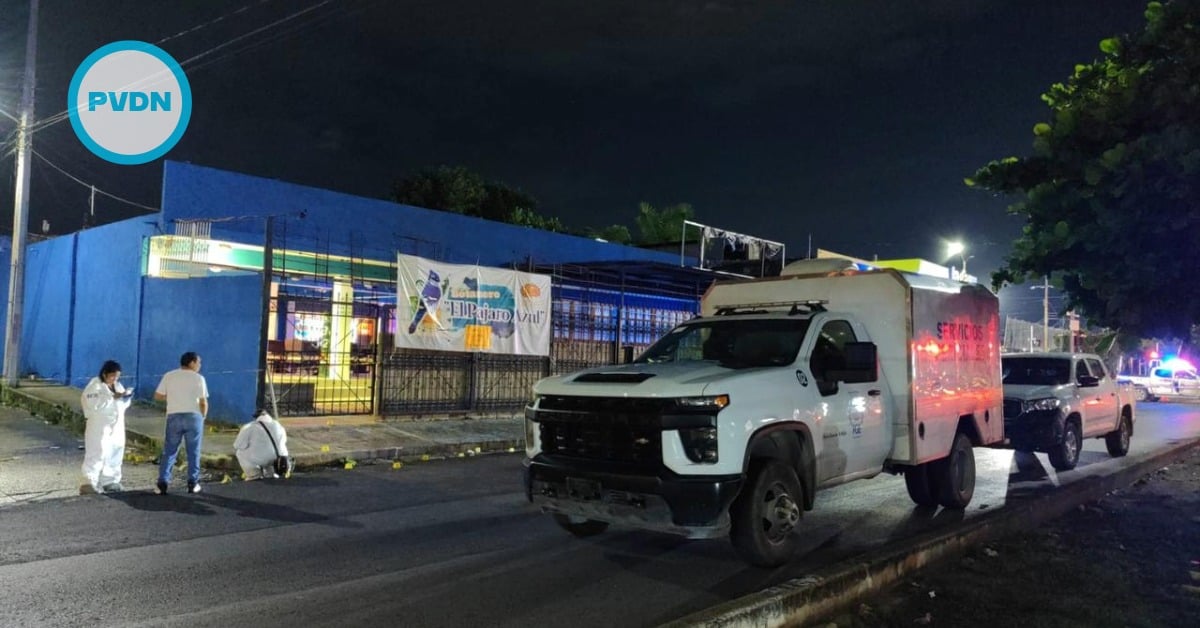
Just after midnight on Friday, November 7, 2025, gunfire broke out inside the Pájaro Azul bar in Cancún’s SM 228. A waitress was killed and another woman was wounded as men who had been arguing pulled guns and opened fire, according to early police reports. The attackers ran into the street and kept shooting as they fled. Vehicles and nearby facades were hit before the scene went quiet again.
Authorities cordoned off the block within minutes. Forensic teams marked more than a dozen shell casings inside and outside the bar; investigators said security-camera footage from nearby businesses is being reviewed. As of Friday afternoon, no arrests had been announced.
Cancun bar shooting
Witness accounts gathered by local outlets describe a fight that started in the bathrooms and spilled onto the floor. The gunmen traded shots at close range. In the chaos, the waitress—identified by coworkers as a staffer on shift—was struck by a stray round. Medics arrived, but she had no vital signs. The other woman was stabilized and taken to a hospital, according to preliminary information shared with reporters. Cancun bar shooting coverage from multiple local newsrooms matched those details throughout the morning.
Neighbors along the Niños Héroes corridor said they woke to the crack of shots and, later, the sight of shattered glass and dented sheet metal on parked cars. Those accounts align with what police documented at the scene—damage outside the bar consistent with gunfire during the escape. Investigators collected upward of 20 casings in total, indicating more than one weapon was used.
Police have not publicly identified suspects or a motive. But detectives and crime-scene officers at the bar pointed to a familiar pattern: a dispute linked to street-level drug sales that escalates fast in a crowded room. That working line of investigation—shared with several outlets on background—tracks with Friday’s bathroom argument turning into an exchange of bullets.
The location matters. SM 228 has seen repeated gun attacks on nightlife spots over the past year, including multiple shootings at the Emporio bar a few blocks away. In August, for example, assailants riddled Emporio’s facade for the third time in months, part of a wave that has unsettled workers and residents along Niños Héroes.
Families in the area describe a whiplash rhythm: quiet days, then a sudden sprint of sirens. By sunrise Friday, small knots of residents were already swapping what they heard and saw, replaying it in short bursts. Some had to explain it to children on their way to school. Others simply returned to sweeping glass from the sidewalk.
Paramedics and officers on scene emphasized a basic plea that bears repeating: do not share gore online, and do not circulate names or rumors. Those posts can make it harder to notify relatives and to sort evidence from noise while investigators work. That reminder feels routine here now, but it still matters.
A violent pattern, and a policy fight over extortion
This kind of gunfire rarely happens in a vacuum. Business owners across Quintana Roo have spent the year talking more openly about extortion—known as derecho de piso—and how it bleeds into attacks on bars, restaurants, and shops. In early October, the state restaurant chamber (Canirac) said several members filed formal complaints this year over extortion attempts, a small number that likely understates the problem given fear of reprisals.
Data points in the same way. Official figures compiled by the national public-security system show extortion complaints rising in the state between 2023 and 2024, with 2025 on pace to remain elevated. Those are only the cases people were willing to report.
Mexico’s Congress has moved to respond. Late last week, lawmakers approved a new federal framework to prevent and prosecute extortion, including the kind linked to forced “protection” payments from businesses. The bill still needs the Senate’s final greenlight, and there’s a sharp debate over last-minute changes that critics say may weaken penalties for some officials. But if enacted, it would standardize prosecution across states and allow more anonymous reporting—tools that anti-extortion advocates have demanded for years.
For the people who closed their eyes when shots rang out at Pájaro Azul, the policy arguments feel distant. What lands close is the empty chair on a bar crew and a woman fighting through an injury at the hospital. Police say they are reviewing footage and checking leads from Friday’s scene. If you live near SM 228 and have video from outside your home or shop around midnight, investigators want to see it.
The questions linger. Will anyone be held to account? Will the shooting scare off customers who keep small businesses alive on that strip? And will the next argument with guns be stopped before another family goes to bed without their loved one? For now, the block is open again, and the sweep marks on the sidewalk are the only sign of what the night took.