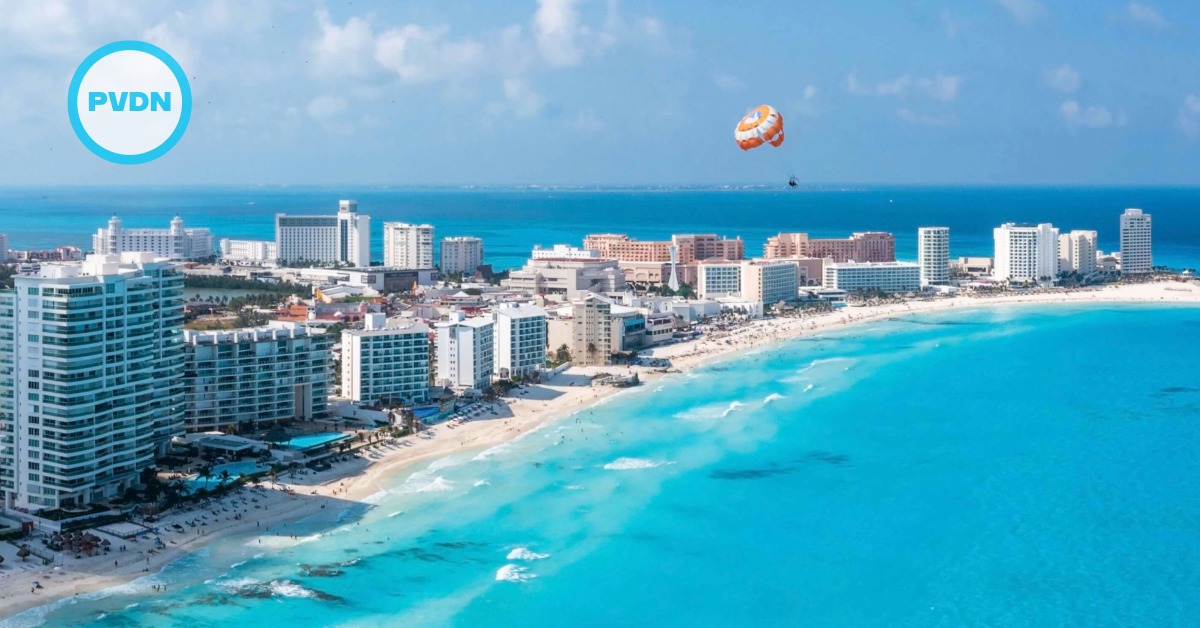
Cancun beach restoration is moving toward a new environmental filing for a wider Hotel Zone project, driven by erosion and sargassum.
Cancún’s Hotel Zone isn’t one beach. It’s a long ribbon of sand that takes every mood the Caribbean can throw at it—glass-calm mornings, hard winter swells, and that quiet, unsettling moment when the waterline sits closer than you remember.
If you live in Mexico as an expat, you’ve probably noticed the change in practical ways. A favorite access point gets narrower. A stretch that used to invite a long walk suddenly has a steep drop-off. Then the sargassum arrives, and the whole experience flips overnight.
Officials now say they’re lining up a broader shoreline recovery plan for the Hotel Zone, backed by a new environmental impact filing. The proposed project would run from Playa Las Perlas down to Punta Nizuc. Benito Juárez Mayor Ana Paty Peralta said the existing authorization only covers part of the coast, and it’s too limited for the kind of “integral” approach being discussed.
A Bigger Plan Than the Current Permit
Beach restoration sounds simple until you see how connected the coastline really is. Fix one small section and currents can move the problem next door. Treat the Hotel Zone as a single system, though, and you have a better shot at making repairs that last longer than a season.
That’s why the environmental paperwork matters. Officials are talking about a fresh filing because the current one doesn’t cover the full stretch they want to address. Without broader approval, you risk getting stuck in patchwork fixes—one beach nourished here, one protected there—without a plan for what happens 300 meters away.
Peralta described the project as tailored to each beach’s needs. Some areas could require sand replenishment. Others might need infrastructure work. And in certain stretches, officials say the priority is strengthening lifeguard coverage.
The cost estimate being discussed is 22 to 23 million pesos. On paper, that’s a clear number. In real life, beach work often comes with “second costs” that aren’t as visible: repeat maintenance, cleanup logistics, and the constant challenge of keeping access safe while nature keeps doing its job.
What Beach Restoration Could Mean Day to Day
When people hear “beach restoration,” they often picture trucks dumping sand like frosting on a cake. Sometimes it is that direct. Often it isn’t.
A beach can look wide and still be fragile if dunes are compromised. It can feel fine on a calm day and then lose meters after a rough week. And sargassum complicates everything. Heavy arrivals change how people use the shoreline, where crews can work, and how quickly a “fixed” area gets stressed again.
Officials cited erosion and recurring sargassum impacts as key drivers behind the push for a wider plan. Peralta also said she expects to walk the beaches in the coming days to evaluate conditions directly. That kind of on-the-ground look is where priorities get set—what gets addressed first, and what can’t wait.
For residents and long-stay visitors, the lived questions are simple. Will access points stay open while work happens? Will popular areas feel like construction zones during peak weeks? And will the restored sand hold, or wash away after the next strong swell?
No one has promised permanence, and that’s an important detail. Beach restoration is usually a commitment, not a one-time event. Success tends to look like “better and safer,” not “solved forever.”
Access and Safety While the Coast Shifts
Beach restoration is about sand, but it’s also about people. Who gets to the water, and who feels safe once they’re there?
Peralta said beaches are open from 9:00 a.m. to 7:00 p.m., tied to lifeguard staffing. Outside those hours, officials say there isn’t lifeguard service. She also pointed to ongoing monitoring linked to sargassum conditions. If you’re the type who loves dawn swims or late-evening dips, that schedule is worth keeping in mind.
She also highlighted RutaMAR as part of a “beaches for everyone” approach, describing it as a social justice effort aimed at residents without easy access to the sea. She said two free routes are operating—one from Tres Reyes and another from Region 242—with two buses per route and an estimated travel time of about 30 minutes to the beach area. She added that no new routes have been launched yet, but a WhatsApp contact line is expected soon to answer questions about how RutaMAR works.
Why bring up buses in a story about sand? Because the benefits of a healthier shoreline don’t mean much if public access stays limited. If more residents can reach the coast easily while the beaches are being strengthened, the Hotel Zone becomes a little less “for visitors only” and a little more like shared city space.
For now, the headline is that officials are trying to widen the frame: not a single quick fix, but a Hotel Zone-spanning plan supported by a new environmental filing. The next markers to watch are straightforward. When is the new filing submitted? What interventions are proposed beach by beach? And how clearly will the public be told what will change, when, and for how long?
If you’ve lived in Mexico for any length of time, you know plans don’t always move in a straight line. But with erosion and sargassum pushing the shoreline year after year, doing nothing isn’t a real option. The sea keeps working. The question is whether the response can keep up.