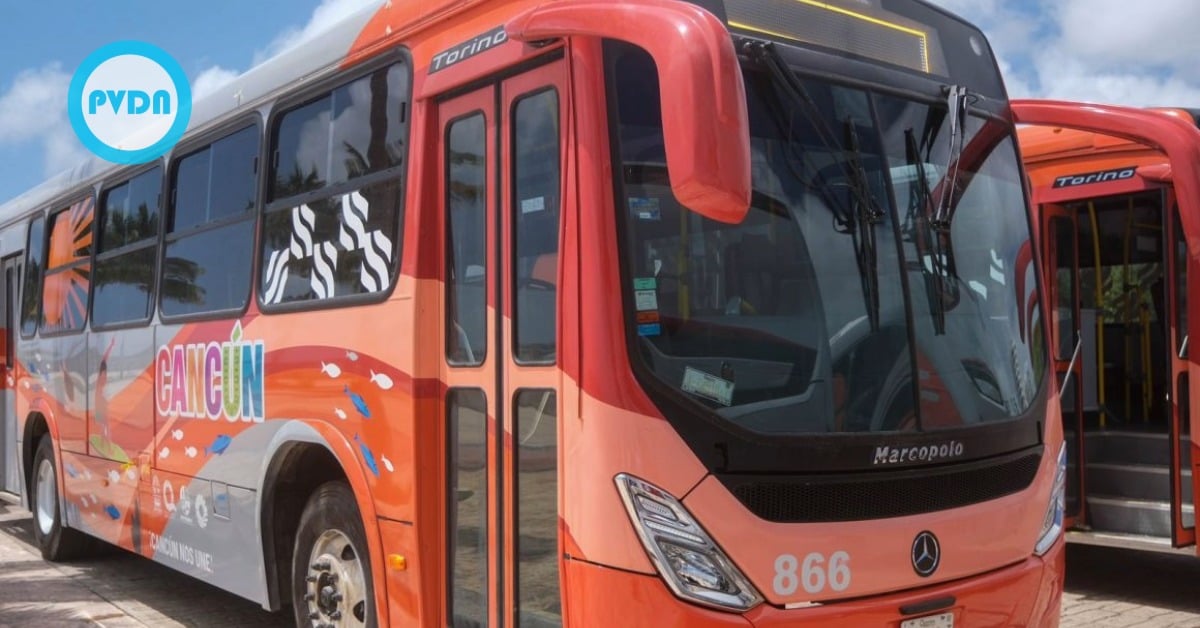
Cancún’s transport regulator says any fare hike will live or die by the public’s vote. The pitch is simple: better buses, faster frequencies, safer trips—then a higher fare. The agency is floating numbers that suggest the actual operating cost is significantly higher than what riders pay today. Operators would need to deliver visible upgrades first. Trials with larger buses are already on the streets. The upcoming consultation will determine whether residents are willing to pay more for a system that finally functions like a big city’s network.
Cancún bus fares
Quintana Roo’s mobility institute has confirmed that it is considering a public-transport fare adjustment in Cancún. The agency says the decision will include a citizen consultation and hinge on operators delivering concrete service improvements, not promises. The institute’s director framed the question plainly: Would riders accept a higher price if service actually gets faster, safer, and more reliable?
Officials argue that the current price paid by users no longer accurately reflects the cost of running a bus network in a fast-growing city. In recent briefings, they have cited a real per-ride cost in the low-20-peso range, far above the typical cash fare riders report paying in the city. That cost gap, they say, is one reason service has stagnated and fleets have aged.
Under state law, the Mobility Institute establishes and publishes public transportation tariffs, within a framework that also involves municipalities for urban bus services. That legal context matters now because any fare decision must be grounded in transparent rules, not unilateral moves by concessionaires. Last year, when operators announced a sharp increase on their own, the regulator pushed back and ran enforcement operations to block unsanctioned hikes. The message was clear: changes run through the state, with public input.
What’s actually on the table
The institute has linked a potential adjustment to tangible upgrades. Officials have discussed shorter headways—wait times of around five minutes on trunk corridors—improved coverage, and modern rolling stock. In August, the city initiated real-world trials with 18.6-meter articulated buses, a type commonly used in higher-capacity systems across Latin America. Those tests do not guarantee a final purchase or route redesign, but they show the state is at least pressure-testing a more robust fleet before asking riders to pay more.
For residents, the starting point is a system that often runs late, bunches up on key avenues, and requires long transfers between neighborhoods and job centers. If the consultation is to succeed, the government will need to pin down specifics: how many new buses, which corridors see shorter waits first, and when reliability metrics will improve. Riders have heard promises of modernization before; this time, the regulator is explicitly tying any increase to measurable delivery by operators.
The numbers in circulation highlight the stakes. Authorities say a typical journey now costs operators roughly 21 to 24 pesos to provide, depending on distance and traffic, while most passengers still pay well under that figure. The mismatch is not unique to Cancún, but the city’s rapid growth and high tourism volumes exacerbate it. Without investment, buses age out, breakdowns rise, and schedules slip. With investment, the network can move more people with fewer vehicles through higher capacity and faster turnarounds. The consultation will essentially test whether residents will fund that jump with a higher fare if upgrades arrive first.
What happens next for Cancún bus fares
Imoveqroo says the consultation will happen “soon,” with details to be published publicly. The institute will also run a technical review with transport companies to model prices and service levels. That process should reveal a sequence: improvements that must be delivered before any fare change, obligations operators must meet afterward, and accountability if targets are missed. The state insists the final decision belongs to the public and that enforcement will back whatever the process decides.
If the proposal advances, expect phased changes rather than a single citywide jump. Corridors where new buses and shorter headways are feasible could move first, paired with clear performance metrics. Other routes may hold at current prices until they meet modernization thresholds. That approach would align with the law’s emphasis on published tariffs and provide riders with evidence that their money is being spent on the service they were promised. It would also avoid repeating last year’s standoff, when private announcements of price hikes outpaced regulatory approval and public trust.
For now, Cancún is at a familiar crossroads. The city can keep fares low and accept a system that struggles to keep up, or it can ask riders to pay a bit more in exchange for buses that arrive on time, operate efficiently, and make daily life easier. The state has put the decision in the hands of those who know the system best: the riders themselves.