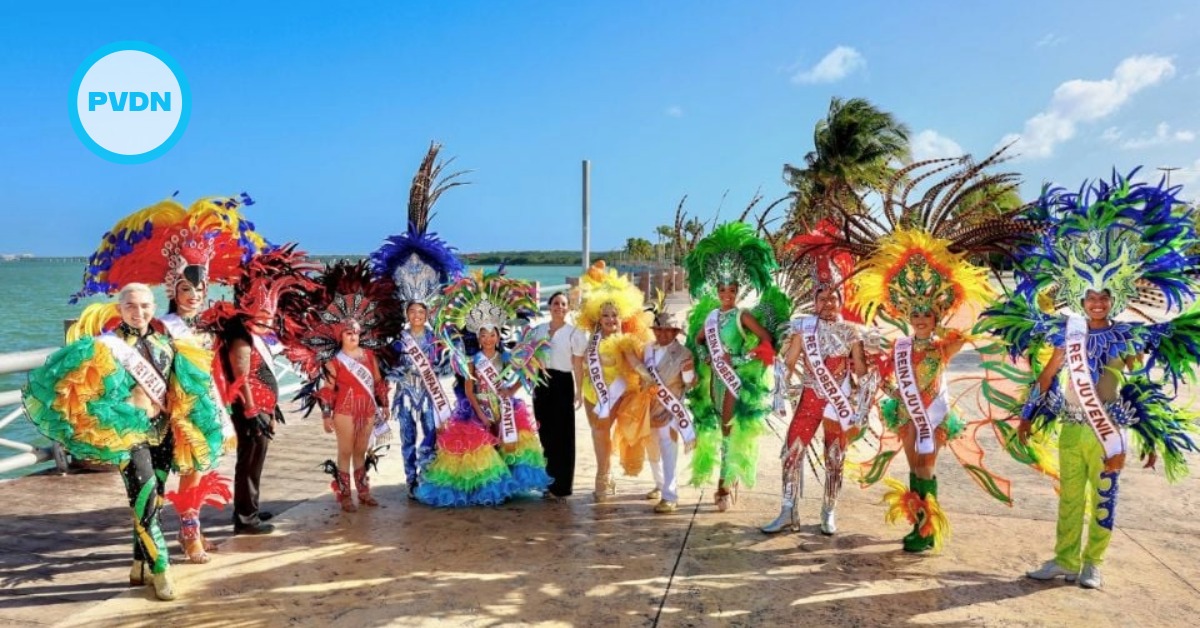
Cancún is already warming up for its biggest street party, and the first step is choosing the faces who will lead it. The city has opened registration to crown the Carnaval 2026 kings and queens across several categories, from children to older adults and the LGBTQ+ court. The finals happen in mid-January at Parque de Las Palapas, with cash prizes on the line. But the real question is what judges are actually looking for—and what winning means once the confetti settles.
Cancún Carnaval 2026 starts early this year
If you think Carnaval is a February story, Cancún is here to correct you. The city has launched its public call to choose the 2026 “soberanos,” the kings and queens who will front the official celebrations. It’s the opening move for a festival that, for many locals, is less about tourists and more about neighborhood pride, performance, and showing up for the city in public.
For expats who want a clearer window into everyday Cancún, this is one of those moments. The selection weekend takes place downtown, not in the Hotel Zone, and it tends to draw families, dance groups, and longtime residents who treat Carnaval as an authentic civic tradition, not just a party theme.
Who can sign up and what the city is asking for
Registration is free, but the city is framing the competition as more than a photo-and-smile contest. Applicants are expected to treat Carnaval as a respectful space, with an emphasis on inclusion and a gender perspective. There are multiple categories, including children, teens, adults, older adults, a category for people with disabilities, and a diversity category aimed at LGBTQ+ participants.
Age ranges and performance limits vary by category. Children compete from ages 6 to 13, teens from 14 to 17, and the main “soberano” category runs from 18 to 49. The “Oro” category is for participants 50 and older. Performances are timed, and that timing matters. The city is signaling that preparation, stage discipline, and knowing how to work within the rules will count just as much as charisma.
There’s also a residency expectation. This isn’t designed as a quick-entry contest for newcomers passing through. The call is aimed at people with established roots in the municipality, with a minimum period of provable local residence.
The deadline, the venue, and what happens on selection weekend
The registration window closes Monday, January 5, 2026, at 4:00 p.m. local time. Sign-ups are handled through the local cultural institute’s offices on Avenida Tulum during business hours. Applicants are expected to show up with standard identity paperwork and supporting documents, and to bring their music prepared on a USB in MP3 format. For minors, the paperwork includes a signed authorization from a parent or guardian and image-use permission.
The finals are scheduled for Saturday, January 10, and Sunday, January 11, at Parque de Las Palapas. If you’ve been in Cancún long enough to know the park’s rhythm, you already get why this location matters. It’s a public stage in the city’s core, where a crowd can actually react in real time. Contestants can perform with a dance group or comparsa, but the rules cap the number of people on stage, and the clock is visible. It’s built to keep the show moving and to make the competition feel fair.
What judges will be watching and what winners receive
The judging criteria mix presentation with performance. Contestants are scored on attitude, stage presence, poise, general cultural knowledge, dance ability, and whether they respect the time limit. The jury is described as comprising recognized artistic and cultural figures, and the decision is final.
Money is part of the incentive, with prizes that reach up to 90,000 pesos per person, depending on category. The city is also explicit about what that money is meant to support: Carnaval isn’t cheap once you factor in costumes, official outfits, and the visual demands of public events. Winning is a title, but it’s also a commitment to represent the festival across appearances once the court is announced. Administrative steps follow quickly after the selection weekend, with winners expected to complete required paperwork soon after being crowned.
Why this matters beyond the crowns
For Cancún, this call is a small but telling reminder that the city still invests in its own public traditions, even as the tourism engine dominates the skyline. Carnaval, at its best, is one of the few moments when the city center feels like it belongs to everybody at once. If you’re an expat trying to build a more grounded relationship with where you live, this is the kind of local calendar marker worth paying attention to—whether you plan to compete, cheer from the crowd, or just understand the cultural life that exists beyond the beach.