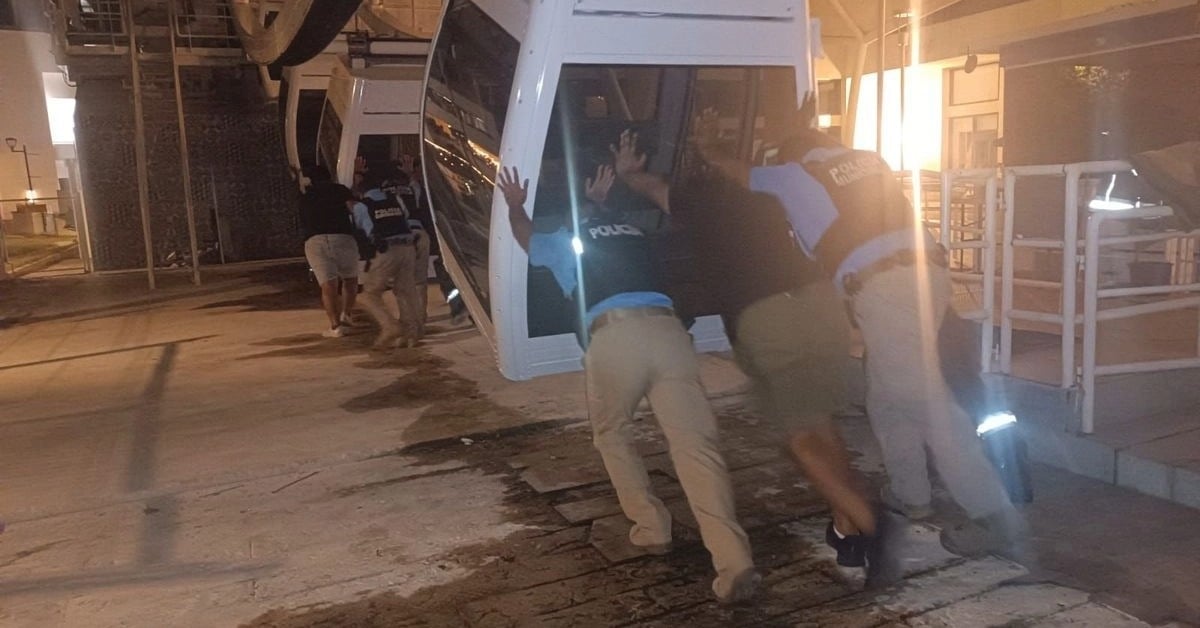
Cancun ferris wheel rescue
Shortly before 8 p.m. on August 18, the Sky Wheel at Plaza La Isla stopped mid-rotation. Families and tourists remained in their sealed gondolas for roughly 30 minutes as responders set up on Boulevard Kukulcán. Firefighters, paramedics, police, and Civil Protection activated rescue protocols at around 7:45 p.m., according to local reports.
Authorities worked cabin by cabin until everyone returned to ground level. No serious injuries were reported. Several passengers were treated for anxiety at the scene and released.
The wheel rises about 70 meters above the Hotel Zone. It is marketed as one of Latin America’s tallest observation rides, a draw for sunset and night views over the Nichupté lagoon. That height framed the night’s tension and the urgency of the response.
What we know about the failure
Initial accounts point to an electrical failure that halted the ride without warning. Staff could not immediately cycle the wheel to unload passengers, prompting the call to 911 and a multi-agency response.
By late evening, multiple outlets reported a headcount of people affected. La Jornada and other national desks cited 19 passengers rescued, while local coverage did not specify a final number. Officials had not issued a formal tally at press time.
Civil Protection in Benito Juárez had not released an official statement on Monday night. Noticaribe noted past stoppages at the same attraction, raising questions about maintenance and contingency plans.
The rescue, step by step
Witness videos show emergency lights, personnel on the plaza, and gondolas paused high over the boardwalk. Crews stabilized the site, coordinated with wheel operators, and brought the cabins down in sequence. The timeline matches eyewitness posts from the Hotel Zone and late-night briefs from local desks.
Passengers described a long half hour with children aboard, little audible guidance, and phone flashlights as the only illumination in some cabins. Once on the ground, several tourists accepted on-site checks and declined hospital transport.
Oversight and accountability
Attractions inside shopping and entertainment complexes sit at the intersection of private operation and public safety rules. When a ride stops, first responders manage the immediate risk, but the duty to prevent repeat failures rests with owners and operators. Monday’s stoppage will likely trigger a technical review of electrical systems, backup power, and evacuation procedures. Officials have yet to detail the scope or timeline of any inspection.
The operator promotes the ride as a landmark and a controlled, enclosed experience. That branding raises expectations for redundancy and clear passenger communication. The night’s rescue puts those promises under a sharper lens.
The social ripple
Clips of the stranded cabins moved quickly through local feeds, pushing the incident into the region’s most-read items for the night. The images resonated because they paired a family attraction with a sudden loss of control. That dynamic often shapes public reaction, even when the outcome is injury-free.
For a destination built on perceived reliability, even brief disruptions carry reputational stakes. The fastest way to limit damage is transparent communication, prompt technical checks, and a public plan to avoid a repeat.
What visitors should know
Observation wheels are designed to stop and start smoothly, including during controlled evacuations. Still, riders can take simple steps: note posted emergency numbers, identify staff nearby, and keep calm if the cabin pauses. Monday night’s response shows that trained teams can clear a stalled wheel without injuries when systems and coordination work as intended.