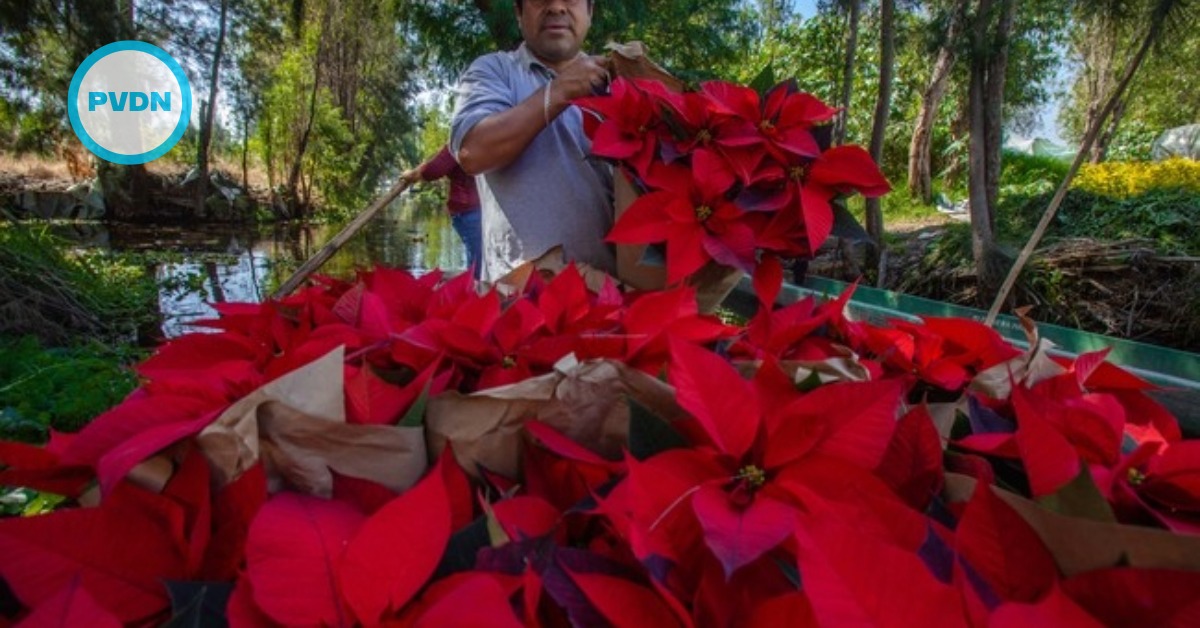
Since the middle of November, the first signal that Christmas is close has nothing to do with shopping malls or hotel decorations. It is the sudden appearance of Nochebuena plants along Cancún’s busiest avenues and neighborhood markets, their red leaves forming bright corridors between the traffic and the sidewalks. On Kabah, López Portillo, and other main routes, rows of plastic tables and improvised stands are already packed with poinsettias in different shapes and sizes.
Vendors have been arriving over the past days from central Mexico, especially Puebla, after weeks in greenhouses and nurseries. They bring thousands of plants in trucks and trailers, then fan out across the city looking for corners with steady foot traffic. A small pot can go for about 100 pesos, while the largest specimens, grown for months under controlled conditions, can reach 300 pesos. The range makes it possible for a family to pick up a modest plant for a kitchen table or invest in a larger centerpiece for the living room.
The most sought-after version remains the classic red poinsettia, but growers now offer white, cream, and speckled varieties that stand out among the sea of crimson. Sellers say they expect to keep their stalls open through the end of November and at least the first two weeks of December, the critical window when most households decide how they will decorate for the holidays. For many, buying a poinsettia on the street has become as much a ritual as putting up a tree.
Cancun poinsettia vendors on the move
Behind these stands is a national supply chain that starts hundreds of kilometers away. Mexico is the birthplace of the poinsettia, a plant known in Nahuatl as cuetlaxochitl and used in pre-Hispanic times for ceremonies and offerings. Over centuries, it became tightly linked with Christmas, first in colonial churches and later in homes across the country and abroad. Today, federal agriculture data indicate that Mexican growers produce more than 21.5 million poinsettia plants a year, giving the crop a market value of around 900 million pesos and making it one of the country’s most important ornamental plants.
Production is concentrated in a handful of states with long floriculture traditions. Morelos and Michoacán lead the national figures, while the State of Mexico, Puebla, Jalisco, Mexico City, and Oaxaca also contribute millions of plants each season. Puebla in particular has increased its cultivated area in recent years, and its greenhouses now send truckloads of poinsettias to cities and tourist destinations across the country. That helps explain why so many of the sellers in Cancún speak proudly of coming from Puebla, even if they are careful not to reveal too much about their routes or wholesale prices.
For families who depend on this work, Cancún’s sidewalks represent a high-risk, high-reward market. The city’s floating population includes hotel workers, local residents, and tourists passing through bus terminals and shopping strips. A good location can mean selling out before Christmas Eve, while a bad week of rain or slow traffic can leave vendors scrambling to cover transport and lodging costs. Many return year after year, building informal networks with residents who now recognize them and come back to buy from the same stall each season.
As daylight fades, the scene shifts. Office workers stop to compare plants as they head home, carefully checking leaves for spots or damage from the sun. Parents negotiate with children over the color and size they can afford. The sellers, often working with their partners or teenage children, answer the same questions again and again: how often to water the plant, whether it should be kept in sun or shade, how long the red leaves will last. The exchange is brief but personal, one of the few remaining moments of face-to-face Christmas shopping in a city where much of the retail economy has moved online or into air-conditioned plazas.
A holiday tradition rooted in Mexican history
The arrival of poinsettias on Cancún’s streets connects the resort city to a much older story. Long before they were associated with Santa and shopping centers, these plants were valued in central Mexico for their deep red bracts, which were linked with life, renewal, and ceremonial offerings. Historians and botanists point out that the plant is native to Mesoamerica and that its link to winter festivities made it a natural symbol when Christmas took root in New Spain. Over time, Mexico’s “flor de Nochebuena” became a global Christmas icon, exported first to Europe and later to the United States and beyond.
In recent years, Mexico has even declared a national day for the poinsettia on December 8, highlighting both its cultural importance and its economic weight for rural communities. For growers and vendors, that recognition is welcome, but what matters most is whether families continue to buy plants each season. The poinsettia trade supports thousands of jobs, from greenhouse workers who monitor temperature and light to truck drivers who move plants from central states to coastal cities like Cancún.
On the Caribbean coast, the plants have to withstand humidity, sun, and salt air once they leave the shade of the nurseries. Vendors offer basic advice: keep them out of direct midday sun, water in moderation, and avoid sudden changes in temperature. Some customers have developed their own routines for keeping plants alive well into the new year, though most accept that poinsettias are a seasonal purchase whose bright color will fade as the holidays pass.
For now, though, Cancún’s poinsettia stands are doing the work they were meant to do: transforming familiar streets into seasonal corridors of red, white, and pink. As traffic crawls by and buses empty out at rush hour, the plants provide a small, vivid reminder that the Christmas season in this corner of the Caribbean is not only about hotel packages and beach parties. It is also about a quiet exchange on the sidewalk between Cancun poinsettia vendors and the families who carry their plants home.