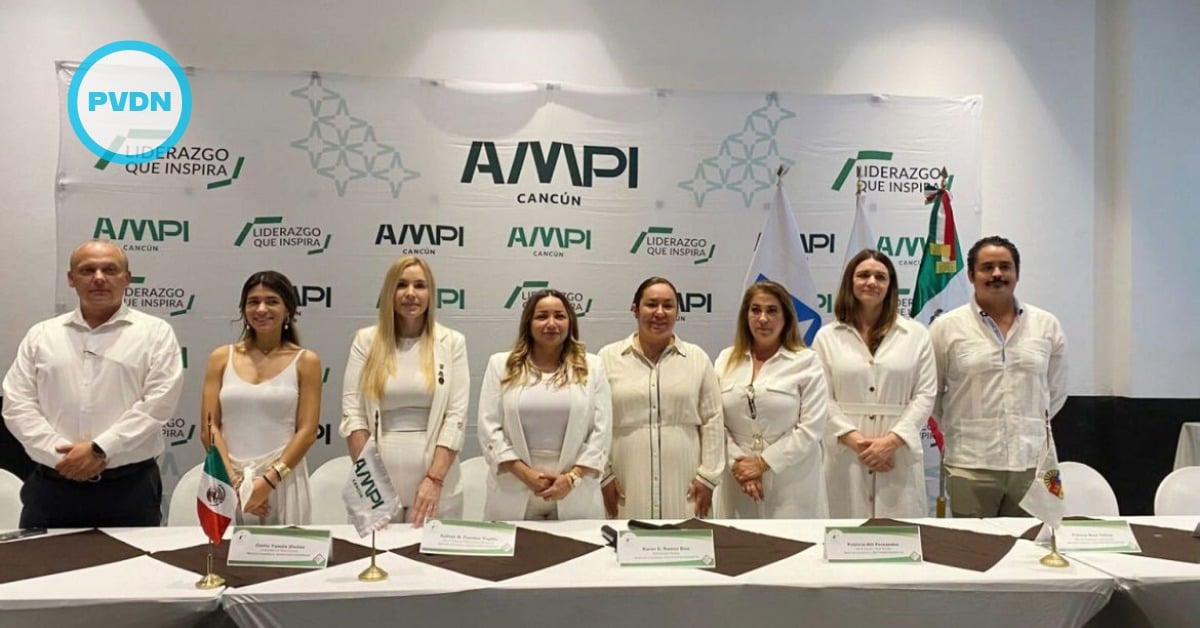
In a city that lives off expectations, Cancún’s real estate industry spent a full day asking what comes next. The XXIV Foro AMPI Cancún, branded “El futuro inmobiliario”, filled a hotel convention center with more than 600 agents, developers, lenders, and officials who all have a stake in how the skyline grows from here.
The forum, organized by the local chapter of the Mexican Association of Real Estate Professionals (AMPI), combined high-energy speeches with a blunt message: trust in the market is fragile, and a single scandal can scare investors for years. AMPI Cancún president Karen Elizabeth Ramos Díaz said the event exceeded expectations and framed the goal as simple but demanding — to give professionals tools that let them see opportunity where others see only risk.
In the lead-up to the event, Ramos and her team stressed that this year’s edition was built around preventing fraud and “misleading sales,” which they say still damage the city’s reputation among Mexican and foreign buyers. The forum’s training blocks offered Sedetus-validated hours that count toward professional certification, a quiet sign that state authorities and the private sector are now moving in the same direction on regulation.
Quintana Roo currently has the highest number of registered real-estate professionals in the country. That registry is becoming the backbone of a system that rewards agents who train, comply with rules, and stay inside formal channels, and makes it easier to identify the “pseudo-advisers” who operate without licenses.
The stakes are high. In a separate briefing on the sector’s performance, state housing officials reported more than 1,000 active developments in Quintana Roo, a housing absorption rate of around 1,600 units per month, and economic growth of 3.7 percent, compared with 1.7 percent nationally. At the same time, only about 4.5 percent of the state’s territory is urbanized, which means developers still have room to build — and room to repeat old mistakes if regulation doesn’t keep up.
Market data backs up the feeling that there is plenty on the line. Analysts tracking the Quintana Roo House Price Index say average home prices in the state jumped about 11.8 percent in the first half of the year. In comparison, other reports point to a 13.4 percent rise in the region’s house prices between 2023 and 2024, helped by major infrastructure projects such as the Maya Train. Forecasts now suggest Cancún home values could rise by around 14 percent between 2024 and 2025.
Even with that run-up, Quintana Roo sits in second place nationally for real estate capital gains, underlining the state’s appeal to investors seeking growth markets rather than mature, slower cities. Yet specialists also note the market is not a straight line: Cancún and Cozumel saw a soft patch in 2024, when sales slowed for several months before recovering toward the end of the year.
Across Mexico, AMPI’s national leadership has been making the same point in broader terms. In its own analysis, AMPI Mexico notes that at least 15 large international funds have been channeling money into Mexican real estate, attracted by returns that still beat many U.S. projects and by solid local consumption. Those flows have gone into shopping centers, housing, and logistics, and beach cities like Cancún sit right at that crossroads.
At the same time, AMPI points out that the market emerging from the pandemic is not the same as the one entering it. Remote work, better credit access for Mexican buyers, and a wave of foreign professionals who want to live longer in the country have changed demand patterns. The group’s post-Covid review found that tourist and beach destinations such as Cancún, Yucatán and Puerto Vallarta have led the recovery, as both Mexicans and foreigners look for homes that double as workplaces.
All of that helps explain why the Cancun real estate future feels both bright and tense: the money is there, but so are the pressure points.
Cancun real estate future
Inside the forum halls, those pressure points were laid out in detail. The program covered economy and finance, sustainable urban development, market intelligence, technology, leadership, emotional skills, international marketing, and, notably, law and regulation. Speakers from across Mexico tried to connect these themes for an audience that ranged from veteran brokers to new agents seeking their first certification.
One recurring theme was professional identity. AMPI now counts just over 7,000 members nationwide and aims to reach at least 7,300 this year, a small number in a country of Mexico’s size but an important reference point in a sector still heavy with informal operators. The national president used the Cancún event to argue that membership is not only about networking but about agreeing to a code of ethics, shared training standards, and a sense of responsibility for the cities where members work.
Local officials backed that message. Quintana Roo’s housing secretary reminded attendees that the state’s reputation as a magnet for foreign real-estate capital depends on confidence that contracts, permits, and titles will hold up under scrutiny. In her remarks, she linked the state’s position as a national leader in registered agents with its status as the top destination for foreign real-estate investment last year, as well as one of the top spots in the country for capital gains.
That kind of confidence is not guaranteed. In recent months, AMPI Cancún has warned that Mexico’s judicial reform — which will change how judges and other legal officials are selected — is already making some investors uneasy. The chapter’s president has told local media that several developers are postponing decisions until secondary laws clarify how disputes over contracts and property rights will be handled, especially for U.S. clients who expect clear court procedures.
Against that backdrop, the forum’s focus on avoiding fraud and misleading sales takes on extra weight. In a previous announcement for the event, Ramos said the chapter wants to use the annual gathering to push back against “pseudo-advisers” whose conduct can scare off entire waves of buyers. Sedetus-validated training hours, along with an emphasis on registration and continuing education, are meant as a kind of shield: the more professionals who pass through that filter, the harder it becomes for scams to hide in plain sight.
Rising prices also raise social questions that were harder to ignore this year. Analysts note that gentrification in areas like Riviera Cancún and ongoing “cultural regeneration” projects are likely to keep pushing values higher, with some estimates pointing to double-digit price growth over the next couple of years. While that may sound like good news in a conference room, it also sharpens concerns about local families being priced out, especially in a city where tourism jobs often pay far less than the income assumed by glossy sales brochures.
That tension between opportunity and exclusion hung over the conversations about sustainability. State officials emphasised that only a small fraction of Quintana Roo is urbanised and called for steering growth toward denser, better-planned areas rather than endless sprawl that eats into the jungle and the coast. Panelists linked that goal with the need to modernize permitting, enforce environmental law, and support projects that use cleaner technology rather than those that treat the Caribbean as a backdrop for quick flips.
For everyday buyers, the message from the forum was mixed but clear. On the one hand, there is still strong demand, significant foreign interest, and a pipeline of new projects aimed at serving both investors and people who want to live in Cancún year-round. On the other, the rules of the game are tightening, and the city’s future will likely reward those who work with certified agents, check permits and look beyond the beach view to the fine print.
If the organizers get what they want, the next time investors sit down to assess the Cancun real estate future, they will see a market that looks less like a gold rush and more like a mature, transparent industry. Whether that promise holds will depend not only on what was said on stage this week, but on how many of the people in that room carry it back into their daily deals.