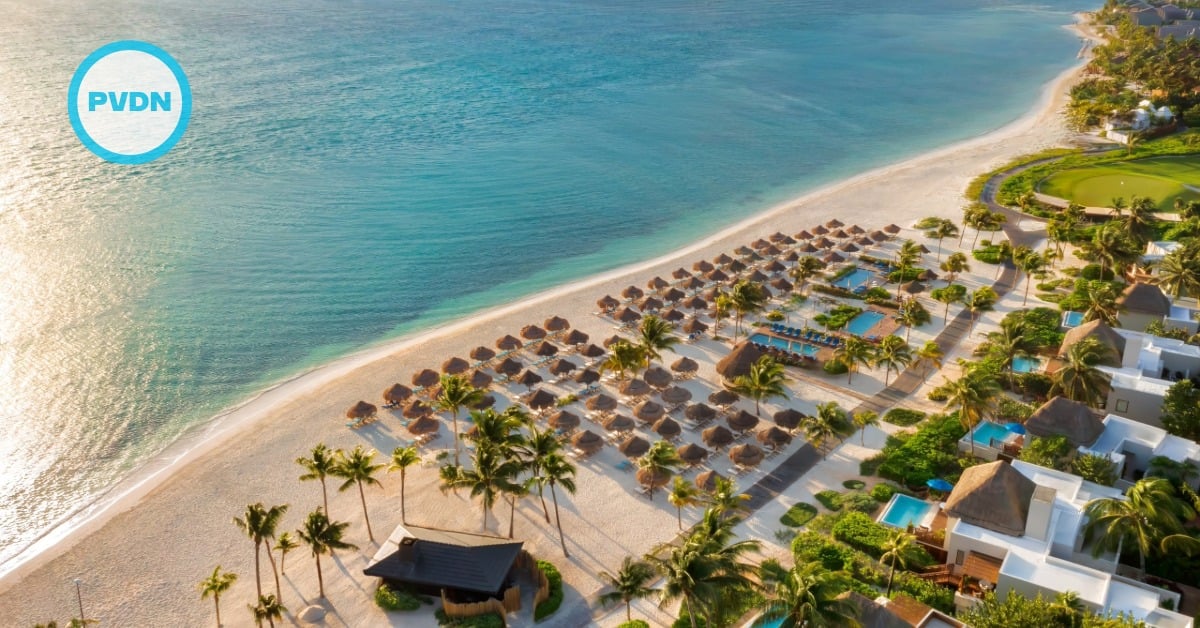
Two of the Riviera Maya’s biggest resorts just stepped onto soccer’s main stage. Quintana Roo Governor Mara Lezama says Cancun World Cup base camps will be at Fairmont Mayakoba and Moon Palace, positioning the Caribbean coast as a training and recovery hub during 2026. It’s a win for tourism—and a signal that FIFA sees the region’s security and logistics as up to the task. Teams won’t be assigned until after the final draw, but the message is clear: the world’s game is coming to the Mexican Caribbean.
Cancun World Cup base camps
Quintana Roo Governor Mara Lezama says the Riviera Maya will host national team delegations during the 2026 FIFA World Cup, with squads lodging at Fairmont Mayakoba and Moon Palace. Her announcement, made this week, frames Cancún as a logistical “gateway” for the tournament, leveraging the region’s hotel capacity and air links into host cities. The state’s own press office echoed the news and highlighted the expected tourism bump for the Caribbean coast.
Before we get ahead of ourselves, a practical note on what “base camp” means. FIFA designates training sites and hotel pairings that teams may choose as their home base during the group stage. Final selections happen after the tournament draw, when teams see where they’ll actually play. FIFA’s guidance puts those choices after December 2025, so which teams end up at these resorts will come later.
Why Cancún—and why now
The pitch is straightforward: elite facilities, secure perimeters, and air connectivity. For coaches, privacy and recovery matter as much as sun and sand. Mayakoba’s gated footprint and Moon Palace’s scale offer that bubble—big staff, big kitchens, big meeting space—which is precisely what national squads look for in a long tournament. The state’s line is also about planes, not just pools. Cancún is the rare airport with direct flights to every World Cup host city across Mexico, the U.S., and Canada, which reduces travel fatigue for players and staff.
FIFA has been expanding its menu of base-camp options across North America throughout 2024 and 2025. Mexico’s list grew beyond the three match hosts to include training hubs in cities such as Querétaro and Torreón. That expansion matters for Quintana Roo: it shows FIFA is comfortable with teams basing outside match venues if the logistics are proper—the state’s claim slots neatly into that direction of travel.
What this is—and what it isn’t—yet
This is official recognition that the Caribbean coast meets FIFA’s technical, security, and accommodation standards for national teams. It is also a branding coup for Quintana Roo’s tourism machine on the cusp of the world’s biggest sporting event. This is not the same as “Team X is staying at Resort Y.” Teams pick after the draw, and some may pivot late based on group geography or performance needs. The governor’s news sets the stage; the cast is selected after the balls are drawn from the pots.
The broader context is Mexico’s World Cup moment. The tournament opens at Mexico City’s Estadio Azteca on June 11, 2026, with matches also in Guadalajara and Monterrey. The Riviera Maya won’t host games, but it doesn’t need to. With direct flights into every host city and resort infrastructure built to handle surge demand, Cancún World Cup base camps double as a fan magnet and a team haven—exactly the hybrid role FIFA built into its base-camp strategy.