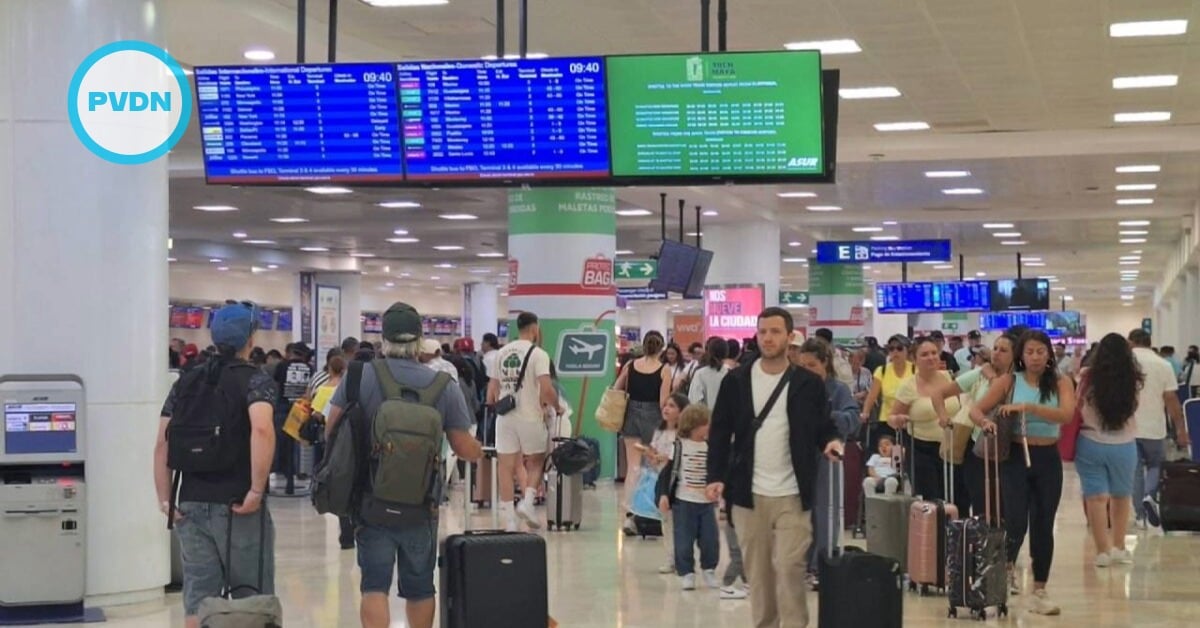
Cancún isn’t hosting a single match in 2026, yet it’s shaping up to be one of the tournament’s busiest gateways. State tourism officials say more than 20 airlines plan extra flights to the Mexican Caribbean, betting on Cancún’s unmatched web of direct connections across North America and Europe. The move comes as carriers restore seasonal links and add new city pairs timed to early summer kickoff, putting the beach hub in play for fans who want sun, easier fares, and one-stop access to host cities.
The Mexican Caribbean is making a simple pitch to airlines: bring more seats, and Cancún will move the fans. State tourism officials say more than 20 airlines are planning to increase service into Cancún ahead of the 2026 FIFA World Cup, positioning the airport as a connector for match-day travelers shuttling between Mexico, the United States, and Canada. The strategy leans on a reality the market already knows—Cancún’s network is intense for a leisure destination.
That network matters. Quintana Roo’s tourism team has touted Cancún as the only airport in Mexico with direct flights to all 16 World Cup host cities across North America, a claim that underscores why carriers view the beach hub as a natural transfer point when fans chase early-round games across long distances. If that holds through summer schedules, it strengthens Cancún’s role as the unofficial “gateway” for tournament travel, even with no matches on local soil.
Cancun World Cup flights
There’s a second, quieter reason airlines are piling in: connectivity sells when demand is lumpy. Mexico will host 13 matches in Mexico City, Guadalajara, and Monterrey, but most fixtures are north of the border. Fans want sun before or after matches and affordable fares in between. Cancún can offer both in one stop, with beach downtime and a giant route map that reaches U.S. and Canadian hubs in a single hop. Officials expect millions of visitors across North America, and Mexico is targeting billions in tournament-related revenue—numbers that help justify added capacity on leisure-heavy routes.
Airlines are already penciling in tangible moves. Southwest has scheduled a nonstop Las Vegas–Cancún link from June 4, 2026—arriving just days before the opening whistle—restoring a route that disappeared during the pandemic and neatly stitching together two tourism engines for the group-stage window. Expect more of these surgical adds: point-to-point flights that sit atop existing daily hubs, then fade as the bracket narrows.
There’s still a headwind to watch. ASUR, the airport operator, reported a year-over-year dip in Mexico passenger traffic in September, including declines at Cancún. Seasonal slumps and macro jitters can spook schedules, but tournament calendars often override the shoulder-season math. Carriers will watch bookings closely in Q1, then lock summer capacity. If early demand spikes, expect extra sections and upgauging rather than brand-new routes.
From connector to springboard
Quintana Roo officials are betting big on spillover. They’ve floated expectations of drawing up to a million tournament-linked visitors, pointed to the state’s breadth of lodging, and pitched Cancún as a smart base for fans who want easy jumps to Mexico City or Houston one day and a beach recovery day the next. That fits how World Cups actually behave: people chase storylines across cities, not one stadium. If the airline adds land as planned, Cancún becomes more than a layover—it becomes the springboard for a North American soccer summer.
For travelers, the upshot is simple. A wider choice of departure cities, more competition on popular routes, and a higher chance of finding a sane fare with sensible times. For the region, the stakes are bigger. A smooth June and July can reset perceptions after soft shoulder months and reinforce the airport’s status as the hemisphere’s most flexible leisure connector. The soccer will be elsewhere. The traffic, increasingly, will pass right through here—and many fans will decide to stay a while. And that, in the end, is the point of adding all those seats.