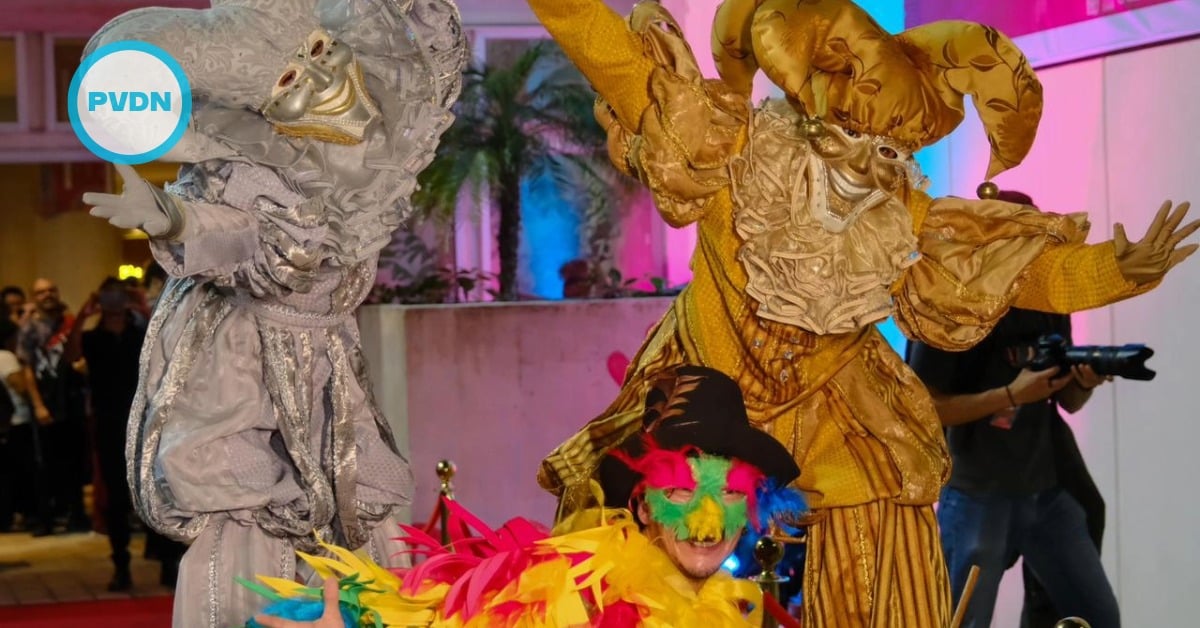
Cancun is used to crowds, but not like this. For ten days, the Cancun theater festival has turned a beach town built for tourists into a national stage, with 29 productions, more than 500 artists, and 87 activities taking over theatres, schools, parks, and waterfront promenades. The 45th Muestra Nacional de Teatro, Mexico’s main showcase for contemporary stage work, is in the Caribbean for the first time, with a theme of migration, mestizaje, and multiculturalism, running from 6 to 15 November.
The festival is not new, but its setting is. Created in 1980, the Muestra Nacional de Teatro travels to a different state each year, offering a snapshot of how theatre looks and feels in Mexico at that moment. In an interview with La Jornada, national theatre coordinator Luis Mario Moncada placed it alongside the Cervantino Festival and the National Theatre Company as institutions that have shaped the country’s stages since the 1970s, and said only five states have yet to host. Organizers hope Cancún will surpass the 11,500 spectators reached in last year’s edition in La Paz, Baja California Sur. The full program is published on the official Muestra Nacional de Teatro site.
For Cancún, a city that barely existed before the 1970s and grew thanks to internal migration and global tourism, the theme choice is not abstract. Artistic director Verónica Maldonado notes that more than 60 percent of local residents are under 20, and that the city’s story is one of constant arrivals—from rural southern states, other parts of Mexico, and abroad. The festival’s curatorial axis, she said, had to reflect that reality: youth, mobility, mixed identities, and the daily coexistence of many cultures in one place.
Cancun theater festival and a younger, mixed city
Those ideas are visible onstage. The opening days featured work from across the country: plays that look directly at borders and disappearance, and others that tackle everyday life in a tourist economy where many workers come from somewhere else. One of the most talked-about pieces is “El acto de desaparecer,” by Creares Escénicas and Explayarte, a Playa del Carmen-based collaboration that uses magic, puppetry, and live music to speak about forced disappearance and the families left behind. Instead of treating violence as spectacle, it leans on symbolism and intimate performance to turn the stage into a place of mourning and resistance.
For children and families, the showcase includes productions like “Historias de papel,” from Querétaro’s La Gaviota Teatro, which builds entire worlds out of sheets of paper and invites young audiences to imagine other futures. Other works push the body to the front: “LEIB, ¿Qué puede un cuerpo?”, a collaboration between artists from Baja California, Chiapas, Mexico City, and Hidalgo, explores movement and identity through physical theatre rather than spoken narrative. Taken together, these shows underline that migration and diversity are not just political themes but lived experiences, written into bodies, voices, and family stories.
The festival also stretches beyond theatre seats. City and federal authorities listed twelve venues ranging from the refurbished Teatro de la Ciudad and the intimate Caja Negra to outdoor spaces such as Parque de las Palapas, Parque de la Paz, Malecón Tajamar, and Puerto Juárez. A night-time street parade, “Sacbé. Un camino iluminado”, led by children from an INBAL-affiliated arts school, opened the program and threaded performers through everyday streets more associated with traffic and shift changes than with performance. On the waterfront, the laboratory piece SALAR brought together 31 local artists to use movement and memory to transform the malecón into a walk-in installation.
Inside the theatres, the appetite has been strong. By 9 November, local outlet Quintana Roo Hoy reported that more than six thousand people had already attended performances, describing the event as a “phenomenon” that kept venues full from early in the week. That demand comes even though all activities are free, meaning tickets sell out quickly in a city where cultural events of this scale are rare and disposable incomes are tight for many families. In that sense, the festival is confirming what artists have long argued: the issue is not lack of interest, but the scarcity of accessible, sustained programming.
The surge of attention has also exposed the limits of the local infrastructure. Another outlet, Quinta Fuerza, documented long lines, frustrated spectators turned away at the doors, and complaints about confusing information on venues and ticket distribution during the first days. Some people said they followed official advice to arrive early and still found the box office empty, while others appeared with special passes. Social media is filled with amateur reviews, logistical rants, and photos of queues snaking along sidewalks—evidence of both strong demand and the learning curve that comes with hosting a national-scale cultural event in a city more practiced at handling package tours than theatre festivals.
Beyond tourism a legacy for local theatre
Behind the headlines and Instagram posts, a political project is at work. Governor Mara Lezama has framed the Muestra as an act of “cultural justice” and part of a broader attempt to decentralize Mexico’s cultural life, which has historically been centered in Mexico City and a handful of other capitals. The renovation of the Teatro de la Ciudad—once described as a “wound in the middle of the city” because it sat abandoned for years—was one of her early projects as mayor; now it is the heart of a national showcase. Municipal president Ana Paty Peralta emphasizes that hosting the festival for the first time in Cancún’s 55-year history signals that the city wants to be seen as more than a resort corridor.
The program also invests heavily in people, not just buildings. Alongside performances, there are workshops, master classes and the Feria del Libro Teatral, with sessions focusing on contemporary playwriting, women dramatists and Indigenous authors. Students and emerging artists are invited into roundtables and staged readings with more established creators, blurring the line between audience and maker. For critics and journalists, the long-running “Muestra Crítica” operates as a laboratory where participants watch, discuss, and publish fast-turnaround texts about the shows, combining immediate reactions with deeper analysis to build a public record of each edition. That work might be less visible than a packed opening night, but it feeds the ecosystem that keeps theatre alive after the festival lights dim.
For local companies, the impact could extend beyond the ten-day rush. Sharing slots with ensembles from Mexico City, the north, and the south puts Quintana Roo’s own groups in national conversation, and exposing young audiences to such a variety of styles may seed future careers. The hope, voiced quietly by several artists between functions, is that once the 45th Muestra packs up, the stages do not go back to being occasional luxuries. If Cancún can keep even a fraction of this energy—new audiences, better-equipped venues, a network of collaborators—the city’s cultural life could shift from seasonal spectacle to something more rooted.
For now, though, the streets still buzz. Children emerge from family shows waving paper programs; teenagers compare notes on experimental pieces that mix dance, masks, and video; hotel workers catch late performances after their shifts. For a few days, the image of Cancún as a place where people only come to consume is quietly rewritten. In the spaces between the hotels and the sea, the Cancun theater festival is asking a different question: what happens when a tourist city starts to see itself as a stage for its own stories?