Quintana Roo plans a 33 km beach restoration push for 2026, betting on dunes and sand to shield its tourism economy from erosion.
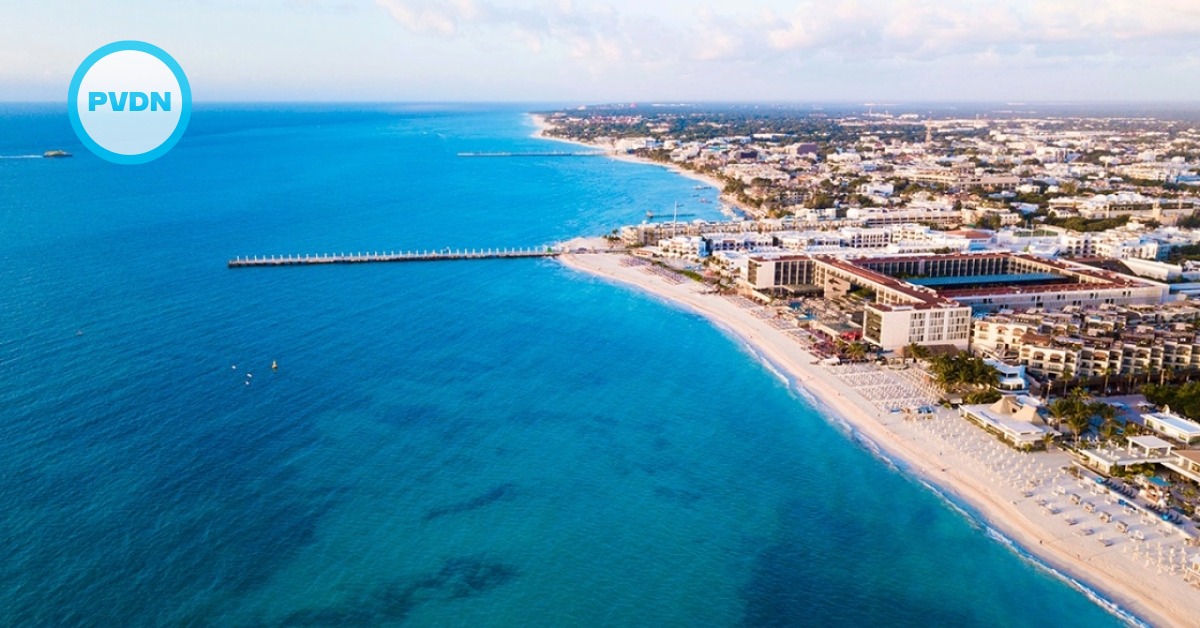
The state government of Quintana Roo is drafting a master plan to restore 33 kilometers of eroded beaches in Cancún, Playa del Carmen, Puerto Morelos and Cozumel, with 2026 set as the year the blueprint is finished and ready to move into full works. The effort is framed as both a climate adaptation project and an economic shield, because the narrow strip of sand where tourists place their towels is also where much of the state’s income and jobs are anchored.
State environment secretary Óscar Rébora has outlined a project that divides the work into four critical fronts. About 12 kilometers would be treated in Cancún, another 12 in Playa del Carmen, 7 in Puerto Morelos and 2.5 in Cozumel, each with different levels of damage and different engineering needs. Some stretches will rely mainly on fresh sand, while others will focus on rebuilding coastal dunes with native plants to act as living barriers against waves and storm surges.
The plan does not start from zero. For years, technical teams have tracked how the shoreline retreats after every winter swell and hurricane season. Authorities estimate that more than 30 kilometers of coastline in northern Quintana Roo already show clear erosion, with some beaches losing several meters of width in short periods. That shrinkage is visible not only in satellite images but also in hotel fronts where the water now reaches walls that once stood well back from the sea.
At the same time, the environmental paperwork has been catching up with reality. An environmental impact authorization first granted in 2009, and renewed in 2019 with validity through 2029, has been used as the legal base for earlier regeneration projects. The state now seeks to expand that authorization’s geographic polygon so that the 33-kilometer stretch can be covered in a single, updated scheme. Officials expect the federal environment ministry to rule on that expansion during the first months of 2026, clearing the way for large-scale dredging and dune work.
From emergency fixes to long-term protection
The new push comes after two decades of emergency measures that never quite kept pace with the sea. After Hurricane Wilma in 2005, authorities pumped millions of cubic meters of sand back onto Cancún’s beaches, only to see a large share stripped away by later storms. Engineering case studies of those works describe how a second sand fill in 2010, combined with coastal structures, eventually produced a more stable beach profile, but only after years of monitoring and natural reshaping. The lesson was simple and sobering: even a massive project can need maintenance and still remain vulnerable to future hurricanes.
On other parts of the coast, private projects tried their own solutions. Hotels and property owners placed rock walls, breakwaters and geotextile “balloons” off their beachfronts to trap sand in place. Local environmental groups have argued that these hard structures may protect a single property while worsening erosion up-drift or down-drift, and they have pushed for them to be removed in favor of softer, nature-based methods. Their demand has been consistent: stop fixing one parcel at a time and build a single, science-based plan for the full shoreline.
The erosion problem itself is a mix of forces. Rising sea levels, stronger storms and shifting currents are part of the picture. So is the human footprint: hotels built on former dunes, mangroves filled in for development, and sand extracted from offshore banks over many years. When those factors stack up, beaches narrow, waves reach infrastructure more often and the room for error shrinks. For a state where tourism has become the backbone of the economy, that exposure is not just an environmental concern but a question of long-term stability.
Quintana Roo beach restoration
Against this backdrop, the Quintana Roo beach restoration plan is being folded into Mexico’s new National Environmental Restoration Program for 2025–2030, which sets priorities and funding channels for degraded ecosystems across the country. Coastal and marine sites in Quintana Roo rank among the program’s key areas, including national parks and reef systems that sit just offshore from the beaches now under review. Linking the local beach works to this federal framework gives the state access to technical support and potential financing, but it also raises the bar on environmental standards.
On the ground, the project hinges on detailed coastal studies now being delivered to federal authorities. Teams are carrying out volumetric surveys to measure how much sand can be safely removed from approved marine banks and how much is needed to rebuild each beach segment. In Puerto Morelos, where recent years have brought some of the sharpest losses, those measurements will help decide whether dunes need to be reshaped first or whether sand fills can happen in parallel.
Money is the other hard variable. State officials have estimated that works just in Playa del Carmen could cost around 800 million pesos, and they have yet to publish a final figure for the full 33-kilometer program. The broad outline is that the project will draw on revenue from federal beach-use fees, combined with funds from different levels of government and contributions from the private sector, especially the hotel industry that depends directly on a wide, safe beach. International financing sources are also on the table, but those would require detailed project designs and proof that the measures meet climate and conservation targets.
For workers and small businesses in the hotel zones, the stakes are concrete. Narrower beaches can mean fewer visitors, more days with red flags and, in the worst case, damage to infrastructure during extreme weather. A well-planned restoration could give those communities a wider physical buffer and buy time as climate pressures mount. But if the works are rushed, or if enforcement is weak and hard structures keep popping up, the long-term result could still be a coast that moves faster than the policy meant to protect it.
The coming year will show whether Quintana Roo can turn years of warnings and pilot projects into a coordinated answer. If the master plan is finished on schedule and the permits arrive, dredgers and planting crews could begin reshaping sand and dunes along some of the busiest beaches in the Caribbean. For a state whose modern history is tied to its shoreline, what happens between now and 2026 will say a lot about how it plans to live with the sea in the decades ahead.