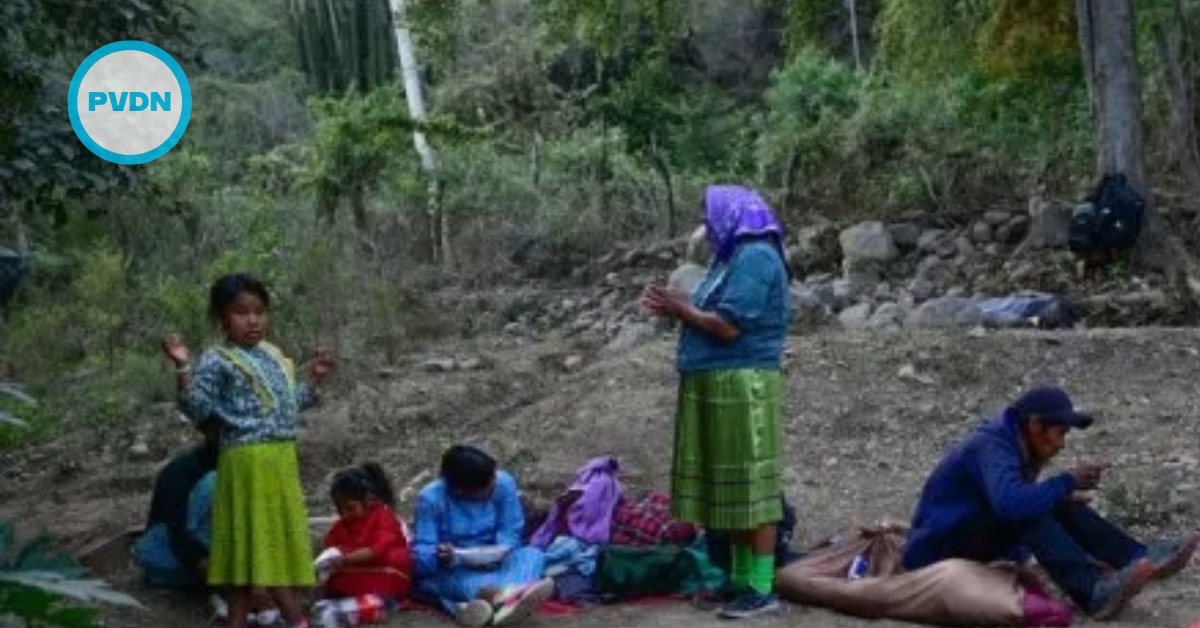
In the remote mountains of northern Mexico, Indigenous families face a new kind of menace. It’s not just drugs anymore. As cartels chase profits in illegal gold mining and logging, entire communities are being forced to flee ancestral lands. Survivors speak of intimidation, violence, and even drones dropping explosives. The forests fall silent, and rivers run polluted, while authorities seem unable to help. How did the quest for timber and gold become a fresh nightmare for Mexico’s native peoples?
Sierra Tarahumara: A New Front in the Cartel Wars
A quiet crisis is unfolding in the high sierras of Chihuahua, Mexico’s largest state. The Sierra Tarahumara—a rugged mountain range famed for its pine forests and home to the Rarámuri (Tarahumara) and other Indigenous peoples—has become the latest prize in organized crime’s expanding portfolio. Long known as a transit corridor for drugs heading north, this remote region is now being targeted for something else entirely: its gold and its timber. Criminal groups, including factions of Mexico’s major cartels, are muscling in to seize mines and forests. In their wake, they are leaving ghost villages and terrified families. What was once largely a battleground over drug routes has broadened into a fight for natural riches buried in the soil and standing in the forests.
Over the past year, local communities have seen an alarming uptick in violent land grabs. In areas like Guadalupe y Calvo and Moris—towns perched in the so-called “Golden Triangle” where Chihuahua meets Sinaloa and Durango—the sound of chainsaws and machinery now accompanies the crack of gunfire. Organized crime cells arrive in Indigenous villages under the pretext of “business.” They offer to buy land if rumors of gold deposits emerge, but negotiations are thinly veiled threats. If villagers refuse to sell or leave, the intimidation escalates swiftly. “They either buy your land or take it when they know there’s gold underneath,” explains one community worker familiar with the region’s plight. Those who resist often face terrifying consequences. Many families have packed whatever they can carry and slipped away in the night, hoping to escape the fate of neighbors who stood their ground.
Illegal Gold Mining Fuels Violence and Displacement
For generations, prospectors known as gambusinos have panned rivers and ground rocks in the Sierra Tarahumara, eking out a living from artisanal gold mining. Now, the same streams and hills that sustained small-scale miners have drawn the predatory gaze of cartel operatives. Between June and July 2025, at least ten Indigenous communities were violently driven out of their territories in northern Chihuahua. In the municipalities of Moris and Uruachi, witnesses say heavily armed men swarmed in, hunting for precious metals beneath communal lands. In one startling tactic, drones carrying explosives buzzed above isolated hamlets, dropping bombs to sow panic. Families huddled in terror as their homes were strafed from the sky. By the time the dust settled, entire villages had emptied out. Local activists identified the attackers as members of Los Salazar, a particularly brutal wing of the Sinaloa Cartel, now intent on conquering mining zones. Until recently, these mountains had been under the sway of a rival cartel, but the push for gold sparked a deadly turf war. The new invaders want unchallenged control of any lucrative deposits—and no locals standing in their way.
While the violence rages, clandestine mining operations proceed unchecked in the emptied territories. Makeshift camps spring up where villages once stood. Young local men, and sometimes boys, are coerced or tricked into working these illegal mines. Parents fear the cartels’ recruitment so much that some send their teenage sons away to the cities, hoping to keep them out of the mines and out of the criminal life. Those who do end up laboring in the mountains face perilous conditions. In primitive, hilltop grinding mills known as tahonas, workers handle mercury with their bare hands, without protection. The toxic metal is used to separate gold from crushed ore, poisoning the air and water in the process. Local health workers quietly report an uptick in strange illnesses: miners with failing eyesight, chronic coughs, skin lesions, and even young men developing cancers. Downstream from these informal mines, once-clear streams run cloudy and lifeless. The mercury-laced runoff flows into rivers that sustain Indigenous farms and villages, tainting fish and farmland. Community members whisper about sick children and farm animals, but few dare openly blame the mines. To do so could mark them as troublemakers in the cartel’s eyes.
Forests on the Frontline: Illegal Logging and Land Grabs
The Sierra Tarahumara’s wealth isn’t only underground. Its vast forests of pine and oak have long been coveted, and illegal logging has plagued these mountains for decades. In the last several years, however, deforestation has accelerated at an alarming rate. Veteran residents say that around 2015, something changed: convoys of trucks began hauling out bigger and bigger loads of logs, often at night. Local people noticed an influx of outsiders with chainsaws felling trees in remote communal woodlands without permission. It’s no coincidence that this boom in timber trafficking followed a downturn in the drug trade’s profits. As the United States legalized and devalued much of the marijuana market, and as synthetic drugs like fentanyl replaced home-grown opium poppies, cartels looked for new income streams. In the pine-clad highlands of Chihuahua, they found one in the black market timber trade. What began as quiet lumber theft has evolved into a major criminal enterprise. Armed groups now impose control over large swaths of forest. They extort local sawmills, bribe officials to ignore illegal harvesting, and threaten Indigenous communities that stand in their way. The scars of this plunder are visible on the land: swathes of once-verdant woodland have been reduced to clear-cut wastelands, tree stumps jutting from the earth like gravestones.
For Indigenous villagers, the forest is life—providing food, fuel, and cultural identity. Losing it to criminal logging is a double blow: it wrecks their livelihoods and brings violence to their doorstep. In several wooded areas of Chihuahua, entire families have been forced out after refusing to collaborate with the loggers. One Tepehuano woman from Guadalupe y Calvo recalls the day her brother and cousin were gunned down, an unspeakable warning to the community. “Everyone was armed. You could no longer live there,” she says of her village, which was encircled by illegal loggers under cartel protection. She fled with her children and elderly parents, finding refuge in a distant town. When she attempted to return a year later, hoping the situation had calmed, gunmen chased her away with a hail of bullets. Two years on, she’s still displaced, scraping by in a borrowed home. The cornfields and orchards her family tended for generations now lie abandoned, likely swallowed up by the same criminal interests that killed her kin.
Chihuahua has witnessed similar tragedies before. The state has a tragic history of environmental activists being assassinated for defending these forests. Notably, acclaimed Rarámuri environmentalist Isidro Baldenegro, a Goldman Prize winner, was shot dead in 2017 after leading campaigns against illegal logging. Such violence sends a chilling message to anyone daring to oppose the plunder of the Sierra’s resources. Locals say that illegal logging has become as lucrative as narco-trafficking in parts of the Sierra. In fact, state officials recently admitted that illicit timber has become one of the main drivers of forced displacement in Chihuahua’s highlands. The criminal groups have woven logging into their business model, using the same intimidation and bloodshed that characterized the drug wars. The difference now is that the victims are often Indigenous landholders and forest guardians who have little support and nowhere safe to go.
A National Trend: Resource Exploitation by Cartels
What’s happening in Chihuahua is part of a broader pattern playing out across Mexico. As crime syndicates diversify beyond narcotics, they have moved aggressively into exploiting the country’s natural resources. In western and southern states, similar stories abound of communities caught between precious resources and predatory criminal interests. In Michoacán, the Knights Templar cartel infamously transformed itself from a drug gang into a mining empire a decade ago. At one point, this cartel’s biggest moneymaker wasn’t meth or marijuana—it was iron ore. They took over mines and even shipped boatloads of illegal iron to China, until a government crackdown in 2014 exposed the scheme. In those same Michoacán hills, cartels have also decimated forests to clear land for profitable avocado orchards, earning avocados the grim nickname “green gold.” Towns like Cherán, Michoacán, rose up in rebellion against illegal loggers linked to organized crime, expelling outsiders and establishing their own community patrols to protect the remaining woods. Cherán’s inspiring self-defense movement has kept its forest standing, but it came only after years of violence and disappearances of community members at the hands of logging mafias.
Farther south in Guerrero, the landscape of conflict is strikingly similar to Chihuahua’s. The mountainous region of Guerrero’s highlands, rich in gold and timber, has seen ruthless cartels such as Los Ardillos impose a reign of terror on Indigenous villages. These criminal groups infiltrate areas where mining companies or logging operations are present, extorting them and using extreme violence to silence any opposition. Entire Nahua indigenous villages in Guerrero have been displaced or virtually besieged by cartel gunmen who are after the forests and minerals. Local community police forces have sprung up in response, but they are outmatched in firepower. In one notorious case, villagers trying to guard their forests in Guerrero were met with horrific brutality—several community leaders were abducted and later found dismembered, a brutal warning from the loggers and their cartel backers. Similar reports emerge from states like Oaxaca, Durango, and Chiapas, where illegal logging and mining are tied to regional crime bosses. From the jungles of the Yucatán to the mountains of Jalisco, organized crime’s fingerprint on resource theft is growing. The criminal playbook is often the same: identify a valuable resource, push out or terrorize the local population, extract and sell the resource, and eliminate those who dare to protest.
Underreported and Unresolved
Despite the severity of this crisis, much of it unfolds in the shadows. There is no comprehensive official tally of how many families have been displaced by resource-driven violence in Mexico, and that is no accident. Fear keeps victims silent. In Chihuahua alone, state human rights officials estimate that the vast majority of displaced Indigenous people—perhaps 95%—never file a report or formal complaint. Families who have been threatened or attacked by criminal gangs are often too terrified to go to the authorities, doubting they will be protected or heard. Many also feel a deep pull to return home as soon as it’s feasible, so they try to wait out the violence instead of making permanent moves or public accusations. This leads to a kind of invisible, protracted displacement. Countless Sierra Tarahumara residents are living in limbo—staying with relatives in nearby towns, or bouncing between temporary shelters and small farms, all the while listening for word that it’s safe to go back. Some do return to their villages after a time, only to find their houses ransacked or burned to the ground. Others find their land occupied by strangers or marked with the presence of armed sentinels, a clear sign that a cartel has claimed the territory.
Government response so far has been halting and insufficient. Chihuahua’s state authorities acknowledge that internal displacement due to violence is a problem, and they even formed a special commission to study it. Yet officials often hesitate to explicitly link these displacements to illegal mining or logging, instead attributing them to generic “conflicts between armed groups.” This official reluctance means little relief or justice for the affected communities. Investigations into who ordered the attacks or who is running the clandestine mines are rare. Arrests of the masterminds are almost unheard of. In the case of the drone bombings by Los Salazar, for example, public pressure forced some acknowledgement of the attacks, but the perpetrators remain free and in control on the ground. At the federal level, Mexico’s government has been largely focused on headline-grabbing cartel issues like drug trafficking and border security. The slow violence of environmental crime in remote Indigenous lands does not get the same spotlight or resources.
Meanwhile, the displaced families of the Sierra Tarahumara and other regions continue to wait and organize as best they can. Nonprofit groups and Indigenous rights organizations have stepped in to document abuses and help as much as possible. They arrange emergency food and shelter, and file legal petitions asserting communities’ rights to their territory. Some communities have even won court rulings affirming their land rights or ordering protection, but on the ground, those papers mean little. One Chihuahua advocate noted that even with a judge’s order in hand, authorities often admit they cannot guarantee safety in areas effectively controlled by criminal groups. It’s a stark reminder that parts of Mexico have become zones of impunity, where parallel authorities rule by fear and force.
The plight of these Indigenous communities remains a largely untold story, overshadowed by other national crises. Yet the stakes could not be higher. What is at risk is not only individual lives, but entire cultures tied to the land—and the land itself. If the current trends continue, more forests will fall to the chainsaw, more rivers will be poisoned by primitive mining, and more communities will be erased from their homeland. Each displaced family represents a cultural loss as well, as Indigenous people are severed from sacred sites, traditional farming plots, and the graves of their ancestors. Despite all this, there is resilience. The Rarámuri and other peoples of the Sierra Tarahumara have endured centuries of adversity. Today, in the face of modern organized crime, they continue to assert their existence and rights. The road ahead is uncertain, but the voices from those remote mountains—once quiet—are starting to reach the outside world. Whether the rest of Mexico will listen and act remains the looming question over this new chapter of an old conflict.
With information from Animal Político, Latin Times, OCCRP, Earth Island Journal