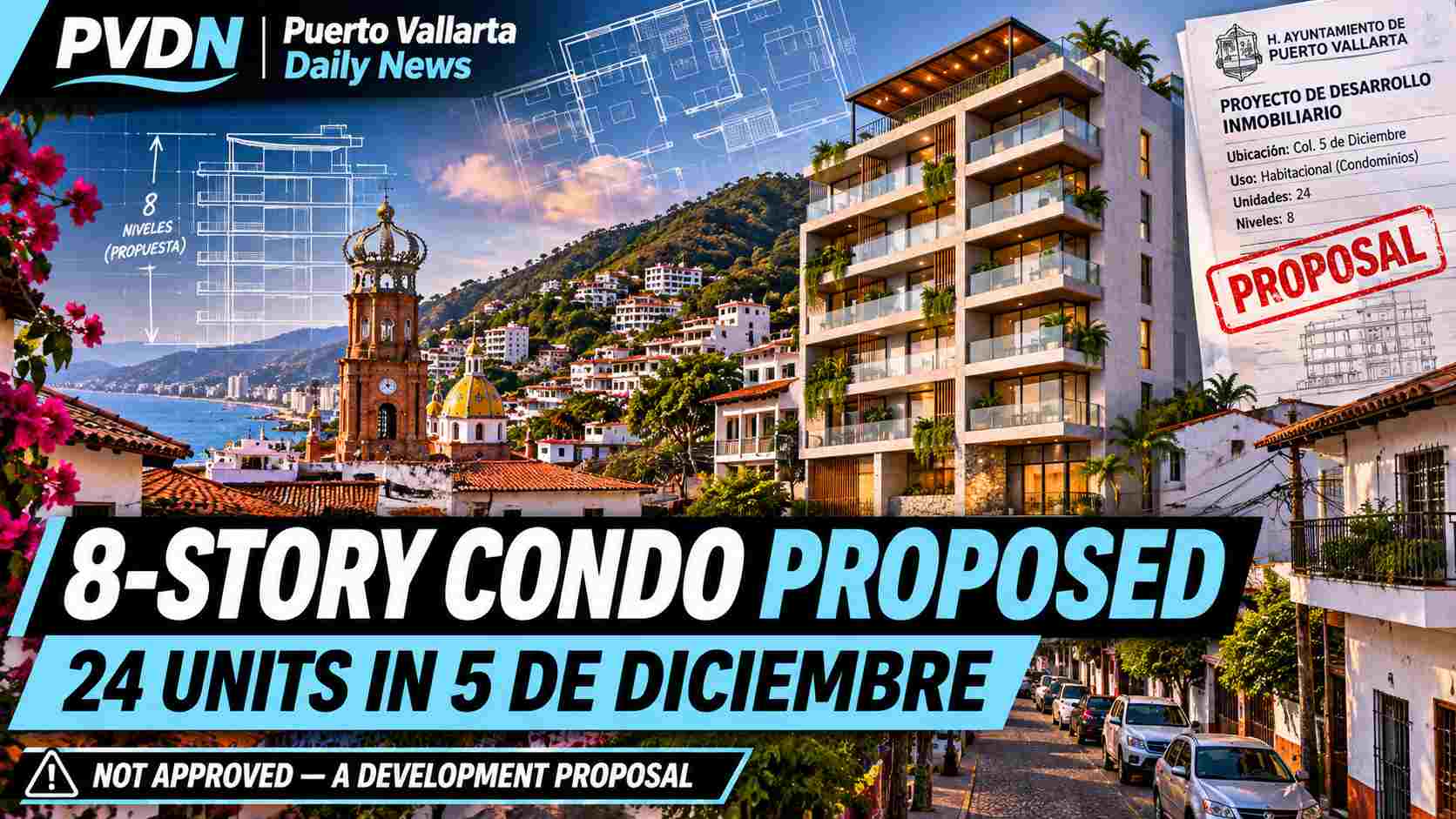
A new eight-story, 24-unit condo is proposed on Colombia in 5 de Diciembre. The filing outlines impacts, but approval is not confirmed.
Puerto Vallarta, Jalisco, November 19, 2026 – Another eight-story condominium development is moving through the environmental review process in Puerto Vallarta, this time on a 778-square-meter property in colonia 5 de Diciembre, where developers plan to replace an existing home with 24 apartments, underground space and a rooftop swimming pool.
The project, called Condominio Higuera, is proposed for Colombia 1429, in the established residential neighborhood just north of Centro.
The project has submitted a Manifestación de Impacto Ambiental (MIA) to the Secretaría de Medio Ambiente y Recursos Naturales (SEMARNAT).
The proposal calls for 3,060.46 square meters of construction on a lot measuring approximately 778 square meters. It includes a basement, eight levels above ground and a rooftop terrace with a swimming pool.
The development would add 24 residences to a neighborhood already seeing considerable interest from condominium buyers.
But an environmental filing is not an approval to build.
The available reporting establishes that the project has entered the federal environmental review process. It does not establish whether SEMARNAT has authorized the development, whether the Ayuntamiento de Puerto Vallarta has issued the necessary construction permits or when building work may legally begin.
Those distinctions matter, particularly in a city where rapid condominium development has raised questions about zoning, water availability, drainage and the ability of older neighborhoods to accommodate larger buildings.
What developers are proposing on Calle Colombia
The environmental filing identifies Gabriela Ezqueda Sánchez as the project’s legal representative.
Plans describe a vertical residential development with 24 apartments built on land currently occupied by a house.
The property falls within Distrito Urbano 8 under Puerto Vallarta’s urban development planning system. The environmental documentation identifies the applicable zoning designation as Habitacional Medio, or medium-density residential use.
That designation provides information about how the site is classified. It does not, by itself, establish that the proposed eight-story building and 24 apartments comply with every local restriction.
That determination depends on the full development plan, applicable zoning standards and any permits or exceptions granted by municipal authorities.
The project’s official marketing website describes Higuera as a residential development with two towers, a rooftop swimming pool, landscaped gathering areas and apartments of varying sizes.
Units range from smaller loft-style residences to larger apartments and a penthouse.
Developers are promoting the building as a relatively low-density residential project, emphasizing privacy and outdoor amenities.
That description is a marketing position rather than a finding made by planning authorities.
Twenty-four residences on a 778-square-meter parcel would represent a substantial change from the single existing home described in the environmental filing, even though the lot sits within an established urban neighborhood.
The question for planning officials is whether the proposed height, density and infrastructure requirements comply with the rules governing this particular property.
The apartments were already being marketed before this week’s filing report
One detail worth examining is that Higuera was already appearing in Puerto Vallarta real estate listings before its environmental filing received local news coverage this week.
A Coldwell Banker La Costa property listing carried by Boardwalk Realty identifies a two-bedroom residence in the project with an asking price of approximately 8.47 million pesos.
The listing shows an original publication date of October 1, 2026, and describes the property as being in preventa, or presale.
Other publicly advertised units include smaller lofts and larger penthouse residences, with prices varying considerably by floor plan and size.
Presale marketing isn’t unusual in Puerto Vallarta.
Developers often advertise condominium projects before construction is complete, sometimes using buyer deposits and installment schedules to help finance development.
Still, the timing makes the status of Higuera’s permits an important question for prospective buyers.
The fact that residences are being marketed doesn’t establish that federal environmental authorization has been granted. Nor does the November publication of a filing report establish that the developer has violated any regulation.
The original submission date, current environmental review status and municipal authorizations need to be confirmed through the relevant agencies.
As Vallarta Daily previously reported in its examination of unpermitted condominium developments, environmental authorization has become a significant issue for local developers.
In March 2025, federal inspectors temporarily closed the Vihara condominium project after finding that it lacked the required federal environmental impact authorization.
That was a separate development, with its own circumstances.
It illustrates why buyers should distinguish between a property being advertised, a project having submitted applications and a development possessing the authorizations necessary for construction.
What the environmental study says about the property
The submitted MIA describes the site as already affected by human activity.
An existing home occupies the lot, and the surrounding area includes residential buildings, tourism-related properties and ornamental vegetation.
According to the filing information published by Tribuna de la Bahía, investigators identified one tree on the construction property, which the project proposes to preserve.
The developer’s advertising also features a preserved higuera tree as part of the property’s design.
The surrounding neighborhood contains ornamental plants and native vegetation, although the filing characterizes the immediate property as part of an established urban area rather than undeveloped natural land.
That distinction influences the environmental review, but it doesn’t eliminate the need to consider what construction could affect.
The application identifies several possible impacts, including dust, noise from machinery, construction waste and risks of contamination to soil and water.
Developers propose measures to reduce those effects, including controls on waste disposal, equipment maintenance, protection of nearby water bodies and measures concerning wildlife.
The filing also describes temporary sanitation facilities for workers, environmental training and employment during construction and operation.
These are proposed measures.
Whether they’re adequate, whether additional conditions are needed and how compliance would be monitored are matters for environmental authorities to assess.
SEMARNAT can approve a project, authorize it with specific conditions or deny authorization following its review.
The agency’s environmental impact assessment process is intended to examine the effects of construction before the project proceeds under the applicable environmental rules.
The available reporting on Higuera does not include a final SEMARNAT resolution.
The bigger issue is what older neighborhoods can support
Condominium construction is not new to 5 de Diciembre.
The neighborhood has become increasingly attractive to buyers who want to live close to Centro, Playa Camarones and the Malecón without being in the Zona Romántica.
Older houses, small apartment buildings, family businesses and newer condominium developments now share streets that were established long before the current wave of vertical construction.
For property owners, new investment can bring renovations, increased commercial activity and higher property values.
For longtime residents, the concerns can be different.
More apartments mean more people potentially using the same streets, water system, sewer network and electrical infrastructure.
A building with 24 residences won’t necessarily overwhelm those services. The actual effect depends on occupancy, water use, engineering design, existing network capacity and the improvements required of developers.
But those questions need answers before construction begins, not after residents experience problems.
Residents described outages lasting several hours and problems involving electrical infrastructure along streets including Ecuador, Bolivia, Venezuela and República de Chile.
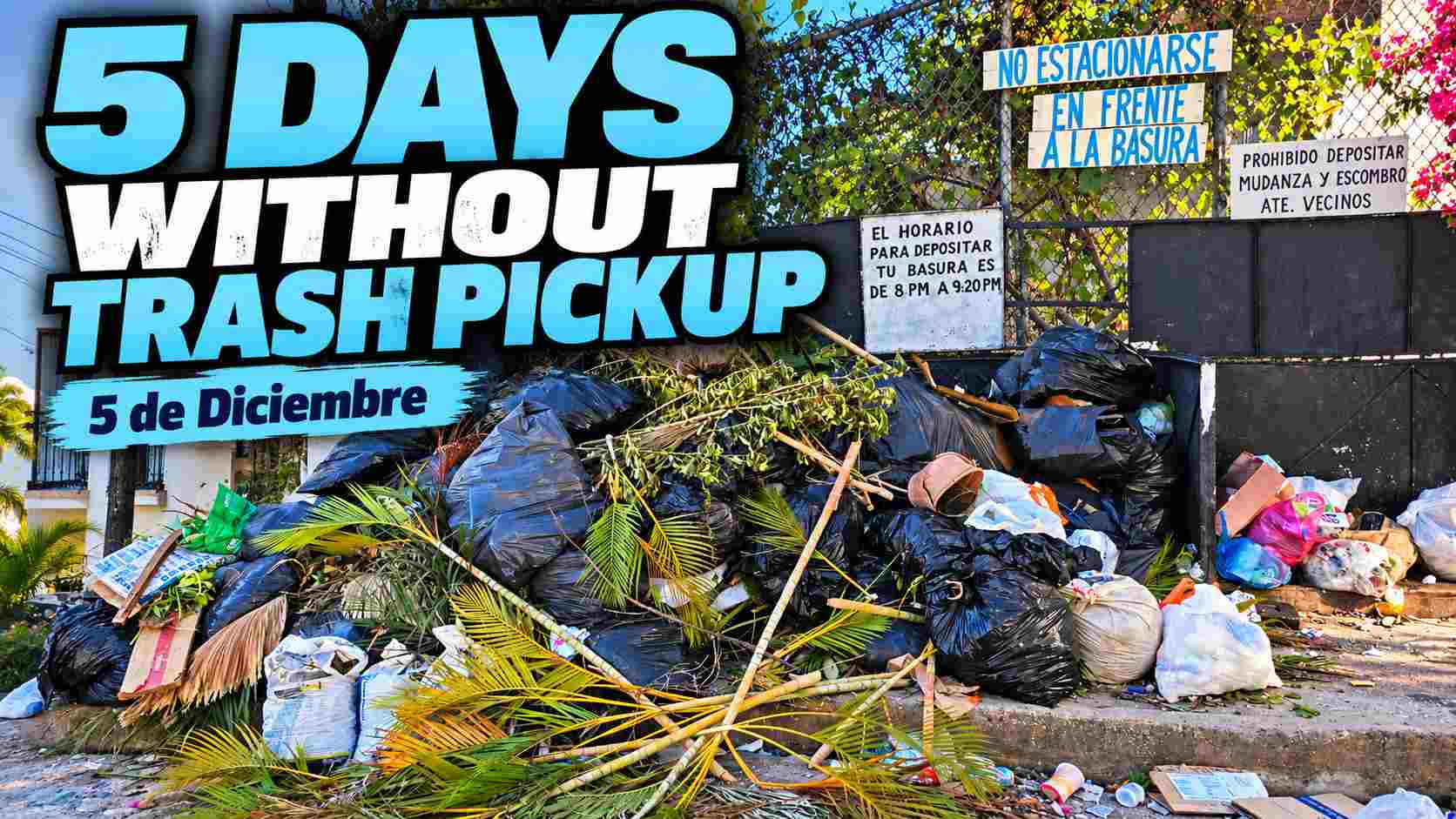
More recently, residents near Brasil and Honduras reported five consecutive days without garbage collection.
Those incidents don’t establish that new condominiums caused the problems, and they don’t demonstrate that Condominio Higuera would make them worse.
They do show why neighbors want more than assurances that a project will meet environmental requirements.
A new building’s contribution to municipal services needs to be assessed alongside the condition of the infrastructure already serving the area.
Water and drainage deserve particular attention
One issue that should be examined during Higuera’s approval process is how the building would obtain water and discharge wastewater.
The environmental filing summary does not establish the project’s expected daily water consumption, the number of residents likely to occupy the apartments or the available capacity of the nearby sewer system.
It also doesn’t provide enough detail to determine whether upgrades to public infrastructure would be needed.
Those questions have become increasingly relevant across Puerto Vallarta.
Earlier this month, Vallarta Daily reported on SEAPAL’s plans to clean 6.2 kilometers of sewer lines following wastewater spills in Versalles.
The utility has also discussed installing wastewater meters in condominium buildings to investigate groundwater and rainwater entering the drainage system.
Those measures concern other neighborhoods and separate infrastructure problems.
They aren’t evidence of a drainage deficiency on Calle Colombia.
Still, they provide context for why water and sewer capacity should be part of any serious review of new residential density.
A building’s ability to connect to existing pipes isn’t necessarily the same as confirming that those systems have enough capacity to serve additional residents without affecting neighboring properties.
Puerto Vallarta has struggled to document the cumulative effects of development
Higuera also raises a broader planning question that extends beyond one parcel.
City records documented new vertical housing licenses and money collected when projects received additional buildable area.
But the reporting did not identify a single public record showing how many new homes were entering each neighborhood, how much additional water and drainage capacity those developments required or which infrastructure improvements developers were obligated to provide.
That information becomes more important when multiple projects are proposed in the same area.
An individual condominium may meet the requirements imposed on its property.
Several condominium projects together can produce a larger increase in traffic, demand for water, wastewater flows and neighborhood density.
The combined effect isn’t necessarily captured by examining each project separately.
For 5 de Diciembre, the relevant issue isn’t simply whether an eight-story building can fit on a 778-square-meter lot.
It’s whether the neighborhood’s public infrastructure and land-use rules can accommodate the additional development being proposed.
What neighbors and prospective buyers can check
Because Higuera has submitted an environmental impact statement, interested residents can seek information about the federal review.
Under Mexico’s environmental protection law, environmental impact files are generally available for public consultation once the relevant administrative requirements have been met, subject to legally protected information.
The law also provides procedures through which community members may request public consultation during the applicable review period.
Those deadlines depend on official publication and procedural dates. The November 19 news report alone doesn’t establish the date by which a request must be filed.
Residents can seek the project’s environmental file number, full study and any published resolution directly through SEMARNAT.
Municipal questions belong with Puerto Vallarta’s urban development authorities, particularly whether the project has obtained land-use authorization, approved construction plans and the permits necessary for its proposed height and density.
Prospective buyers should also distinguish between a presale contract and proof that every required authorization has been issued.
A property’s marketing materials may describe future amenities, building layouts, completion expectations and available units. Those descriptions don’t replace the legal documents governing the development or the terms of an individual purchase contract.
For Higuera, the published information establishes the proposed 24 apartments, eight levels, basement and rooftop swimming pool.
It does not yet establish an approved construction timetable or a completed federal environmental review.
The approval record will determine what happens next
Condominio Higuera is one more example of the changes taking place in Puerto Vallarta’s older residential neighborhoods.
The project proposes to replace a single existing home on Colombia 1429 with a building containing 24 residences, while preserving a tree identified in its environmental documentation.
Its developer is already marketing apartments, and the environmental filing has now entered public reporting.
What remains to be established is the official authorization record.
SEMARNAT’s response will determine whether the project receives environmental approval and under what conditions. Puerto Vallarta’s municipal authorities are responsible for their own land-use and construction decisions.
For residents of 5 de Diciembre, those decisions will establish whether the proposed eight-story, 3,060-square-meter development can proceed as presented and what requirements must be met before it does.