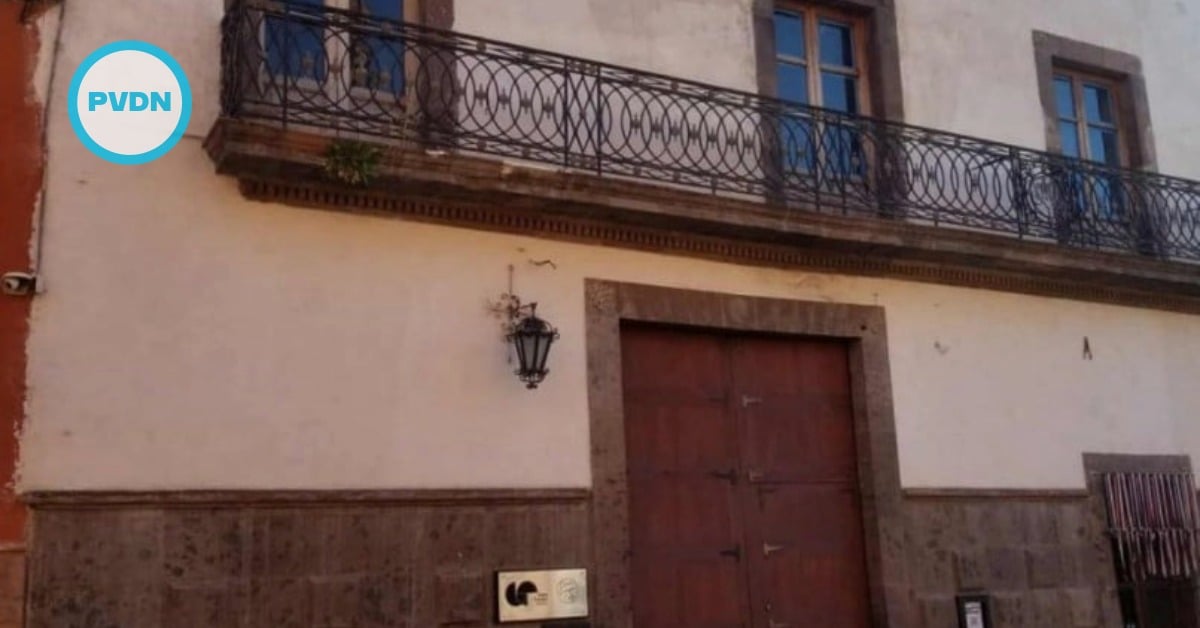
San Miguel de Allende could gain a new kind of visitor center if a proposal to convert the former Casa Europa building into a Guanajuato tourism museum advances at the state level. The plan comes from state deputy Ricardo Ferro Baeza, who argues that the site could become a showcase for all 46 municipalities and be financed with the state’s lodging tax fund. He floated an annual operating budget of five to six million pesos and said the museum would centralize statewide promotion in a city that already draws international traffic.
Ferro’s pitch lands in a place built for visibility. Casa Europa sits in San Miguel’s historic center, a UNESCO World Heritage city that attracts year-round tourism. While the proposal is new, the building itself is not: Casa Europa has hosted art shows and cultural programming in recent years and remains a recognizable venue among locals and frequent visitors.
Guanajuato tourism museum
What’s on the table, concretely? In the local press, Ferro frames the project as a statewide gallery of experiences—foodways, festivals, artisan routes, and lesser-known towns—marketed from San Miguel, then channeled outward to the rest of Guanajuato. He suggests tapping the lodging tax to fund operations, sketching a small public budget compared with those of larger cultural institutions. According to his motion, Casa Europa—identified at San Francisco 23—would be the preferred site, with the deputy noting that the property is now in state hands.
The money case will get scrutiny. Guanajuato’s lodging tax—charged on hotel stays and, increasingly, short-term rentals—sits at 4% for 2025. State budget tables set this year’s projected revenue from taxes at roughly 159.7 million pesos, giving lawmakers a ceiling for any new cultural outlay without cutting existing campaigns. If the museum claimed the five-to-six-million annual slice Ferro described, it would represent a few percent of the total lodging-tax take.
There’s also timing. The state has pushed this year to tighten compliance on the lodging tax and bring platforms like Airbnb further into the fold—important context if the museum depends on those pesos. Better collection could cushion a new program; weak enforcement would do the opposite. In short, a tourism museum funded by the tax lives and dies on consistent remittances from the sector it aims to grow.
Stakeholders will watch the building story, too. Casa Europa’s recent public updates referenced restoration and preservation work—signals that any change of use would require careful stewardship of a heritage structure in a tightly regulated historic core. That dovetails with San Miguel’s constant balancing act: keeping its postcard beauty intact while managing heavy visitor flows.
What it means for San Miguel and beyond
If the state green-lights the project, the museum could become a funnel, convincing visitors who already land in San Miguel to take day trips to Dolores Hidalgo for ceramics, León for leather, Guanajuato capital for its alleys and museums, or smaller towns that rarely make foreign itineraries. That dispersion—spreading people and pesos—is the heart of the pitch. But residents will want guardrails: programming that highlights local makers without becoming a souvenir mall, and staffing that hires locally while lifting the wider state brand. San Miguel’s success is exactly why the site is attractive—and why the bar will be high.
There are open questions. How fast could the state adapt the building for museum use, and at what capital cost? Would the lodging-tax contribution be locked in or subject to yearly fights during budget season? Could a San Miguel-based museum avoid concentrating benefits in the city that needs them least? And who would curate the stories of all 46 municipalities so the experience feels statewide, not San Miguel-centric? Those are policy choices as much as line items.
For now, the paper trail is a legislative exhortation, not a construction notice. The deputy’s proposal asks the Tourism and Identity Secretariat to study and pursue the idea; it does not appropriate funds or award contracts. Local dispatches suggest the state owns the property in question, which would simplify logistics, but any conversion would still have to clear heritage rules and public contracting steps. A follow-up report pegs the address as San Francisco 23, a detail that aligns with Casa Europa’s known location and makes the project easier for residents to visualize—one more reason the conversation has picked up.
Bottom line: the museum idea is plausible, priced to fit within the lodging-tax envelope, and positioned in a building that already speaks culture. It also asks San Miguel to play host to a project meant to benefit the entire state. If the numbers hold and the design tells Guanajuato’s story beyond its marquee destinations, the proposal could move from talking point to useful piece of the tourism puzzle. If not, it risks becoming another pretty room in a city with plenty of them.