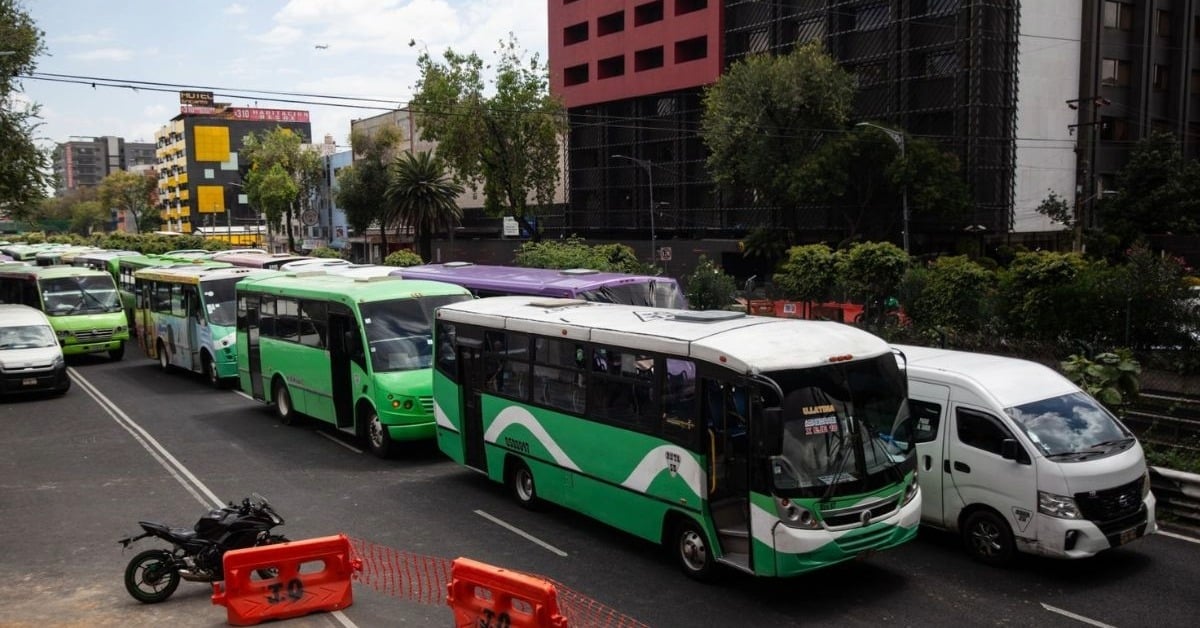
City transport unions say they will bring thousands of buses and vans into the streets on Monday, September 1, if the government does not set a clear path to higher fares or immediate fuel support. The CDMX fare hike protest is timed for the first day of classes. That raises the stakes for commuters, schools, and a city already strained by rush-hour traffic.
Organizers from the Fuerza Amplia de Transportistas (FAT) say they plan blockades at key gateways from dawn. They frame it as a last resort after talks stalled. City officials say they are reviewing fares and point to subsidies elsewhere in the system. Riders fear another day of gridlock.
CDMX fare hike protest
FAT leaders argue that current fares no longer cover basic costs. Fuel is the first pain point. Repairs and spare parts come next. Many operators took on debt to modernize their fleets as the city pushed for safety technology and renewals. Without relief, they say, units go off the road and service gaps grow.
The plan is blunt: gather at the main access roads and slow or stop the flow toward the core. FAT estimates about 7,500 units could join. The group has staged similar pressure tactics before, but the date—September 1—adds new leverage. Families will be driving. Buses will be full. Patience will be thin.
What unions plan and where
Spokesperson Francisco Carrasco says the action will begin at 7 a.m. on several entry corridors. Outlets close to the northern metro area flag the México–Pachuca corridor as a likely flashpoint. Others name Periférico Norte, Calzada Ignacio Zaragoza from the east, and the México–Cuernavaca approach from the south. Expect rolling slowdowns and full closures at times, with knock-on delays on inner arterials.
The unions say they will apologize to the public even as they push ahead. Their message is simple: the numbers no longer work at today’s fares, and they want either a formal fare update or stopgap fuel support while the city decides.
What fares are now and what could change
Concessioned microbuses and vans last saw a formal increase in June 2022, when the city added one peso to the tiered distance fares (6.00, 6.50, 7.50 pesos). Since then, official lines, such as RTP buses, have kept low, subsidized prices (ranging from 2 to 7 pesos, depending on the service), and metro and trolleybus fares remain government-set and subsidized.
This split fuels the fight: private concessionaires purchase fuel at market prices and cover repairs out of pocket, while public systems rely on subsidies. City officials have said in recent weeks that an adjustment is under study. Unions have floated different targets over the summer—from a three-peso increase to a 12-peso minimum fare. Either path would represent the most significant shift since 2022 and would impact riders in lower-income corridors unless accompanied by discounts or transfers.
What the city says
The Mobility Secretariat has acknowledged the review but has not announced a figure or date. The government highlights subsidies elsewhere, such as metro, trolleybus, and RTP, and points to ongoing fleet renewal and safety requirements for concessioned operators. The modernization push—encompassing cameras, GPS, and electronic payments—aims to improve safety and reliability. For operators, it also adds fixed costs.
City Hall must balance three pressures: inflation-driven costs for drivers, affordability for riders, and the political optics of a fare hike in the capital. The calendar makes that more challenging. September 1 is not just the start of the back-to-school season. It’s also a day when the federal news cycle is hot, which amplifies any disruption.
Why costs are biting
Diesel, tires, and parts have climbed sharply since the 2022 fare update. Operators say margins vanished as daily takings lagged behind expenses. Some routes also thinned out during fleet renewal, which reduced back-to-back departures and cut farebox revenue at the tail ends of lines. Riders, for their part, say they need cleaner units, safer driving, and more predictable headways before they are willing to pay more.
This is the core policy question: does the city raise fares, expand subsidies, or push a deeper re-franchising of routes into larger, more accountable corridor companies that can spread costs and invest? The answer likely mixes all three. The risk, in the short term, is a standoff that punishes commuters.
What commuters can expect on September 1
Prepare for long inbound queues at the metro area edges, especially from the north and east. Inside the city, main arterials could see surges as drivers reroute. If you can connect to Metro, Metrobús, RTP, or trolleybus, you’ll likely move faster than by car. If the unions and the city reach a last-minute understanding, actions may scale back to marches or partial slowdowns. But plan for the hard version; hope for the soft landing.
The CDMX fare hike protest is a stress test for a hybrid network, where private concessionaires still account for a significant share of daily trips. Fares, subsidies, and fleet renewal all matter. So does trust. Riders need to see better service. Operators need a path to solvency. And the city needs to keep people moving on a school day.