A CFE electricity bill can look routine until the amount due jumps. The clue is often not a single number but a pattern: the kWh used, the billing period, the applied tariff, and the colored consumption graph. For foreigners living in Mexico, understanding these fields can help spot possible reading issues, avoid missed deadlines, and keep a home from slipping into higher-cost consumption levels.
CFE reminds users how to read their power bill before costs rise
Mexico’s Federal Electricity Commission is urging customers to look more closely at their CFE electricity bills, saying the documents contain key information that can help explain high charges.
The reminder comes as many households enter hotter months. In several parts of Mexico, air conditioning, fans, refrigeration, and dehumidifiers can increase electricity use.
For international residents, the CFE bill can also be confusing. It may arrive in Spanish, use unfamiliar tariff codes, and show consumption in kilowatt-hours (kWh). But the core idea is simple. The bill shows how much electricity was used, when it was measured, and how CFE calculated the amount due.
Understanding Your CFE Electric Bill in Mexico
CFE’s 2025 Investment Plunge Puts Mexico’s Power Grid at Risk
The bill is more than a payment notice
The first section to check is the service information. This includes the service number, account holder, and address. These details matter because they identify the meter and the property being billed.
Next is the billing period. This shows the dates covered by the charge. A bill covering more days than usual can make the total look higher, even when daily use has not changed much.
The most important number is usually the total consumption. CFE calculates this by comparing the previous meter reading with the current one. The difference is the number of kWh used during the billing period.
That number drives the bill. If the current reading looks wrong, or if consumption suddenly jumps, customers should compare it with the physical meter when possible. A sharp increase can be caused by heat, old appliances, a pump, air conditioning, a wiring problem, or a reading issue.
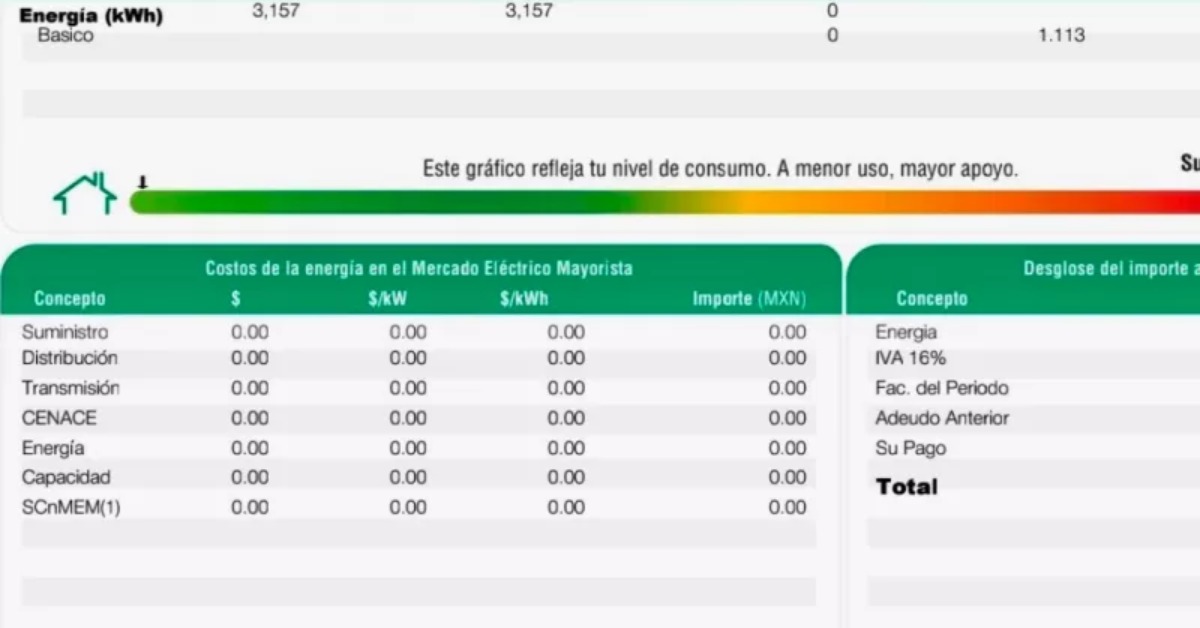
The color graph is an early warning
CFE bills include a colored consumption graph. It is meant to show whether a household is using electricity at a low, moderate, or high level.
Green generally means low consumption. This usually reflects more efficient use and greater support in the cost of service.
Yellow means moderate consumption. It is a signal to watch habits before the next bill.
Red means high consumption. This can reduce the support applied to the bill and increase the amount due.
For many households, the graph is the fastest way to see whether usage is moving in the wrong direction. It should be read in relation to the actual kWh figure, not just the amount charged.
The tariff line can explain a lot
The tariff applied is another key line. Domestic CFE tariffs vary by locality and climate conditions. In hotter areas, some tariffs allow higher electricity use before a household is considered a high-consumption household.
CFE’s domestic tariff system includes classifications such as Tarifa 1, 1A, 1B, 1C, 1D, 1E, and 1F. These are not random codes. They reflect the type of domestic service and, in many cases, the area’s climate classification.
The line many users want to avoid is DAC, which means Domestic High Consumption. CFE defines high consumption by comparing the household’s average monthly use over the previous 12 months with the limit for that locality.
Those limits vary. CFE lists the high-consumption thresholds at 250 kWh per month for Tarifa 1, 300 kWh for 1A, 400 kWh for 1B, 850 kWh for 1C, 1,000 kWh for 1D, 2,000 kWh for 1E, and 2,500 kWh for 1F.
That is why two homes using the same amount of electricity may not be treated the same. A home in a hotter tariff zone may have a higher threshold before reaching DAC.
Summer use can change the pattern quickly
In coastal and hot inland areas, summer habits can change a bill fast. Air conditioning is often the biggest factor, especially when used overnight.
CFE recommends using natural ventilation where possible, efficient lighting, proper cooling settings, and disconnecting devices that are not in use. These steps may seem small, but they help keep the kWh total from climbing into the red zone.
The larger risk is not only one expensive bill. If high use continues, the 12-month average can rise. That average is what matters for high-consumption classification.
For renters and homeowners, this means the past year of use matters. A few very high periods can affect future billing, especially in homes with heavy cooling needs.
Payment deadlines and digital access also matter
The bill also shows the importe por pagar, or amount due, and the fecha límite de pago, or payment deadline. Missing the date can cause additional problems, including service interruptions and reconnection costs.
CFE says customers can consult their bills digitally through official platforms. Users can also pay online after registering a service in the CFE portal.
Customers should be careful with payment links. CFE states that it does not send emails with links asking users to pay through a website. That warning matters because fake payment messages can target people who are unfamiliar with official CFE channels.
For questions, CFE lists 071 as its customer service number. The same number can be used to check whether an online payment has been registered.
What to do if the bill looks wrong
If the bill looks unusually high, the first step is to compare it with previous bills. Look at the kWh, not only the peso amount. A higher total may reflect more use, a longer billing period, or a tariff change.
The second step is to check the current meter reading. If the meter number is lower or far different from the bill’s current reading, that may require clarification.
CFE’s customer rules allow users to request a review of the meter and electrical installation. The first review within a 12-month period is listed as free for the user. Additional reviews can have a cost if the meter is found to be working correctly.
Customers who need to correct an address or change the account holder must usually visit a CFE customer service center with the required documents. These may include official identification, proof of address, and documents showing ownership or possession.
For foreigners in Mexico, the key is tracking use
For many foreign residents, electricity in Mexico can feel inexpensive during mild months, then rise sharply during hot periods. The change is often tied to air conditioning, pool pumps, older refrigerators, or extra guests in the home.
The best habit is to keep copies of recent bills and watch the kWh trend. A peso amount can change due to exchange rates, billing periods, or taxes. The kWh figure shows the actual electricity used.
A home that stays in the green or yellow range is usually easier to manage. A home moving toward red should be checked before the next bill arrives.
Reading the CFE bill does not require technical knowledge. It requires attention to a few fields: service data, billing period, meter readings, total kWh, tariff, color graph, amount due, and payment date.
Together, those lines show whether a bill is normal, whether usage is rising, and whether a household may be approaching more expensive territory.