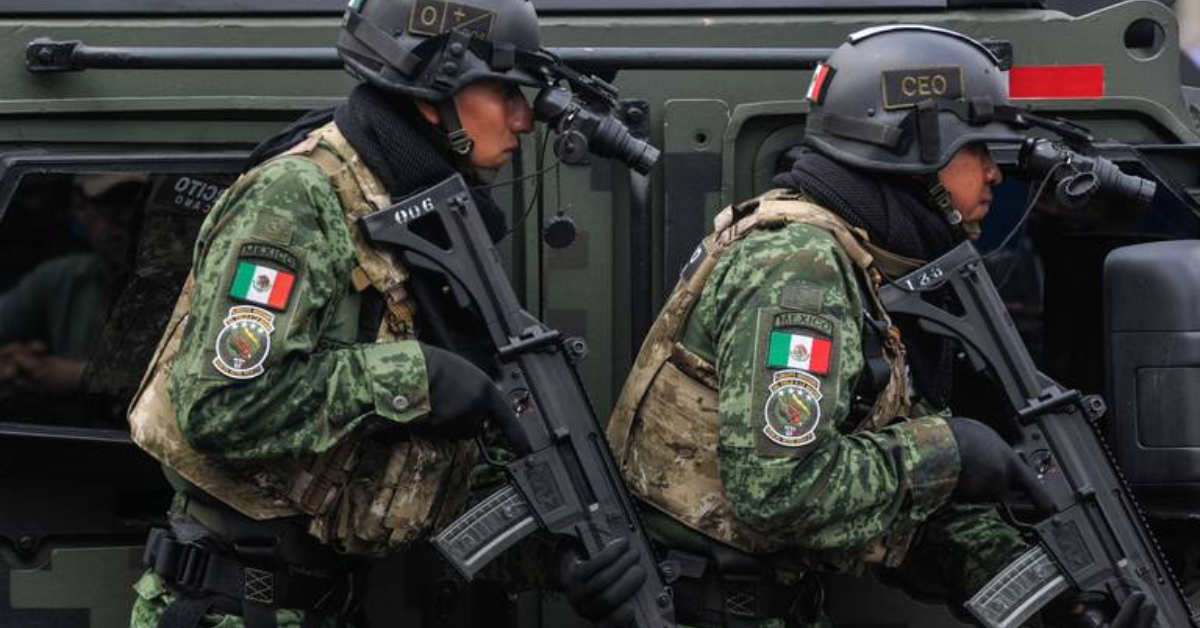
Fresh government data reveals the scale of human-rights violations attributed to Mexico’s armed forces over the past two decades. The Secretariat of National Defense (Sedena) reports that 318 soldiers have been implicated in 163 recommendations issued by the National Human Rights Commission (CNDH). Of them, 154 were formally indicted, 109 were brought to trial, 23 received sentences, 16 were acquitted and another 16 are on the run.
CNDH cases against Mexican military
The catalogue of abuses is grim: torture, extrajudicial killings, forced disappearances, illegal searches, home invasions, unlawful detention, isolation, rape and abuse of authority. Several emblematic files stand out:
- Naco, Sonora (Aug. 3, 2007): A detainee later appeared dead with signs of torture. Twelve tenientes linked to the case are still fugitives.
- Comitán, Chiapas (Sept. 18, 2009): Soldiers fired on a truck that failed to stop at a checkpoint, killing one person and injuring three. Two soldiers fled.
- Cuernavaca, Morelos: Two people were allegedly detained, disappeared and killed. One soldier remains wanted.
- Tijuana, Baja California (Nov. 24, 2020): An internal case where a soldier died of bronchoaspiration; one serviceman is sought.
Sentences have been rare. In a widely publicized 2016 torture video, a captain received just over a year in prison and was freed in 2019; a female soldier was released for lack of evidence, and charges against a major were dropped. Another 2012 Chihuahua case involving an arbitrary use of force and corpse exhumation was kicked to a civilian judge and closed after the court declined military jurisdiction.
New wave of recommendations
From 2023 to mid‑2025, Sedena received at least 22 additional CNDH recommendations, most deemed “grave” violations. Twelve came in 2023, five in 2024 and five so far in 2025, spanning Chihuahua, Sonora, Chiapas, Mexico City and Guerrero. The trend underlines that oversight has tightened, but accountability still lags.
The accountability gap
Mexico’s legal framework allows military personnel to be tried in civilian courts for abuses against civilians, yet prosecutions drag and convictions are scarce. Families and rights advocates argue that opaque investigations, jurisdictional wrangling and slow-moving courts perpetuate impunity.
What’s next: Congress faces mounting pressure to strengthen civilian oversight of the armed forces, limit their policing role and ensure CNDH recommendations trigger binding actions. For now, the numbers show a system where most accused soldiers are still waiting for justice—or have slipped away from it.
Mexico, CNDH, human rights, Sedena, military, impunity, fugitives, recommendations, justice