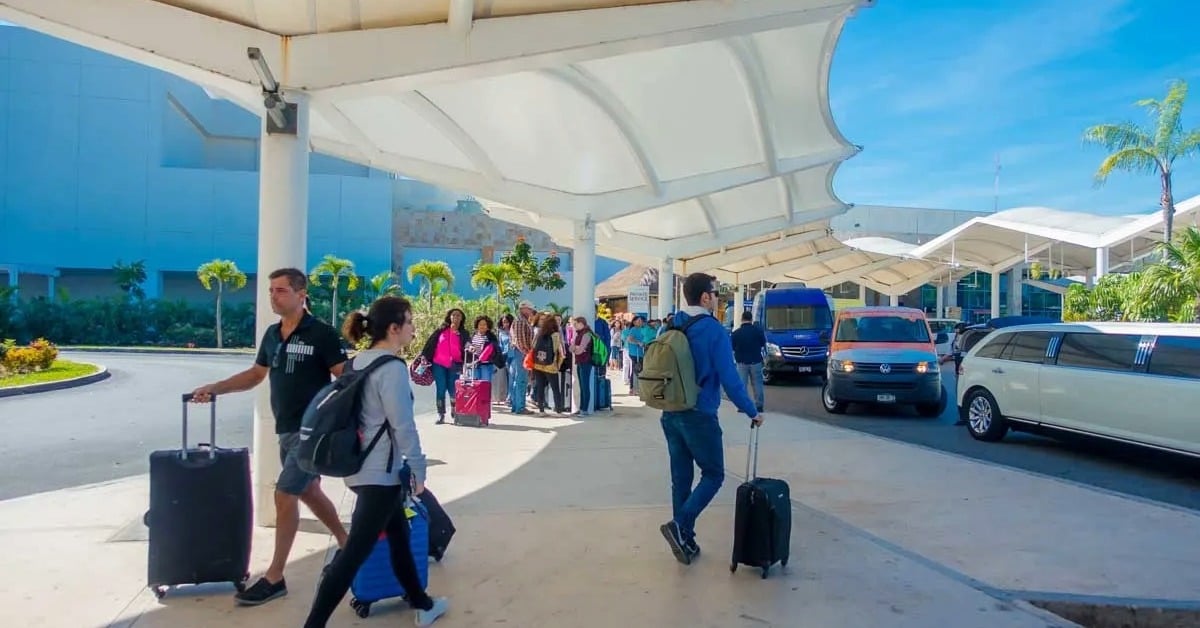
Cancún, QR – Colombian Ambassador to Mexico Fernando García Manosalva announced a seven-point agreement aimed at reversing a sharp decline in Colombian visitors and curbing cases of denial and mistreatment at Cancún International Airport. Central to the deal is a new pre-registration system requiring Colombians to complete a questionnaire before arrival, giving Mexican immigration authorities advance access to their information and reducing uncertainty at entry.
The agreement was reached following a meeting between the Colombian embassy, immigration officials from Quintana Roo, and representatives of the National Immigration Institute (INM) at Cancún International Airport (AIC). The pre-registration measure is expected to begin rolling out in a couple of months, with officials framing it as a way to provide travelers with clearer expectations and fewer surprises when they land.
Ambassador García Manosalva emphasized that Colombia had been Mexico’s second-largest source market for tourists, but growing reports of rejection and mistreatment by INM staff had eroded that position. He said the inconsistent treatment and the fear that a trip could be halted upon arrival have driven Colombian travelers to look elsewhere, dropping Colombia to fourth place behind Canada and Argentina. The ambassador framed the new protocol as a corrective step to restore trust and reliability for Colombian visitors.
Data from the Center for Advanced Research in Sustainable Tourism (STARC) at Anáhuac Cancún underscores the urgency. In the first four months of 2025, the Mexican Caribbean saw a 45% drop in arrivals from Colombia compared to the same period in 2024. Officials and tourism stakeholders are pinning hopes on the pre-registration system to stem the slide by giving prospective visitors more certainty that they will be allowed entry—provided they meet the clarified requirements.
The advance questionnaire will collect basic traveler information and flag any potential issues ahead of time, aiming to streamline the inspection process and minimize subjective or inconsistent decisions at the immigration desk. Officials said the pre-registration will include a transparent checklist of documentation and entry criteria so that Colombians know upfront what is expected of them when they arrive in Quintana Roo.
Beyond the questionnaire, the broader seven-point pact includes commitments to improve training for INM personnel on fair treatment, establish clearer communication channels for grievances, and monitor implementation to ensure the agreement translates into real change at the arrival gates. Embassy sources indicated there will also be follow-up mechanisms to track whether travelers still face unjustified rejections or hostile treatment once the new steps are in place.
Tourism industry observers in both countries have noted that reputational damage from entry denials can outpace even sharp marketing efforts. “Travelers remember being turned away or questioned without explanation more than they remember promotional campaigns,” said one local tourism analyst. Restoring Colombia’s position among top feeder markets to Quintana Roo hinges not just on attracting visitors but on ensuring the arrival experience feels predictable and respectful.
The initiative also carries economic weight. Colombia has traditionally delivered high-value visitors to the Mexican Caribbean, and the drop in their numbers has rippled through hotel bookings, excursions, and related service sectors. Local tourism officials are now coordinating with Colombian consular staff to communicate the new pre-registration pathway through travel agencies and official channels, hoping to signal to potential visitors that Mexico is addressing the problem proactively.
The embassy and Quintana Roo immigration authorities plan to release implementation details in the coming weeks, including the platform or portal for pre-registration, the specific timing of the rollout, and the support available to travelers who encounter issues. Ambassador García Manosalva framed the agreement as a turning point: “We want Colombians to feel welcomed, not wary, when they choose Mexico. This system will give them the confidence that their trip will proceed as planned if they comply with the clearly stated requirements.”
Restoring Colombia’s status as a leading tourism market for Mexico will depend on whether the pre-registration process reduces perceived risk at arrival and whether the broader reforms on treatment and transparency stick. For now, officials are betting that early visibility into traveler data and better communication can begin to rebuild a relationship strained by bureaucratic friction and uncertainty.