Conagua has paused paperwork for multiple Los Cabos projects, including an IMSS hospital, alarming officials as delays ripple into health and growth.
Los Cabos is used to living with delays. But this one is landing in a sensitive place: health care and basic city growth.
Local officials in Baja California Sur say the state office of the National Water Commission (Conagua) has paused administrative processing for several projects in Los Cabos. The hold-up is described as paperwork, not bulldozers, but it still stops work from moving forward. Among the projects caught in the pause is the planned new regional hospital for the Mexican Social Security Institute, IMSS.
Conagua rarely makes headlines in resort towns. Yet it sits on many of the keys that let a project move from planning to construction, especially when water supply, drainage, or federal rights-of-way are involved. That is why a paperwork pause, even a temporary one, can feel like a hard stop.
Mayor Christian Agúndez Gómez has framed the problem as a breakdown with the local Conagua office. He said the city and the state government went to Mexico City to meet with Conagua’s federal leadership because they were not getting answers at the state level. “Conagua local does not help us,” he said in Spanish, describing the process as running into “little stones in the road.” He also warned that an issue involving Conagua could leave the IMSS hospital project inactive for days, weeks, or months.
Conagua pauses Los Cabos
The original concern is simple: when a federal agency pauses a file, local projects can’t clear the next gate. Conagua’s job is to regulate national waters and handle permits and authorizations tied to water use, discharges, and works that touch federally managed water zones. If a project needs Conagua sign-off at any stage, a delay in trámites can quickly become a delay on the ground.
In Los Cabos, the pause is being linked to a mix of projects. Local authorities have pointed to municipal urban improvements aimed at upgrading public spaces and strengthening the city’s look and feel. The projects described so far are broad, and officials have not released a public list with each permit number or deadline. They have said that multiple files are not moving and that the situation has been raised with Conagua at the federal level.
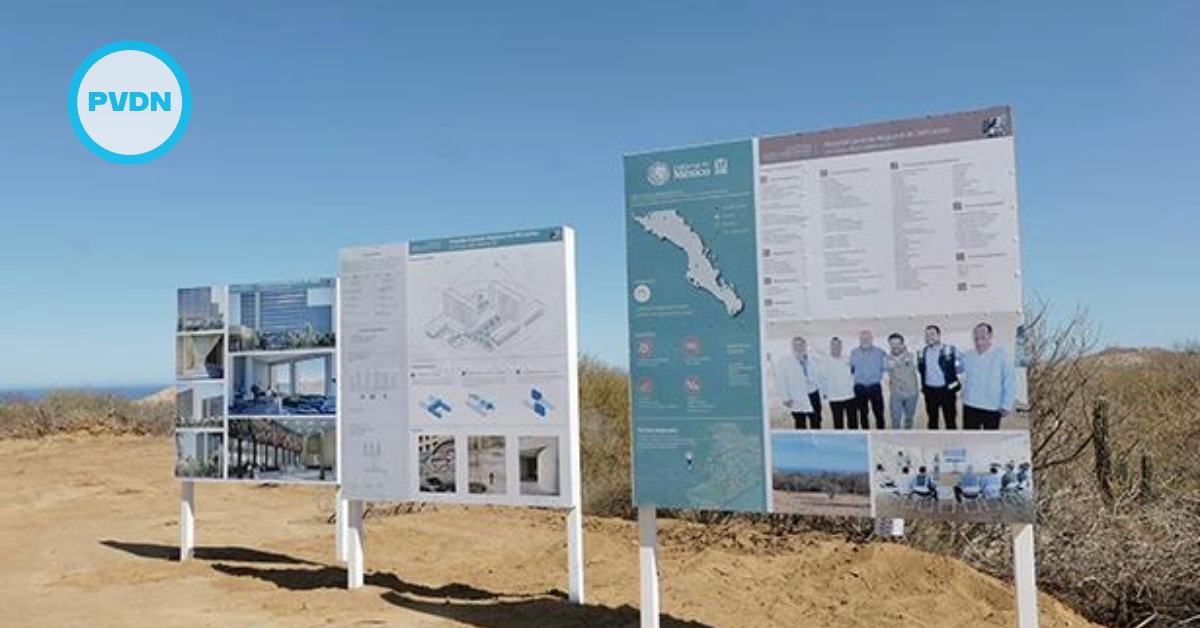
The highest-profile project in the discussion is the new IMSS Hospital General Regional planned for Los Cabos. IMSS launched the project publicly on May 18, 2025, in an event led by President Claudia Sheinbaum and IMSS director Zoé Robledo. IMSS described the hospital as a 260-bed facility designed to expand care in the region and, under an “IMSS Universal” model, serve both insured patients and people without social security.
Since then, IMSS has continued to describe the hospital as a major regional build. In October 2025, IMSS said its Technical Council approved multi-year contracting for three regional hospitals, including Los Cabos. In that same update, IMSS again cited 260 beds for Los Cabos and said the hospital’s zone of influence would exceed 894,000 people, reflecting how quickly demand has been rising in the area.
At the municipal level, Los Cabos officials have been working to keep the hospital moving through the approval maze. In July 2025, the city reported holding a technical follow-up meeting with agencies including IMSS, the federal transport and infrastructure secretariat, and local departments that handle ecology, civil protection, and water services. The stated goal was to align technical needs and secure the authorizations needed to expedite construction.
That is what makes the current pause so unnerving for many residents. Los Cabos has a growing population and a heavy tourist load. When health infrastructure is late, people feel it first in crowded clinics, long waits, and longer drives for specialized care. When public works are late, the pressure shifts to overstretched systems that were already behind.
Los Cabos sits at the center of Mexico’s water stress story. The municipality has long faced a tight water supply, aging infrastructure, and rapid growth. Water service is now a basic limiter on housing and health care and economic expansion.
What the pause could mean next
The immediate question is whether the pause is temporary friction or the start of a longer bottleneck. Conagua has a nationwide portfolio and a heavy workload. Even small administrative changes can slow local processing when a file needs review, correction, or a new round of technical requirements. But the political temperature rises fast when the projects involved are visible and federally backed.
Federal and local institutions have promoted major efforts to modernize the local water system and improve efficiency.
For the IMSS hospital, the risk is not only timing. Delays can change costs, contracts, and the sequence of work. A stalled authorization can also create domino effects, because large projects often depend on coordinated sign-offs across agencies, utilities, and safety departments. That is why local officials want clarity on what is missing, who must provide it, and when the file can move again.
For residents, the standard is not perfection. It is transparency and predictable timelines. If the pause is based on a technical issue, officials can explain what must be fixed. If it is a process issue, Conagua can clarify the steps and the responsible office. Either way, the city needs a clear path forward, because the cost of waiting in Los Cabos is paid in daily life.