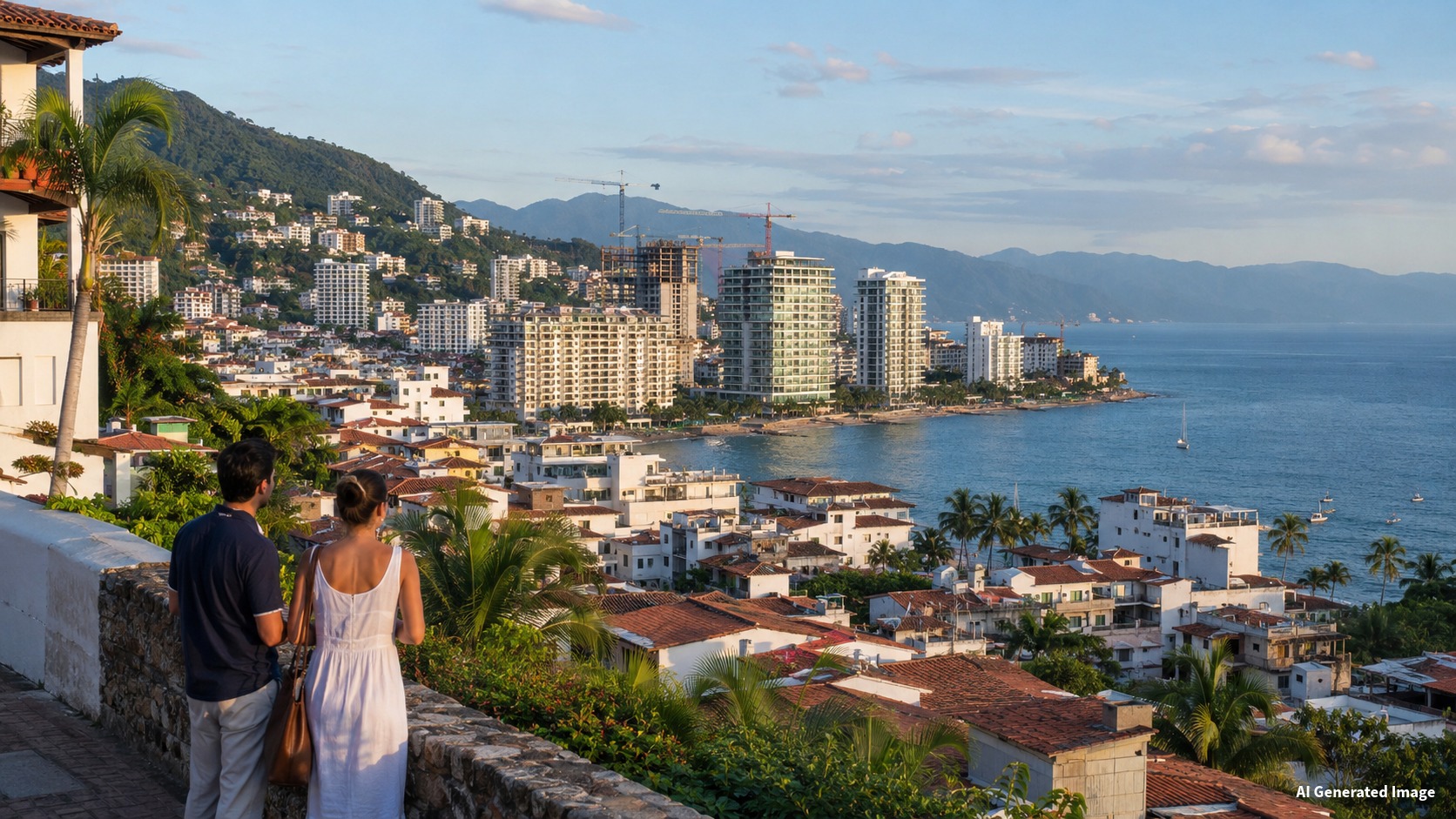
Puerto Vallarta still looks affordable from a distance, especially compared with coastal cities in the United States and Canada. Inside Mexico, the picture is more complicated. Rent, restaurant prices, beach-area premiums, and air conditioning can push monthly costs higher than many people expect. A comparison with Mérida, San Miguel de Allende, Mexico City, Guadalajara, Mazatlán, and Playa del Carmen shows where Puerto Vallarta is still manageable, where it is expensive, and why the cheapest city on paper is not always the best fit.
Puerto Vallarta Costs More Than You Might Think
Puerto Vallarta is one of Mexico’s more expensive places to live when compared with several other popular cities. The clearest reason is housing, followed by restaurant prices, beach-area premiums, imported goods, air conditioning, and the daily habits that come with living in a tourist economy.
That does not mean Puerto Vallarta is unaffordable. It means the city is easy to misread. Someone comparing Puerto Vallarta with Los Angeles, Vancouver, or Toronto may still see a deal. A person comparing it with Mérida, Guadalajara, or Mazatlán will likely see a premium.
Current cost comparisons put Puerto Vallarta near the top among Mexican cities tracked by user-submitted price indexes. San Miguel de Allende sits in roughly the same range. Mexico City can be more expensive for rent in certain neighborhoods, but Puerto Vallarta often catches up through food, services, and tourism-driven convenience costs. Mérida and Guadalajara usually come in lower. Mazatlán appears cheaper on rent and restaurant spending, though some public comparison tools have less complete data for that city.
The better question is not whether Puerto Vallarta is expensive in the abstract. The better question is what kind of life someone is pricing.
Puerto Vallarta’s Price Problem Starts With Rent
Rent in Puerto Vallarta has become the dividing line between a comfortable budget and a strained one. A simple apartment outside the most desirable areas can still keep monthly costs under control. Move closer to the beach, Zona Romántica, Marina Vallarta, Versalles, the Hotel Zone, or a polished condo building, and the math changes quickly.
A one-bedroom apartment outside the center may cost around 12,000 to 18,000 pesos per month. Better-located one-bedrooms often run between 18,000 and 30,000 pesos, while beach-area or premium units can climb into the 30,000 to 50,000 peso range or higher. Those numbers make Puerto Vallarta harder to compare with inland cities, where central housing can cost less and everyday life is less tied to tourism.
Short-term rentals have also shaped expectations. Owners who can rent by the night often price long-term units with that market in mind. Furnished rentals, ocean views, elevators, pools, parking, security, and walkable access to restaurants all add to the monthly bill.
A lower rent is still possible, but it usually requires compromise. The apartment may be farther from the beach, older, hotter, less updated, unfurnished, uphill, outside the tourist corridor, or harder to find through English-language channels.
Puerto Vallarta vs. Mérida
Mérida is usually cheaper than Puerto Vallarta, especially on rent. Current city comparisons place Puerto Vallarta’s rent well above Mérida’s, with restaurant and grocery costs also higher there.
That difference matters because Mérida gives people a large city with hospitals, shopping, airport access, colonial neighborhoods, and nearby Gulf Coast beaches without the same resort-town pressure. Housing supply is broader, and many neighborhoods are built around local life rather than tourism.
The tradeoff is climate. Mérida’s heat can be punishing, and electricity bills can climb when air conditioning runs heavily. A cheaper apartment can become less cheap if it is poorly insulated, exposed to direct sun or cooled all day.
Even with that caveat, Mérida usually gives more budget flexibility than Puerto Vallarta. Someone willing to live inland, handle the heat, and use the city as a base rather than a beach destination will often get more space for the money.
Puerto Vallarta vs. San Miguel de Allende
San Miguel de Allende and Puerto Vallarta are closer than many people assume. Current comparisons put the two cities in a similar cost range overall, with small differences by category.
The spending pattern is different. San Miguel de Allende has a luxury colonial-town premium, especially in Centro and nearby neighborhoods. Puerto Vallarta has a beach-and-tourism premium, strongest near the ocean and restaurant corridors.
In San Miguel, higher costs may show up through boutique housing, imported goods, private services, galleries, restaurants, and homes designed for buyers with outside income. Puerto Vallarta pushes the budget through beachside rent, air conditioning, taxis, restaurants, building fees, and miscellaneous spending.
A person choosing between the two should treat them as similar-price cities, not as a cheap-versus-expensive comparison. San Miguel may feel more contained and walkable. Puerto Vallarta offers the ocean, a broader local economy, and a more direct connection to the resort market. Neither city is the low-cost version of Mexico anymore.
Puerto Vallarta vs. Mexico City
Mexico City is complicated because it has several markets all in one place. A person renting in Roma, Condesa, Polanco, Juárez, Cuauhtémoc, or parts of Miguel Hidalgo may face prices that rival or exceed those in Puerto Vallarta. Someone living farther from those neighborhoods can lower housing costs while still having access to public transportation, markets, hospitals, and cultural life.
Direct comparisons show that Mexico City rent can be higher than Puerto Vallarta’s, while Puerto Vallarta can be higher on several daily cost categories. That is why the two cities can feel surprisingly close in total monthly spending.
Mexico City offers one major budget advantage: scale. There are more neighborhoods, more transit options, more doctors, more markets, more competition, and more ways to live without a car. Puerto Vallarta is smaller, and the desirable zones are easier to price up because there are fewer of them.
The capital can still become far more expensive than Puerto Vallarta if the budget is built around high-demand neighborhoods, private schools, frequent restaurants, ride-hailing, and premium services. A careful Mexico City budget, though, has more room to maneuver than a beach-area Puerto Vallarta budget.
Puerto Vallarta vs. Guadalajara
Guadalajara is generally cheaper than Puerto Vallarta. Current comparison data puts Puerto Vallarta above Guadalajara for overall cost, rent, restaurants, and groceries.
That difference is important because Guadalajara is Mexico’s second-largest metro area, with major hospitals, universities, shopping, tech employment, cultural venues, and a large local housing market. It also has more neighborhood variety. A person can spend heavily in Providencia, Americana, Chapalita, Puerta de Hierro, or Andares, but lower-cost options exist across a much wider urban area.
Puerto Vallarta has fewer layers. Once someone wants walkability, beach access, a furnished apartment, and reliable services, the search quickly narrows to areas where many others want the same things.
Guadalajara also offers better access to domestic travel, private healthcare options, and big-city services. The tradeoff is traffic, air quality, urban scale, and distance from the ocean. Budget-wise, Guadalajara usually gives more bang for the peso.
Puerto Vallarta vs. Mazatlán
Mazatlán is one of the clearest examples of a beach city that can still cost less than Puerto Vallarta. Public comparison data is thinner for Mazatlán, but available rent and restaurant comparisons point in the same direction: Puerto Vallarta is significantly higher.
The difference comes from market identity. Puerto Vallarta has a long-established international tourism and real estate economy, with prices shaped by retirees, remote workers, vacation rentals, cruise passengers, resort traffic, and investors. Mazatlán has tourism too, but it has historically kept a larger share of everyday Mexican city life in the budget equation.
That does not make Mazatlán cheap in every neighborhood. Beachfront areas, newer towers, and tourist corridors can still be expensive. Even so, people comparing West Coast beach cities often find Mazatlán offers more housing value than Puerto Vallarta.
The tradeoff is personal. Puerto Vallarta has a more established international service network, a larger English-language comfort zone, strong air connectivity, and a softer landing for many newcomers. Mazatlán may offer better rent, but it can require a different adjustment.
Puerto Vallarta vs. Playa del Carmen
Playa del Carmen and Puerto Vallarta are both shaped by tourism, beach demand, and outside money. Current comparisons place Puerto Vallarta above Playa del Carmen for overall cost, rent, restaurants, and groceries, though both cities can become expensive fast in the most desirable areas.
Playa del Carmen has its own pressure points. The Riviera Maya market is tied to Cancún, Tulum, vacation rentals, international tourism, beach clubs, and a fast-changing real estate sector. Puerto Vallarta’s market is older and more geographically constrained, with mountains pressing the city toward the bay and limiting the most desirable flat, central areas.
A person can still find lower rents in Playa del Carmen by moving away from the beach or choosing less polished housing. The same is true in Puerto Vallarta, but the most walkable beach-adjacent zones in Vallarta have become expensive enough that “Mexico beach town” expectations can be badly outdated.
Both cities reward people who can live outside the tourist core. The biggest budget mistakes happen when someone prices the city through vacation habits: eating out constantly, using taxis for every errand, renting furnished units near the beach, and shopping mostly in convenience-oriented areas.
Where Puerto Vallarta Still Makes Sense
Puerto Vallarta can still work financially when the housing choice is disciplined. The city becomes more manageable for people who rent outside the most expensive zones, cook often, use local markets, limit their use of taxis, understand seasonal electricity bills, and avoid treating every week like a vacation.
The strongest value is not always the lowest rent. A slightly higher rent in a cooler, better-built apartment can beat a cheaper unit that requires constant air conditioning. A place near daily errands can reduce transportation costs. Reliable internet, good ventilation, safe stairs, water pressure, and shade can matter as much as square footage.
Healthcare access is another part of the comparison. Puerto Vallarta has private clinics, specialists, and hospitals, but more complex care may still lead people to Guadalajara or Mexico City. That travel cost belongs in the budget, especially for anyone managing ongoing medical needs.
Food costs depend heavily on habit. Eating in tourist corridors will make Puerto Vallarta feel expensive. Shopping at local markets, cooking at home, and learning neighborhood prices keep the city closer to a normal Mexican budget.
The City Rankings Depend on Lifestyle
A simple ranking would miss the point, but the pattern is clear. Mérida, Guadalajara, and Mazatlán usually offer lower monthly costs than Puerto Vallarta. San Miguel de Allende is roughly comparable. Mexico City can be cheaper or more expensive depending on the neighborhood. Playa del Carmen is another beach-market comparison, though current data places Puerto Vallarta higher across several categories.
Puerto Vallarta’s premium comes from a narrow set of choices that many people want at once: beach proximity, furnished housing, walkability, restaurants, services, views, security, air conditioning, and convenience. Remove some of those requirements, and the city becomes easier to budget. Keep all of them, and Puerto Vallarta starts behaving less like a bargain and more like a competitive coastal market.
The most realistic budget starts with rent, then adds the costs that are easy to underestimate: electricity, private healthcare, restaurant habits, transportation, insurance, visitors, maintenance, imported goods, and emergency savings. In Puerto Vallarta, the gap between “I can afford Mexico” and “I can afford this version of Puerto Vallarta” can be wide.