This article requires an Insider Subscription level for access. From an Ixtapa shooting to road deaths, beach closures, and missing women, our October report examines Puerto Vallarta’s monthly safety picture.
October brought another reminder that safety in Puerto Vallarta can’t be measured by police reports alone. A hotel employee was shot and killed outside a sports facility in Ixtapa. Two people lost their lives in separate crashes on the Libramiento. Families blocked one of the city’s busiest roads demanding answers about two missing young women. And for much of the month, dangerous surf and approaching hurricanes kept emergency crews busy.
There was some encouraging news, too. A national survey released in October found that fewer Puerto Vallarta residents considered their city unsafe than they had three months earlier. A local court also handed down a 32-year prison sentence in a murder case involving an elderly woman.
But the latest survey results come with an uncomfortable comparison. Residents felt considerably less safe than they had just one year earlier.
This first edition of the Puerto Vallarta Monthly Safety Report looks beyond individual headlines to examine what happened during October, what official records tell us about crime, and where serious questions remain unanswered.
One limitation needs to be clear from the beginning. As of November 15, the federal government has not yet published its complete October 2026 municipal crime figures. The latest available data covers January through September. That means we can examine October’s documented incidents and the existing crime baseline, but we cannot yet give a reliable month-to-month comparison of October and September crime.
That’s a distinction worth keeping. A month with several frightening headlines isn’t necessarily the month with the most crime. And a quiet news cycle doesn’t mean nothing happened.
The Numbers Behind Puerto Vallarta’s Crime Problem
Before looking at individual cases, we need to understand the city’s existing crime picture.
According to the Secretariado Ejecutivo del Sistema Nacional de Seguridad Pública (SESNSP), the most recent available municipal figures cover the first nine months of 2026. The figures below are drawn from those records, as compiled in the Puerto Vallarta municipal crime database.
Puerto Vallarta crime statistics — January through September 2026
| Crime category | Reported investigations |
|---|---|
| Intentional homicide | 22 |
| Intentional assault or injury | 332 |
| Vehicle and motorcycle theft | 331 |
| Business robbery | 140 |
| Residential burglary | 116 |
| Street robbery | 102 |
| Family violence | 781 |
| Fraud | 367 |
| Extortion | 13 |
These figures cover January–September 2026, not October. They reflect offenses recorded in official investigative files and may be revised. Categories are reported separately and should not be added together as a measure of unique victims.
A few numbers deserve closer attention.
Start with family violence. Authorities recorded 781 investigations in the first nine months of the year. That’s substantially more than the number of reported home burglaries, business robberies or vehicle thefts.
It’s also a reminder of something that doesn’t always come through in public discussions about crime. Much of the harm people face happens inside homes, away from the streets where police patrol and cameras operate.
The 367 fraud investigations also matter. Fraud can involve financial losses without a confrontation or physical violence, and reported cases may cover several different methods. These statistics don’t establish how many involved online scams, property transactions or false employment offers, so we shouldn’t assign them to those categories without more detailed records.
Vehicle theft remains another significant concern, with 331 investigations through September. Residential burglary and business robbery together accounted for 256 reported cases.
The 22 intentional homicide investigations provide an important baseline for understanding serious violence. But a homicide investigation isn’t necessarily the same as one victim, and these figures shouldn’t be confused with a count of all deaths investigated by police.
There is no reliable October-versus-September crime percentage to publish yet. When October’s records become available, we’ll be able to measure whether the numbers actually moved and in which categories.
There’s another complication. Mexico began using a revised SESNSP crime-reporting methodology in 2026. Straight comparisons with older datasets need to account for those changes.
And even the best official statistics have limits. They record crimes that entered the reporting system, not every crime committed. People who never report a theft, assault or threat aren’t represented in the same way as people whose complaints result in an investigation.
A Killing in Ixtapa and Theft in the City’s Commercial Areas
One of October’s most serious reported crimes occurred outside the sports dome in Ixtapa.
A man sitting inside a vehicle was shot and killed near the facility. By October 23, authorities had identified him as an employee of the Marriott hotel in Puerto Vallarta, where he had worked for more than six years in the finance department.
Investigators were still working to determine who carried out the attack and why.
Circumstances of a shooting often invite immediate speculation about organized crime. An armed attack may raise those questions, but the presence of gunmen alone doesn’t establish a cartel connection.
Until investigators release more information, this remains a homicide with an unidentified motive and no publicly established explanation for why the victim was targeted.
Elsewhere, the crimes making news were different.
In mid-October, municipal police arrested a 20-year-old man following the reported robbery of two older American visitors in downtown Puerto Vallarta. Officers recovered their belongings, according to Vallarta Daily’s October 15 report.
The arrest was a positive development for the victims, but it wasn’t a conviction. The final legal outcome wasn’t established in the information available for this report.
Earlier in the month, reports described several commercial thefts, including incidents involving businesses in La Aurora and on Calle Viena. The report also described a vehicle stolen from an automobile dealership.
For a business owner, a break-in can mean more than the value of the stolen merchandise. Broken equipment, damaged doors, lost paperwork and interrupted trading all carry costs.
Still, several incidents reported close together don’t establish that commercial robbery increased across the municipality. That will require the monthly figures.
Where the incidents occurred
October’s reporting placed significant incidents in Ixtapa, Centro, La Aurora and other parts of Puerto Vallarta.
We should resist turning that into a ranking of dangerous neighborhoods.
The available municipal crime statistics don’t provide a verified breakdown that would allow us to compare the risk in Ixtapa with the risk in Versalles, Centro, Emiliano Zapata or Marina Vallarta.
News coverage also tends to concentrate on incidents that generate police activity, serious injuries or public attention.
A neighborhood with several widely reported crimes isn’t necessarily the neighborhood with the highest crime rate. Without reliable neighborhood-level figures and population comparisons, making that claim would be misleading.
Missing Women and the Families Still Waiting for Answers
October ended with a public demonstration that had nothing to do with routine traffic congestion.
On October 31, families and members of the collective Una Luz Para Nuestros Desaparecidos blocked Avenida Francisco Medina Ascencio near Walmart, demanding progress in the search for two missing young women.
Violeta Alejandra Santana Bueno, 21, and Melissa Anahí Carranza Contreras had disappeared after traveling to Puerto Vallarta on July 27.
According to reporting from the demonstration, the women had reportedly come from Acatlán de Juárez after receiving what appeared to be an employment opportunity.
Violeta’s mother said the family had information about the women’s arrival at the bus station and their subsequent departure in a vehicle. She also questioned the progress of the investigation and the handling of possible surveillance footage.
Those are the family’s allegations about the investigation, not independently established findings of official wrongdoing.
The demonstration lasted more than three hours, beginning around 10 a.m. and ending when traffic was released at approximately 1:30 p.m.
The disappearance itself happened in July. It belongs in the October report because the search remained unresolved at the end of that month, and the families’ public demand for answers was one of October’s most significant safety developments.
The case also raises questions about employment-related recruitment.
In an earlier case, Vallarta Daily reported on two young men found alive in late September after a suspected criminal recruitment scheme. That case became public in October.
The circumstances aren’t proof that the two disappearances are connected. There is no verified basis to combine them into a single investigation.
But alleged job offers are an issue that deserves continued reporting, particularly when applicants are asked to travel away from home without independently verifying who is offering the work.
October also brought renewed efforts to identify the remains of two women discovered months earlier in Puerto Vallarta.
Families and search advocates circulated identifying information in hopes of establishing who the women were.
Those discoveries were made in May, not October. They should not be counted as October homicides.
By the end of October, the search for Violeta and Melissa remained a public concern, and their families were asking the Fiscalía de Jalisco to explain what progress had been made.
A 32-Year Sentence in a Puerto Vallarta Femicide Case
There was also a significant development in the courts.
On October 25, the Fiscalía de Jalisco announced that Mariano “N” had received a 32-year prison sentence for the femicide of a 67-year-old woman in Las Juntas.
The crime occurred on December 9, 2025.
According to reports, the man entered the woman’s home intending to steal. When she confronted him, he attacked her with a bladed weapon, causing fatal injuries.
The defendant accepted responsibility through a shortened criminal procedure. A judge imposed the prison sentence and ordered payment of 633,800 pesos in compensation.
This was a completed judicial result, unlike the investigations still underway in the Ixtapa homicide and other October incidents.
The case is also worth separating from October’s homicide count. The killing took place in 2025; the court ruling came in October 2026.
For anyone following public safety over time, those distinctions matter. A murder can remain under investigation for months, while a conviction announced this month may relate to a crime committed the previous year.
The Libramiento Had Two Fatal Crashes in October
Road safety produced some of the month’s most serious losses.
On October 10, Francisco Josué, a 21-year-old resident of colonia Benito Juárez, died after a motorcycle collided with a Nissan Versa on the Libramiento Luis Donaldo Colosio near the Par Vial.
Emergency workers took him to Clínica 42 of the Instituto Mexicano del Seguro Social, where he later died from his injuries.
The initial investigation included questions about how the vehicles came to collide. Police detained the car’s driver while authorities investigated.
The information available doesn’t establish who was legally responsible for the crash, and it would be wrong to assign blame before the investigation’s findings.
Two weeks later, another fatal crash occurred on the same major road.
On the night of October 24, a Ford Explorer overturned near the intersection of the Libramiento and Calle Bolivia, in colonia Lázaro Cárdenas.
Claudia Cecilia Villa Salvatierra, 40, died at the scene. She had been traveling as a passenger in the vehicle.
According to reports, the vehicle struck roadside infrastructure during the crash. The driver was detained while authorities investigated the circumstances.
These are two documented October traffic deaths. They are not necessarily the full municipality-wide total.
An accurate monthly road safety report will eventually need complete figures from municipal traffic authorities, including fatal collisions, serious injuries, motorcycle incidents and pedestrian deaths.
Individual police stories can’t provide that total.
A white bicycle for Alexa
October also brought a public reminder of a traffic death from September.
On October 24, relatives, friends and cyclists marched from El Pitillal and placed a white bicycle near Macroplaza in memory of Daniela Alexa Martínez González.
Alexa had been struck while riding her bicycle near Avenida Francisco Villa and González Gallo. She died on September 27 after spending five days in the hospital.
Her relatives said the driver left the scene and asked authorities for progress in identifying and locating the person responsible.
Her father said the family had provided investigators with videos that might help establish what happened.
The bicycle was placed close to where she was hit.
Between those two fatal October crashes and the continuing investigation into Alexa’s death, the Libramiento and the city’s major connecting roads deserve more attention than a simple monthly accident count.
Specific questions remain about intersection design, motorcycle safety, driver behavior, enforcement and whether investigations lead to meaningful consequences.
Dangerous Surf and Hurricane Warnings Dominated October
For much of October, the biggest public safety threat wasn’t a crime.
It was the weather.
The month began with dangerous ocean conditions associated with Hurricane Rachel. Beaches and parts of the Malecón faced restrictions, and powerful waves damaged coastal structures.
On October 3, Vallarta Daily reported damage at Playa de Oro, where high surf undermined a structure and rescue crews helped merchants remove belongings.
The situation became more serious when Hurricane Simón approached Mexico’s Pacific coast.
On October 10, Jalisco placed Puerto Vallarta and 21 other municipalities under its highest tropical cyclone alert as the Category 4 hurricane approached the region.
Authorities instructed people to shelter, closed beaches and restricted activities. Airport operations were suspended, while SEAPAL announced a preventive interruption of the city’s water supply.
The Vallarta Daily live coverage of Hurricane Simón documented the changing forecasts, closures and emergency instructions throughout the weekend.
The storm eventually tracked farther west than earlier forecasts suggested, reducing some of the expected direct impacts on Puerto Vallarta.
By the morning of October 12, officials reported no deaths or river overflows associated with the storm in the city.
But the precautions had already produced substantial disruption.
More than 100 flights were canceled, airport operations were interrupted, businesses closed temporarily and classes were suspended.
Those were costs of the storm response, even without the widespread structural damage that had been feared.
The warnings didn’t end with Simón.
Additional Pacific systems, including Trudy and later Vance, kept the region watching forecasts for rain, high surf and possible coastal disruptions.
By October 14, Puerto Vallarta was still maintaining red flags on city beaches. On October 16, Vallarta Daily reported continuing swimming restrictions at several locations across Puerto Vallarta and Riviera Nayarit.
These were warnings about specific conditions at the time, not a statement that every beach remained closed throughout October.
A rescue at Conchas Chinas
One of the month’s most concerning ocean emergencies happened on October 20.
A man lost consciousness while in the water near Playa Conchas Chinas. A lifeguard helped bring him to safety, and emergency personnel arranged his transfer to the ISSSTE hospital.
Public reports identified the emergency as occurring while the man was snorkeling.
Reports differed on some personal details, including his age. The central facts were consistent: he became unresponsive in the water, rescuers intervened, and he required hospital care.
There was no established finding that storm-driven currents caused this particular emergency.
What the case does show is why lifeguard coverage matters beyond days when the surf looks especially dangerous. A swimmer can suffer a medical emergency even when the surrounding water isn’t the immediate cause.
Flooding, Sewage and the Problems Storms Leave Behind
The October weather also exposed problems in the city’s water and drainage infrastructure.
On October 5, SEAPAL Vallarta reported damage and emergency repairs at several locations following heavy rain and high surf.
Crews repaired damaged water pipes in 5 de Diciembre and Vista Océano. They also carried out drainage cleaning near Las Glorias, where sand and debris can interfere with the movement of stormwater toward the sea.
Power failures affected pumping equipment supplying neighborhoods including Villa de Guadalupe, San Esteban and Rivera del Pitillal.
SEAPAL also temporarily stopped operations at the Buenos Aires water treatment plant after the Río Cuale rose, before restoring service and working to normalize supply.
Those details may sound like ordinary maintenance problems, but failures in drainage, pumping and water treatment can quickly become safety concerns during intense rain.
Streets flood. Wastewater can back up. Water supply interruptions affect households and businesses, while accumulated water creates additional sanitation problems.
On October 20, municipal crews were clearing sand from the Las Glorias stormwater outlet.
The work was needed because high surf can push material back toward drainage outlets, limiting their ability to discharge water.
There were also continuing sewage concerns in Versalles and nearby areas.
SEAPAL discussed work intended to address recurring spills, but an announced repair program isn’t the same as confirmation that the underlying problem has been fixed.
Separately, Vallarta Daily reported complaints about a possible wastewater discharge into the ocean in the northern Hotel Zone.
The allegations involved a hotel and prompted calls for inspection. The reporting did not establish that an unlawful discharge had been independently confirmed.
These cases need follow-up because a repair announcement, a public complaint and a completed inspection are three different things.
Garbage collection became another concern
By the end of October, residents in Lázaro Cárdenas and 5 de Diciembre were complaining about missed garbage collections.
As Vallarta Daily reported on October 29, waste was accumulating and residents and businesses reported foul odors.
Garbage collection is usually treated as a public service issue rather than part of a safety report.
It belongs here when missed collections create sanitation concerns, obstruct drainage or leave residents dealing with waste for extended periods.
We don’t have a verified figure for how much garbage accumulated across the municipality in October, nor a complete account of every neighborhood affected.
The complaints, however, were documented. Whether municipal collection schedules and service reliability improved afterward is a question for the next report.
What Police and Local Authorities Did During October
Puerto Vallarta’s police department handled criminal investigations, public order concerns and several planned deployments during the month.
The most visible operation announced near the end of October involved Día de Muertos.
Municipal police said they would reinforce patrols along the Malecón beginning October 30, before concentrating officers at the city’s eight cemeteries for November 1 and 2.
The plan called for more than 200 officers and traffic personnel during the busiest cemetery visits.
Police identified cemeteries including 5 de Diciembre, El Progreso, Ramblases and Ixtapa as important areas for the operation.
The department also assigned patrols and traffic support to manage crowds and access.
This was a planned security deployment. Its announcement alone doesn’t establish whether crime was prevented or whether routine neighborhood policing improved.
The distinction is especially relevant in a city where police may be asked to handle a violent crime investigation, storm-related evacuations and holiday crowd control within the same month.
During Hurricane Simón, city authorities also announced coordinated security patrols with state and federal agencies in evacuated or vulnerable areas to discourage looting.
Those operations were part of the emergency response, but publicly available reporting does not provide enough evidence to calculate how many crimes they prevented.
Measuring police performance
A monthly safety report needs to follow more than the number of patrols or arrests announced.
For October’s most serious incidents, the questions are fairly specific.
Was anyone arrested and charged in the Ixtapa homicide? What happened to the drivers investigated after the two fatal Libramiento crashes? Did the families searching for Violeta and Melissa receive the investigative follow-up they requested?
The Las Juntas femicide conviction shows that a criminal case can reach a judicial result. The other investigations illustrate how much of the public safety picture remains unresolved after the headlines fade.
Future reports should also track police staffing, equipment problems, emergency response capacity and whether municipal spending commitments actually result in improvements.
An announcement about more patrols is useful information. A measurable reduction in crime or faster emergency response would tell us more.
Puerto Vallarta Residents Feel Safer Than in June, but Much Less Safe Than Last Year
One of October’s most important pieces of public safety news came from INEGI.
The agency’s quarterly Encuesta Nacional de Seguridad Pública Urbana, known as ENSU, found that 53.6% of adults surveyed in Puerto Vallarta considered living in the city unsafe in September.
That was a substantial improvement from June, when the figure reached 65.4%.
But the September 2025 reading was just 24.7%.
Puerto Vallarta’s perception of insecurity
Percentage of adults who considered their city unsafe
INEGI ENSU quarterly survey, selected periods. The percentage decreased in the latest quarter but remained well above September 2025.
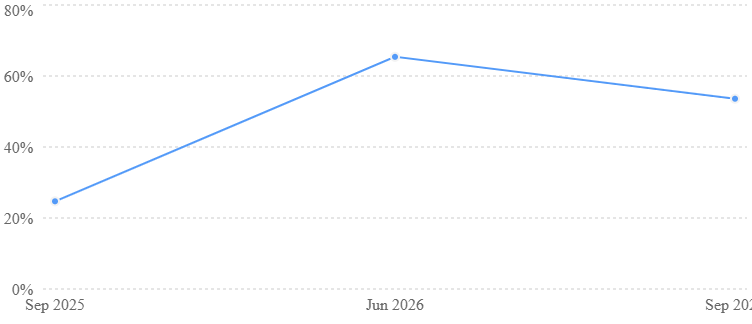
The quarterly improvement was 11.8 percentage points, while the figure remained 28.9 points higher than a year earlier.
For comparison, the national urban average in September 2026 was 58.1%.
The October 25 analysis also identified a difference between men and women in the survey results.
The statistically significant quarterly improvement was concentrated among men. Puerto Vallarta did not record a statistically significant quarterly change among women.
That’s a detail worth following, especially alongside the city’s high number of family violence investigations.
It doesn’t prove that family violence caused the difference in perceptions. INEGI’s survey doesn’t establish that connection.
The survey also measures how people feel about safety, not the number of crimes committed.
And the September survey was conducted before many of the October incidents discussed in this report.
So we shouldn’t describe the 53.6% result as a public reaction to October’s Ixtapa shooting, fatal road crashes, or disappearances.
What it tells us is that Puerto Vallarta entered October with an improvement in public confidence compared with June, but with insecurity perceptions still more than double the level measured one year earlier.
The next ENSU release will help establish whether that improvement continued.
What October Tells Us About Safety in Puerto Vallarta
Looking at the month’s events together, three concerns stand out.
Violent crime and disappearances remain serious unresolved issues. The Ixtapa homicide investigation and the search for two young women who disappeared after traveling for a reported job opportunity deserve continued attention. October’s femicide conviction demonstrates that the justice system can produce a result, but it doesn’t resolve those other cases.
Road safety deserves as much scrutiny as conventional crime. Two documented deaths on the Libramiento and the continuing demand for justice after Alexa’s September death show why fatal crashes should be tracked systematically. The published reports identify individual losses, but not the full scale of the road safety problem.
Storm safety extends well beyond hurricane landfall forecasts. October’s dangerous surf, beach restrictions, water interruptions and drainage problems affected public services even when a storm’s center stayed offshore. Repairs and improvements to water and sewer infrastructure remain part of the city’s emergency readiness.
The available evidence doesn’t justify declaring Puerto Vallarta either safer or more dangerous in October than it was in September.
That judgment needs the municipal crime totals, which haven’t been published yet, along with better information about traffic deaths and emergency incidents.
The citywide ENSU survey showed a meaningful quarterly improvement in how residents viewed safety. It should be reported as encouraging news, while keeping the much larger year-over-year increase in view.
What We’ll Be Watching in November
The next report will have several unresolved questions to follow.
First is the publication of October’s official crime statistics. Those figures should establish whether reported homicides, robberies, vehicle thefts, family violence and other offenses rose or fell compared with September.
We’ll also be following the Ixtapa homicide investigation and any new information about the disappearance of Violeta Alejandra Santana Bueno and Melissa Anahí Carranza Contreras.
The investigations into the fatal crashes on the Libramiento deserve updates, as does the case involving Daniela Alexa Martínez González.
On the public services side, the questions concern whether SEAPAL completed its drainage and sewage work, whether recurring trouble spots experienced further problems, and whether municipal garbage collection returned to a dependable schedule.
The change in seasons will also shift the kinds of risks that deserve regular attention. Dangerous surf doesn’t disappear with the end of the rainy season, and road safety, neighborhood crime and emergency response remain year-round concerns.
This report will return to those subjects each month, using the same categories and geographic boundaries so readers can make meaningful comparisons rather than starting from scratch every time.
For now, one of October’s clearest unanswered questions comes from the final day of the month.
At about 1:30 p.m. on October 31, the families demonstrating on Avenida Francisco Medina Ascencio ended their blockade and traffic resumed.
Violeta and Melissa had not been located.