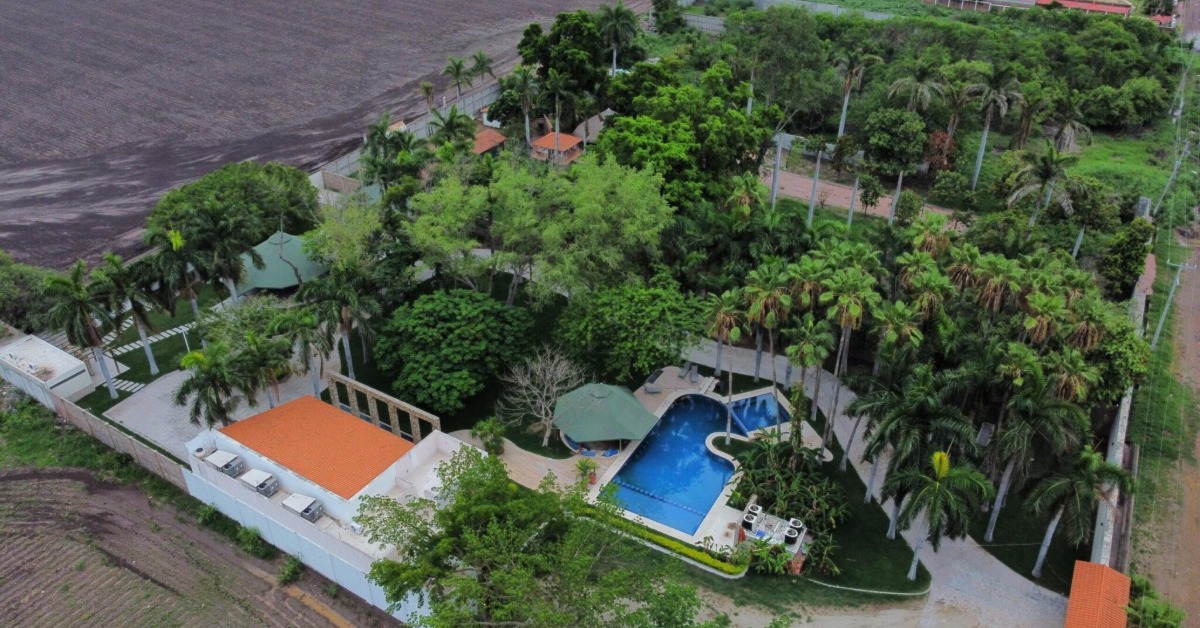
A ranch outside Culiacán has become more than a crime scene. Huertos del Pedregal is now tied to the abduction of Ismael “El Mayo” Zambada, the killing of Héctor Melesio Cuén, the violent break inside the Sinaloa Cartel, and the political crisis surrounding Rubén Rocha Moya. Nearly two years after the events of July 2024, the property remains under federal guard as the legal and political fallout continues to widen.
A Culiacán ranch now sits at the center of a larger crisis
A ranch on the outskirts of Culiacán has become one of the clearest symbols of the fracture inside the Sinaloa Cartel and the political crisis around Rubén Rocha Moya.
The property, known as Huertos del Pedregal, is tied to the July 2024 abduction of Ismael “El Mayo” Zambada, one of the historic leaders of the cartel. It is also tied to the killing of Héctor Melesio Cuén Ojeda, a Sinaloa political figure and former rector of the Autonomous University of Sinaloa.
The ranch is now under federal investigation. It has been described as an abandoned property with official seals, guarded by federal forces. Its importance is not only physical. It has become a reference point for several overlapping stories: a cartel betrayal, a wave of violence, and a case that now reaches into U.S. courts.
For readers outside Sinaloa, the ranch helps explain why this story has remained national news. It is where several versions of events collide.
What happened to El Mayo Zambada
On July 25, 2024, El Mayo Zambada ended up in U.S. custody after arriving by plane in El Paso, Texas. The official U.S. version and Zambada’s later account both rejected the idea that he had surrendered voluntarily.
Zambada said he had been called to a meeting near Culiacán. He claimed the meeting involved a dispute between Rocha Moya and Cuén over the leadership of the Autonomous University of Sinaloa. According to Zambada’s account, Joaquín Guzmán López, one of the sons of Joaquín “El Chapo” Guzmán, arranged the meeting.
Zambada said he was ambushed at the ranch, restrained, placed on a plane, and taken to the United States. He also said Cuén was killed at the same place.
Rocha denied taking part in that meeting. He said he was not in Sinaloa that day and rejected any link to organized crime. His denial has remained central to his public defense.
The Cuén killing changed the case
The killing of Héctor Melesio Cuén became one of the most disputed parts of the story.
The first local version said Cuén was killed during an attempted vehicle robbery at a gas station. That version later came under federal scrutiny. The federal investigation found blood evidence linking Cuén to the ranch, not only to the gas station narrative.
That finding gave new weight to Zambada’s claim that Cuén had been killed at the same site where Zambada said he was kidnapped. It also raised questions about the handling of the initial investigation in Sinaloa.
This is one reason Huertos del Pedregal matters beyond the cartel story. The ranch became a place where questions about cartel violence and public institutions came together.
For many people in Sinaloa, the case sharpened existing doubts about whether state authorities could investigate high-level violence when powerful interests were involved.
The split between Los Chapitos and La Mayiza
The abduction of Zambada was followed by a deeper split inside the Sinaloa Cartel.
On one side are Los Chapitos, the faction tied to the sons of El Chapo Guzmán. On the other side are groups aligned with the Zambada network, often described as La Mayiza or Los Mayos.
The split has reshaped security in Sinaloa since late 2024. Culiacán, Navolato, and nearby areas have seen killings, disappearances, armed clashes, attacks on businesses, and forced displacement. The violence has also affected Mazatlán and rural communities.
This is not only a fight between criminal groups. It has touched everyday life in parts of the state. Families have changed routines. Businesses have closed early. Public events have been canceled. Some communities have emptied as people moved away from conflict zones.
The ranch story helps explain how the cartel fracture began to move from rumor into public evidence. The site now stands as a symbol of the betrayal that helped ignite the conflict.
The Rocha case expands the political fallout
The case took another turn in April 2026, when U.S. authorities accused Rubén Rocha Moya and nine current or former Sinaloa officials of helping the Sinaloa Cartel, especially Los Chapitos.
The U.S. case alleges that cartel support helped Rocha win the 2021 governor’s race. It also alleges that, in exchange, the cartel received political protection and influence over parts of the state security structure.
Rocha denies the accusations. He has described them as false and politically motivated. After the U.S. charges became public, he took a temporary leave from the governorship while the matter is reviewed in Mexico.
The accusations have created a difficult moment for Mexico’s federal government. The case involves a governor from Morena, the ruling party. It also involves U.S. pressure at a time when security cooperation, fentanyl trafficking, extraditions, and sovereignty are already sensitive issues.
Mexico has said any action must be based on evidence and handled through Mexican legal channels. That position is meant to avoid appearing submissive to Washington. It also puts pressure on Mexican authorities to show that serious allegations will not be ignored.
What remains unresolved
The ranch has not answered every question. It has made the questions harder to dismiss.
There are still unresolved issues around who planned the meeting, who was present, who killed Cuén, and how Zambada was taken across the border. There are also legal questions around what evidence U.S. prosecutors have against Rocha and the other accused officials.
A U.S. indictment is not a conviction. It is an accusation that begins a criminal process. For Mexican authorities, the issue is also complicated by extradition rules, local jurisdiction, political immunity, and concerns about sovereignty.
For Sinaloa residents, the legal process may feel distant compared with the daily impact of violence. The cartel split has already left a mark on public life. The Rocha case now adds a political layer to a crisis that began as a cartel betrayal.
Huertos del Pedregal is now more than a ranch. It is a place where Mexico’s cartel war, state politics, and U.S. pressure meet in one unresolved story.