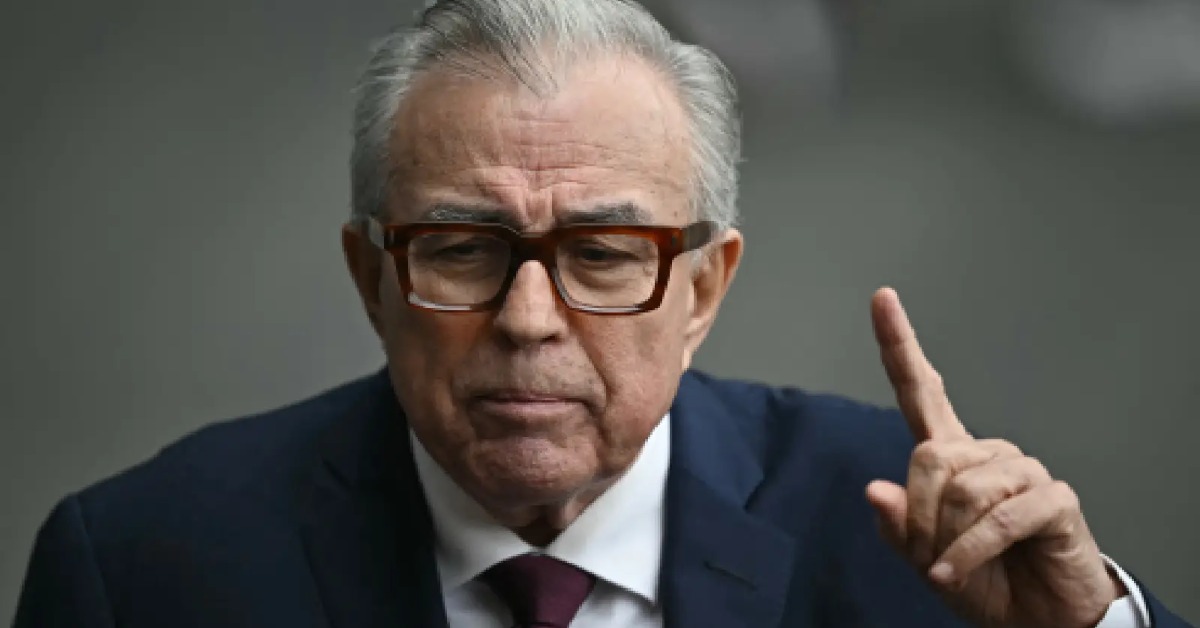
The U.S. case against Sinaloa Governor Rubén Rocha Moya is not just another cartel indictment. It reaches into elected office, Morena politics, extradition law, and the limits of U.S.-Mexico cooperation. President Claudia Sheinbaum says Mexico will not protect criminals, but also will not act without clear proof. That balance now faces its hardest test, as Washington pushes a case that Mexico says must meet Mexican legal standards before any arrest or extradition can move forward.
[adinserter block=”3″]
U.S. indictment opens a new front in Mexico’s cartel fight
A U.S. indictment against Sinaloa Governor Rubén Rocha Moya has opened one of the sharpest political and legal disputes between Mexico and the United States in years.
The case is not limited to a suspected cartel operator or a fugitive drug trafficker. It reaches the sitting governor of one of Mexico’s most-watched states, along with other current and former officials from Sinaloa. U.S. prosecutors accuse them of helping the Sinaloa Cartel, especially the faction known as Los Chapitos, move drugs into the United States.
The charges are serious. They include narcotics importation conspiracy and weapons-related offenses. U.S. authorities say the alleged conduct helped protect cartel operations involving fentanyl, heroin, cocaine, and methamphetamine.
Rocha denies the accusations. He says the case has no basis in truth. He has also framed it as an attack on Mexico’s governing political movement, known as the Fourth Transformation, or 4T.
President Claudia Sheinbaum has taken a careful but firm position. She says her government will not protect anyone who commits a crime. But she also says Mexico will not arrest or extradite citizens based only on accusations from another country.
That is the center of the political storm.
The case now turns on a basic but difficult question: what level of proof must the United States provide before Mexico acts against one of its own sitting governors?
What the U.S. alleges
The U.S. Justice Department says Rocha and nine other current or former Sinaloa officials conspired with leaders of the Sinaloa Cartel. The indictment says the alleged arrangement involved political support, protection, and bribes.
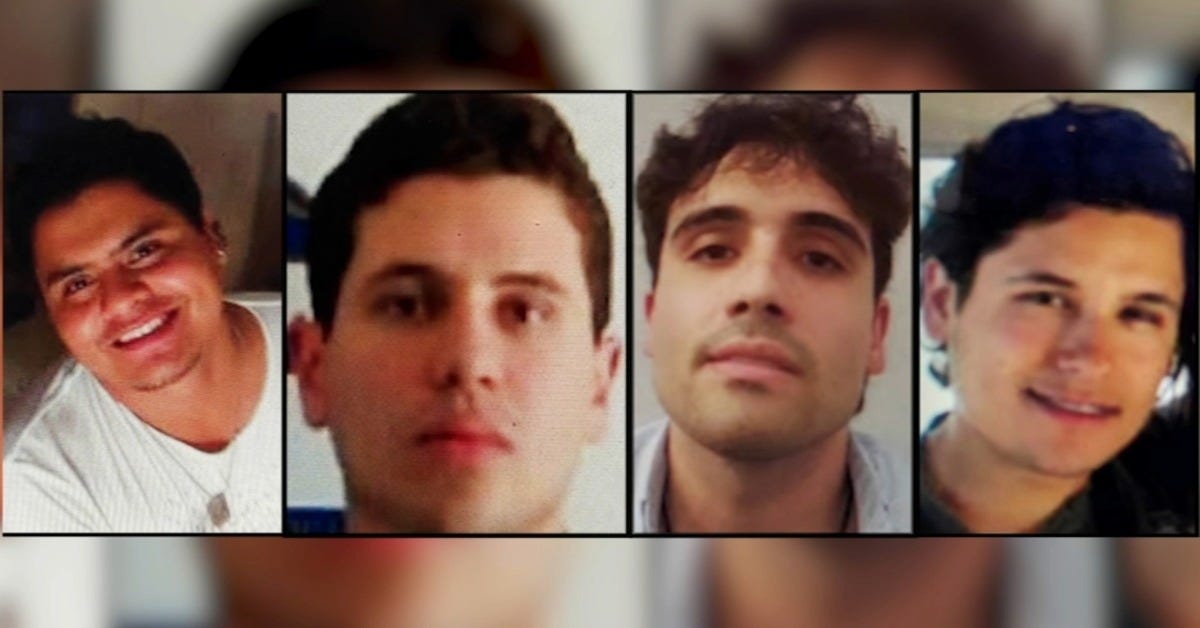
According to the U.S. case, Los Chapitos, the sons of Joaquín “El Chapo” Guzmán, allegedly helped Rocha win the 2021 governor’s race. Prosecutors say that support included intimidation and kidnapping of political rivals.
In return, U.S. authorities allege Rocha promised protection once in office. The indictment says cartel leaders were allowed to operate with impunity in Sinaloa.
The indictment also names officials tied to state and municipal law enforcement. U.S. prosecutors allege they shielded cartel leaders from arrest, passed sensitive law enforcement information to traffickers, and directed police to protect drug shipments.
One former Culiacán police commander faces additional kidnapping-related charges. U.S. prosecutors allege those charges are tied to the deaths of a DEA source and the source’s relative.
The Justice Department says all defendants are presumed innocent unless proven guilty. That point is important, especially because the case has already become a political weapon in both countries.
For now, the U.S. has made formal criminal accusations. It has not proven them in court.
Sheinbaum’s response draws the line
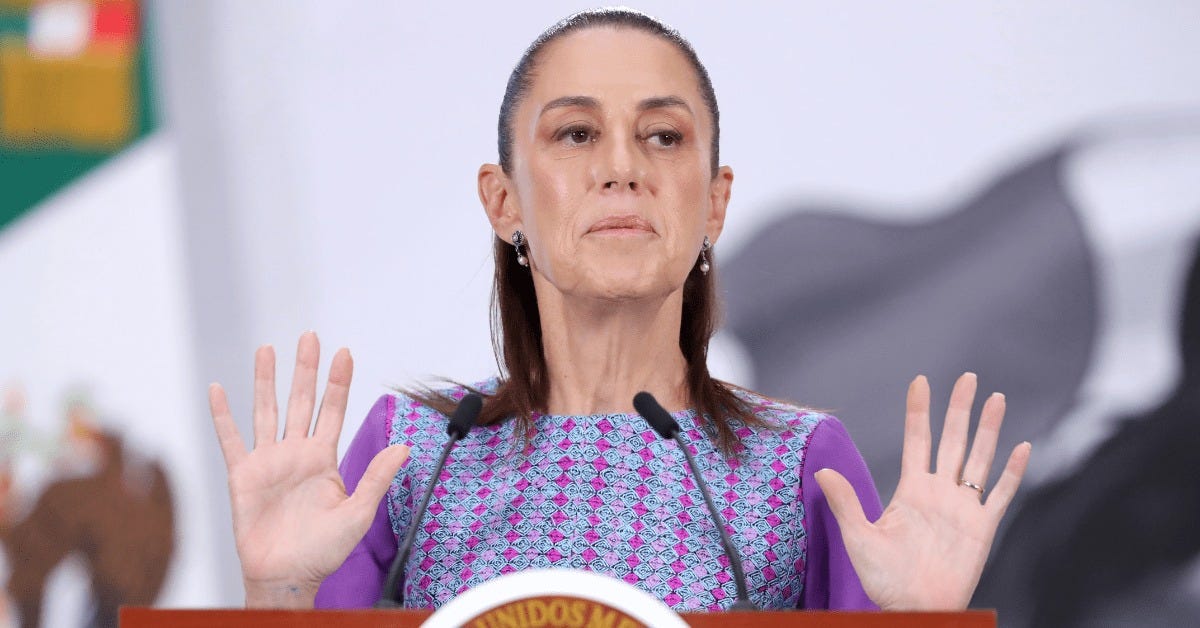
Sheinbaum’s response was not a simple defense of Rocha. It was also not a full embrace of Washington’s case.
Her message had two parts.
First, she said Mexico will not shield anyone who commits a crime. That gives her room to support a Mexican investigation if the evidence is strong enough.
Second, she said Mexico will not allow foreign interference or political pressure to decide what happens inside the country. That gives her room to resist a U.S. demand she considers unsupported.
Sheinbaum has said the Fiscalía General de la República, Mexico’s federal prosecutor’s office, must review the material and determine whether there is enough evidence under Mexican law.
Her position is that Mexico needs clear, strong, and irrefutable evidence before acting. She also suggested that, without such evidence, the U.S. indictment could be viewed as political.
That is a high-stakes statement.
If the U.S. provides stronger evidence, Sheinbaum may have to allow the case to move forward in Mexico. If she refuses despite stronger evidence, she risks being accused of protecting an ally. If the evidence remains thin, she can argue that Mexico is defending due process and sovereignty.
This is the narrow path she is trying to walk.
[adinserter block=”3″]
Extradition is not automatic
The U.S. request does not mean Rocha or the other defendants will be arrested and sent north immediately.
Mexico and the United States have an extradition treaty, but extradition still requires legal review. Mexico must decide whether the evidence meets the standard required under Mexican law.
That matters because Sheinbaum’s government says the material received so far does not prove the accused officials’ responsibility. The Foreign Ministry said the U.S. request was sent to the Attorney General’s Office for review.
This distinction is important for international readers. An indictment in the United States can be enough to begin a criminal case there. It does not automatically become an arrest order in Mexico.
Mexico has its own legal process. That process can include judicial review, diplomatic review, and possible challenges by the accused.
There is also the issue of political immunity. Sitting officials may have protections that complicate any immediate action. Those protections do not mean a person can never be prosecuted. But they can create another legal step before arrest or extradition.
This is one reason the case could move slowly, even if the political pressure is immediate.
Why Sinaloa makes the case bigger
The word Sinaloa carries a heavy meaning in both Mexico and the United States.
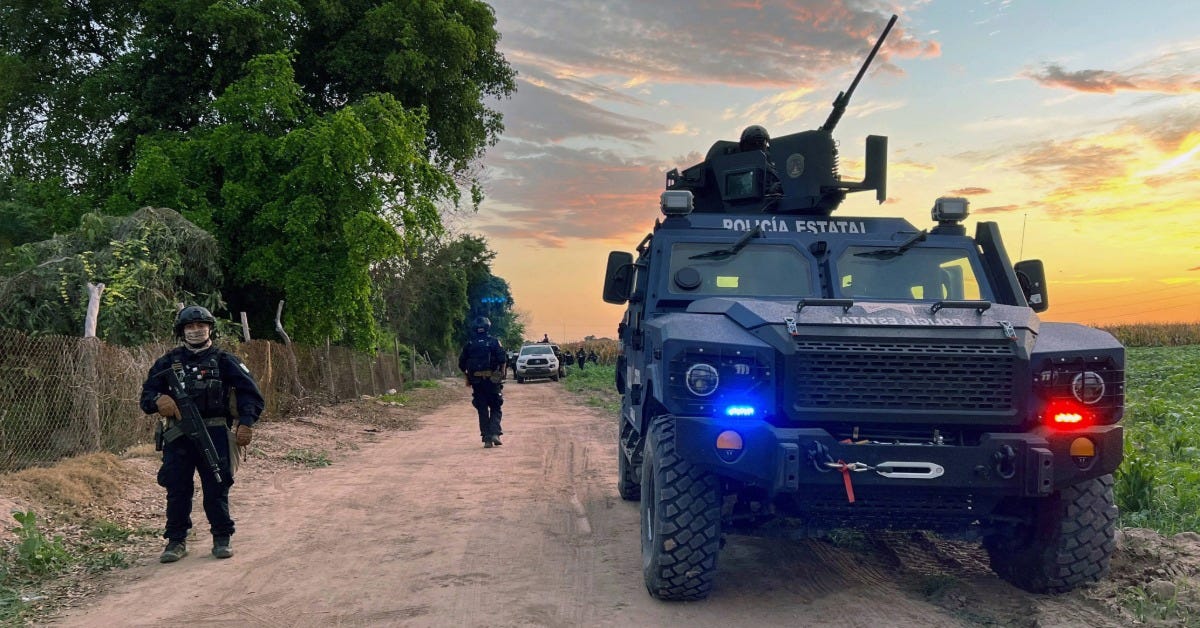
The state is associated with one of the world’s most powerful criminal organizations. The Sinaloa Cartel has operated through shifting alliances, family networks, and violent internal divisions. Its factions have fought each other and rival groups, creating periods of intense insecurity.
The current U.S. case focuses heavily on Los Chapitos. That faction has been under growing U.S. pressure because of fentanyl trafficking. U.S. authorities have made fentanyl a central issue in their security policy toward Mexico.
This makes the Rocha case larger than one governor.
Washington is arguing that cartel power does not survive only through gunmen and traffickers. It survives through political protection, law enforcement leaks, and public institutions that fail or are corrupted.
That argument is not new. Mexico has faced accusations of narco-politics for decades. But naming a sitting governor from the ruling party raises the case to a different level.
For Sheinbaum, this becomes both a security challenge and a test of political credibility.
The older shadow over Rocha
The indictment did not appear in a vacuum.
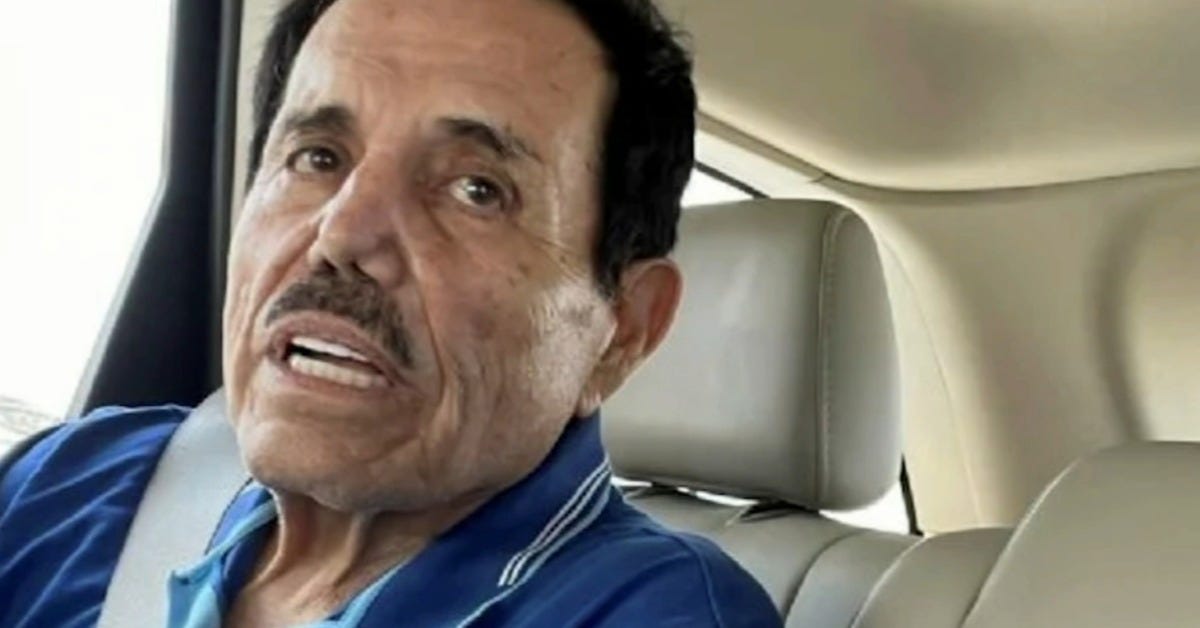
Rocha’s name had already been drawn into controversy after the 2024 capture of Ismael “El Mayo” Zambada, one of the historic leaders of the Sinaloa Cartel.
After Zambada was taken to the United States, a letter attributed to him claimed he believed he was going to a meeting involving political figures in Sinaloa. The episode also involved the killing of political figure Héctor Melesio Cuén Ojeda.
Rocha denied wrongdoing at the time. He has continued to reject allegations linking him to organized crime.
Still, that earlier controversy created a backdrop for the new U.S. indictment. It made Rocha a figure of national attention before the latest charges were announced.
The U.S. case now pulls those suspicions into a formal courtroom setting. That does not make the allegations true. But it does mean they are no longer only political claims, media speculation, or cartel gossip.
They are now part of a criminal case in the United States.
[adinserter block=”3″]
The Morena problem
Rocha is not just any governor. He belongs to Morena, the party of Sheinbaum and former President Andrés Manuel López Obrador.
That makes the case politically sensitive.
If Rocha were an opposition governor, Sheinbaum’s critics would likely accuse her of using the case for political gain. Because he is an ally, the accusation goes in the other direction. Opposition voices can now claim that the government is defending one of its own.
Sheinbaum appears aware of that risk. Her language has tried to separate legal review from political loyalty.
But the line is difficult to maintain.
If Mexican prosecutors say the evidence is insufficient, critics may call it a cover-up. If prosecutors move aggressively, Morena could face internal fractures and political damage in Sinaloa. Either outcome carries costs.
The case also lands as Mexico continues to manage pressure from Washington on security, migration, fentanyl, and trade. That makes every public statement part of a larger diplomatic calculation.
The U.S. pressure campaign
The indictment fits into a broader U.S. strategy against cartels.
In recent years, U.S. agencies have moved beyond individual traffickers and targeted financial networks, chemical suppliers, weapons links, and alleged political protection systems. The Sinaloa Cartel, especially factions tied to fentanyl, has remained a priority.
The U.S. has also used sanctions, criminal charges, and extradition requests to pressure cartel-linked networks. That pressure often creates friction with Mexico, where sovereignty is a deeply sensitive issue.
For Mexico, cooperation with U.S. agencies can bring intelligence and enforcement benefits. But it can also create domestic backlash if it appears Washington is dictating Mexican policy.
That is the tension Sheinbaum is managing.
She needs to show that Mexico takes cartel corruption seriously. She also needs to show that Mexico is not simply accepting U.S. accusations without review.
For many Mexicans, both points matter.
What this means for foreign residents in Mexico
For foreign residents watching the story, the immediate effect may not be visible in daily life. This is not a travel alert or a sudden nationwide policy change.
But the case does speak to broader issues affecting Mexico’s stability, institutions, and relationship with the United States.
If U.S. prosecutors can prove high-level political protection for cartel operations, it would raise deeper questions about governance in Sinaloa. If Mexico finds the evidence weak, it would raise questions about whether Washington used a criminal case for political pressure.
Either way, the story touches on trust.
Trust between governments. Trust in courts. Trust in prosecutors. Trust in Mexico’s ability to investigate powerful officials without outside pressure.
That is why this case is likely to remain in the news.
[adinserter block=”3″]
What happens next
The next step is Mexico’s legal review.
The Attorney General’s Office must evaluate the material sent by the United States. If prosecutors believe there is enough evidence, Mexican authorities could seek arrest warrants or begin extradition proceedings.
If they find the evidence insufficient, Mexico could reject or delay action while asking Washington for more proof.
Rocha may also face political pressure inside Mexico. Calls for resignation or removal could grow if the case develops. But unless Mexican institutions move formally, he remains governor.
In the United States, prosecutors will continue the case in federal court. But the practical challenge is clear: the defendants are believed to be in Mexico. Without arrests or extradition, the U.S. case may move slowly.
That gives Mexico significant control over the next phase.
A test of law and sovereignty
The Rocha case is now a test of two principles that often collide.
The first is accountability. If officials helped a cartel traffic drugs, shield leaders, and undermine law enforcement, the case should be investigated fully. No office should place someone beyond the reach of justice.
The second is sovereignty. Mexico has the right to require evidence before arresting or extraditing its citizens. An accusation from another country cannot replace the Mexican legal process.
Sheinbaum is trying to stand on both principles at once.
That may be legally sound. It may also be politically difficult.
If the evidence becomes stronger, the president will face pressure to act against a member of her own party. If the evidence remains weak, she will face pressure from Washington and critics who say Mexico is avoiding accountability.
For now, the case sits between accusation and proof.
That is where the political storm begins.