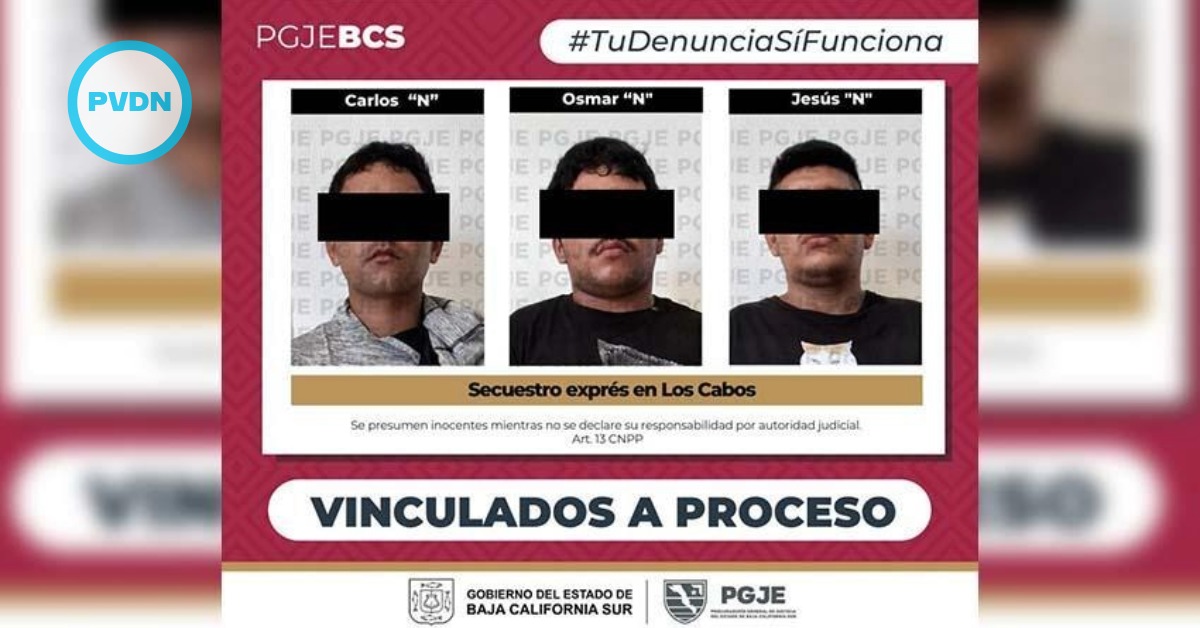
A late-night date in Cabo San Lucas allegedly turned into a trap: a victim who agreed to meet after connecting on a dating app was taken against his will and marched through cash machines. Prosecutors say three men were caught in the act, and a judge has now ordered them held while the case moves forward. The details raise familiar questions for anyone meeting strangers in Mexico’s resort corridors: how do you keep a first meetup from becoming a payout opportunity for criminals?
What authorities allege happened in Cabo San Lucas
State investigators say the case began in the early hours of January 3, when a victim arranged to meet someone after making contact through a dating app. Instead of a normal first meetup, prosecutors allege the person was lured to a private home in the Colonia Ejidal area of Cabo San Lucas, where three men confronted him and violently deprived him of his freedom.
According to the case file described by prosecutors, the motive was financial. Authorities allege the victim was relieved of cash and bank cards and then taken to multiple ATMs so money could be withdrawn directly from his accounts. Officials say the men were detained in the act, a detail that often becomes central later when a judge weighs evidence and the defense challenges how an arrest unfolded.
Three men linked to proceedings and ordered held
Prosecutors say the suspects, identified as Osmar Arturo “N,” Jesús Eduardo “N,” and Carlos “N,” have now been formally linked to criminal proceedings for aggravated express kidnapping, a charge used in Mexico when someone is unlawfully held for a short period as part of another crime such as robbery or extortion.
At a hearing held January 10, authorities presented initial evidence to a control judge, who ordered mandatory pretrial detention. The court also set a five-month window for the prosecution to complete its complementary investigation, the phase when investigators can continue building the case, pursue additional leads, and attempt to show whether the defendants are tied to other incidents.
A vinculación a proceso is not a conviction, and Mexican courts still require prosecutors to prove their case. But the decision does mean the matter has moved beyond an arrest and into an active criminal proceeding, with the defendants remaining behind bars while the investigation continues.
Why the case hits a nerve for expats and visitors
Los Cabos sells itself, rightly, on sun and ease. But resort cities also create a predictable target: visitors and newcomers who may be relaxed, unfamiliar with neighborhoods, and carrying the kind of bank access criminals want. Dating apps add another layer, because they can quickly move a conversation from public to private without the informal safety checks that come with meeting through friends, workplaces, or community circles.
Over the last year, U.S. consular officials have publicly warned travelers that kidnappings and extortion schemes can begin with an online match, particularly when a first meeting is shifted to a home, hotel room, or other secluded spot. Those alerts were not limited to one state, and the same basic mechanics described in this Los Cabos case are what make the approach attractive to criminals: isolate the victim, pressure them fast, and turn bank access into immediate cash.
Local authorities in Baja California Sur have echoed a simpler version of that guidance, urging people who use these platforms to raise their guard during first meetings and to avoid private locations until trust is established.
What to keep in mind if you date online in Mexico
Most people on dating apps are looking for exactly what they say they are. The risk comes from the small fraction who are not, and from how quickly a normal conversation can be steered into a situation that is difficult to exit. The safest first meetups are the boring ones: a busy café, a well-lit bar, a place where staff and other patrons are around, and a plan that doesn’t depend on a stranger controlling transportation.
If you live in Mexico as an expat, it helps to treat early app meetups the way you’d treat any unfamiliar transaction. Keep your financial life out of reach, avoid handing over your phone or letting someone see passcodes, and resist the pressure to relocate at the last minute to a more “private” setting. Sharing your plans with a friend, arranging your own ride, and giving yourself an easy reason to leave if something feels off are not paranoia; they are the kind of small habits that reduce the leverage a criminal needs to turn a date into a robbery.
In Los Cabos, prosecutors say this case was interrupted before it could go further. The larger question now is whether investigators see it as a one-off or part of a pattern, and whether additional victims come forward as the five-month investigative window runs.