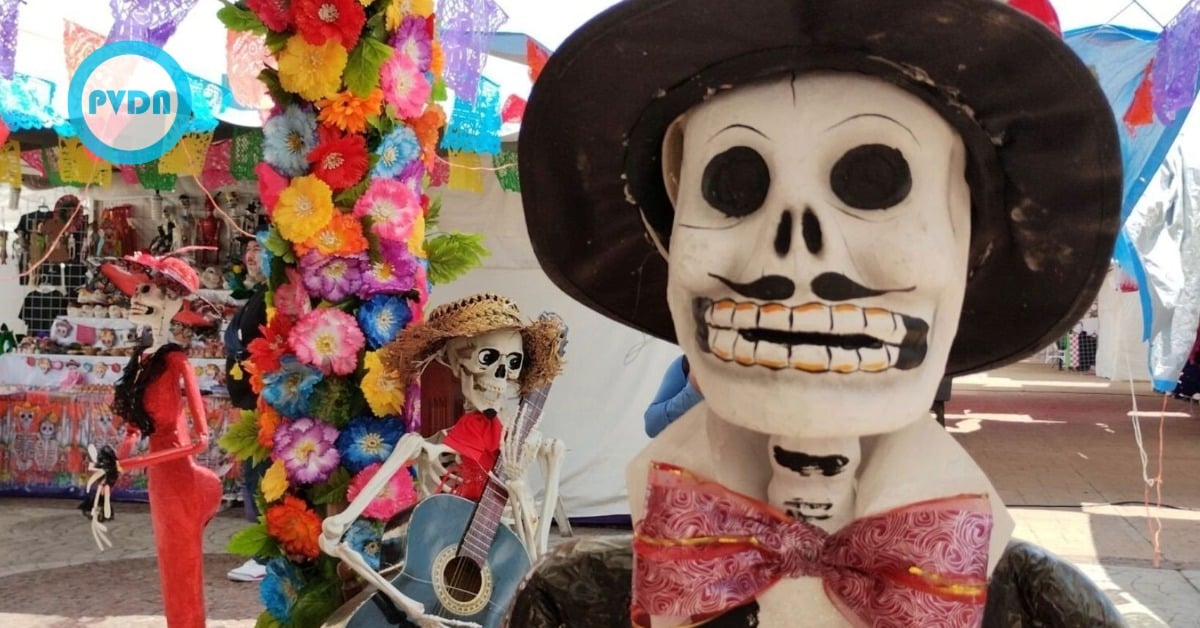
Plan a Day of the Dead weekend that feels intimate, not packaged. San Miguel de Allende lines up live music, a Concheros night vigil, a catrina parade, and even a film screening inside the San Juan de Dios cemetery. Guanajuato City hosts its own festival during the same week, featuring family processions and giant altars. Here’s how to string it together—what to expect, how to time it, and the small local moments worth crossing town for. The best scenes aren’t always on the main square. Some are by candlelight.
Day of the Dead
San Miguel de Allende doesn’t do spectacle for spectacle’s sake. It does memory in public. This year’s Day of the Dead flow takes place from October 31 through November 2, with a familiar rhythm locals trust: music around the centro, a Concheros vigil, a catrina parade, and a night of cinema among headstones at the San Juan de Dios cemetery.
If you’re starting in Guanajuato City, the state capital isn’t sitting out the season. Its festival program features children’s processions, tapete de cempasúchil carpets, a parade of calaveras and catrinas, and the immersive Retorno al Mictlán show—family-friendly and rooted in local tradition.
The cemetery screenings aren’t a stunt invented for visitors; Guanajuato’s film culture leans into the mood. The Guanajuato International Film Festival is once again pushing “Cine entre Muertos,” a unique event that moves horror films into real burial grounds across the state—an eerie, respectful, and packed late-night ritual. It’s part spectacle, part vigil, and it sells itself without a poster.
San Miguel’s script is predictable in the best way. Ofrendas rise in neighborhoods, faces bloom into skull makeup by dusk, and the parade rolls when church bells cool. Last year’s municipal program set the template with mega ofrendas, a catrina parade, and night rituals in and around San Juan de Dios. This year’s preview coverage points to the same anchor events, now scheduled Oct 31–Nov 2. Expect a crowd, but also corners of quiet where a single candle tells the story.
San Miguel’s daytime belongs to craft and food. Street fairs sprout with pan de muerto, atole, and paper-thin alfeñiques—the sugar art that seems too delicate for the road home. By night, the Concheros hold vigil in a tide of shells and smoke, a sound that rattles your ribs before you see the dancers. The newspaper round-up that locals passed around this morning lists all of it plainly: music, vigil, cemetery cinema, catrina parade, artisan and food fairs. The editor didn’t need adjectives. Neither do you.
UNESCO recognized Mexico’s indigenous festivity dedicated to the dead back in 2008. The listing didn’t canonize a museum piece; it affirmed a living ritual that changes block by block. In San Miguel and across Guanajuato, the point isn’t to watch. It’s to walk. Follow the marigolds. Read the photos on the altar like a family album someone decided to share with everyone.
Getting there from Guanajuato City
If you’re driving from Guanajuato City to San Miguel, the straight shot via the libre toward Silao and Dolores Hidalgo runs about an hour and a half in normal traffic—call it 76 kilometers give or take. Plan for more on parade nights, and remember that the last blocks are the slowest. Park where the streets widen, then walk into the noise.
Crowd math matters. Friday and Saturday nights pull the heaviest flow; mornings in barrios like San Rafael feel gentler and closer to the bone. If you want the parade and the cemetery film screening on the same night, aim early for makeup and a spot near San Juan de Dios, then drift toward the route as the drums swell. If you land in Guanajuato City for the family-centric program, the “Angelitos” procession and tapetes offer a unique lens into how children learn the ritual without gloss.
Two final notes. First, the tombstones aren’t backdrops. Ask before photographing altars and children. Second, the best time is the minute after midnight when the streets are thin and the candles are still brave. That’s when the city sounds like breath.