Neighbors drove past that billboard every day on Colosio’s extension, but few walked the scrubby patch beneath it. That’s where authorities say they found a decomposed body in Playa del Carmen, tucked below a municipal ad near Real Ibiza. The forensics team moved quickly, transferring the remains to SEMEFO while investigators worked a scene that is more common than most care to admit. Questions linger. Who was this person, and how long had they been there without anyone noticing in a city that never seemed to stop moving?
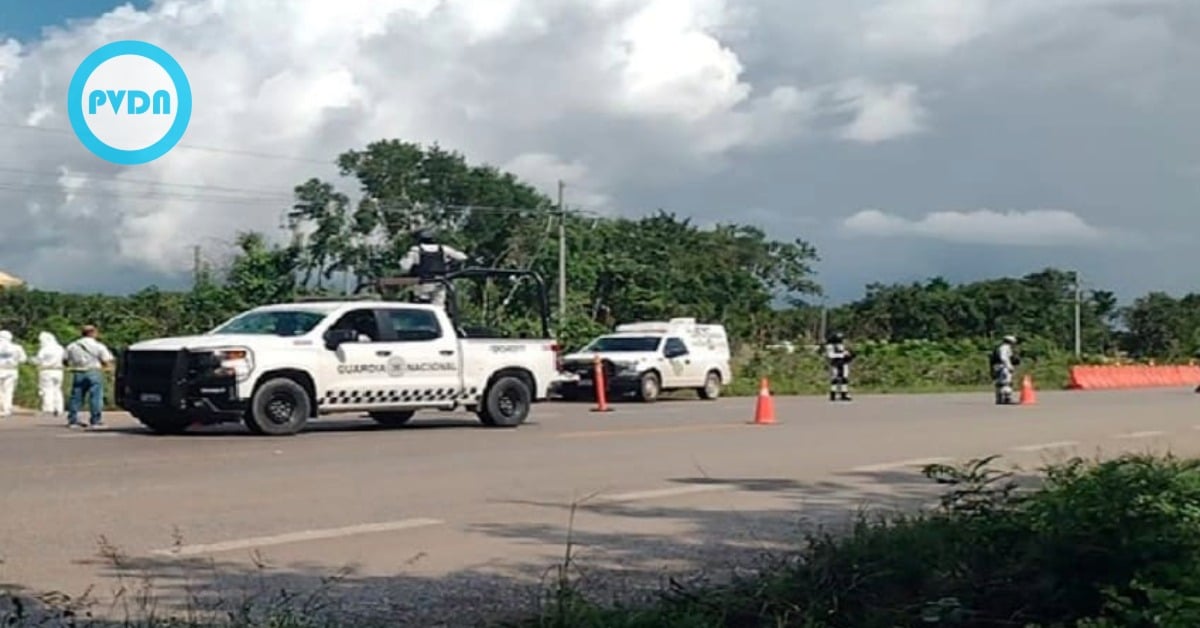
Authorities say the body was discovered Tuesday afternoon beneath a municipal billboard along the prolonged stretch of Avenida Luis Donaldo Colosio, near the Real Ibiza housing area. The spot sees heavy vehicle flow but little foot traffic, which likely delayed the discovery. Forensics transferred the remains—already in an advanced state of decomposition—to the state morgue (SEMEFO) for identification and autopsy.
Local outlets that arrived soon after reported the exact coordinates and circumstances of the crossing at Flor de Ciruelos by Real Ibiza, an open patch of brush and broken stone pressed between fast traffic and the edge of town. A second report echoed those details and the transfer to SEMEFO.
Decomposed body Playa del Carmen
The phrase is clinical, but it carries a story families dread the wait for a name, a call, any scrap of certainty. For now, authorities have not released the cause of death. In Quintana Roo, that step belongs to forensic medicine; the autopsy establishes whether a death was violent or natural, and basic identifiers can sometimes be recovered even after days under the sun. Only then can any theory about what happened move beyond rumor.
This is not an isolated headline for the region. Similar decomposed-body recoveries make the crime blotter every few weeks across the Riviera Maya and interior municipios, reminders of how quickly the jungle and heat work against the living and the dead—and against investigators. But each case is singular to one person and one family waiting on the SEMEFO ledger.
What happens next
The morgue’s first jobs are the quiet ones: documentation, the autopsy, and any steps toward identification. In recent months, Quintana Roo’s forensic and prosecutorial system has faced pressure to improve these steps after high-profile cases exposed long delays in identification. One widely covered case involved a young woman whose remains sat unidentified for years, prompting administrative charges against public servants and a broader reckoning with the backlog. Those failures loom over every new case, adding urgency to the timely identification of today.
For families searching for a missing loved one, SEMEFO’s work can finally bridge the gap between a name and a body—or rule out a feared match. Civil society groups tracking disappearances in Quintana Roo say 2025 has kept search collectives busy, with hundreds of cases logged by mid-year. Each identification made by forensic teams, whether of the living or the dead, matters for the ledger and for those who carry the waiting.
Back at the billboard scene, investigators still have the basics to answer: How long was the body there? Did anyone see movement, hear a shout, notice a smell? Heavy traffic offers witnesses without faces; sparse pedestrian traffic means fewer eyes on the ground. The patch under the sign is easy to miss. In cities that grow as fast as Playa del Carmen, there are more of those in-between places than most realize—liminal spaces that belong to no one until they belong to a story like this one.