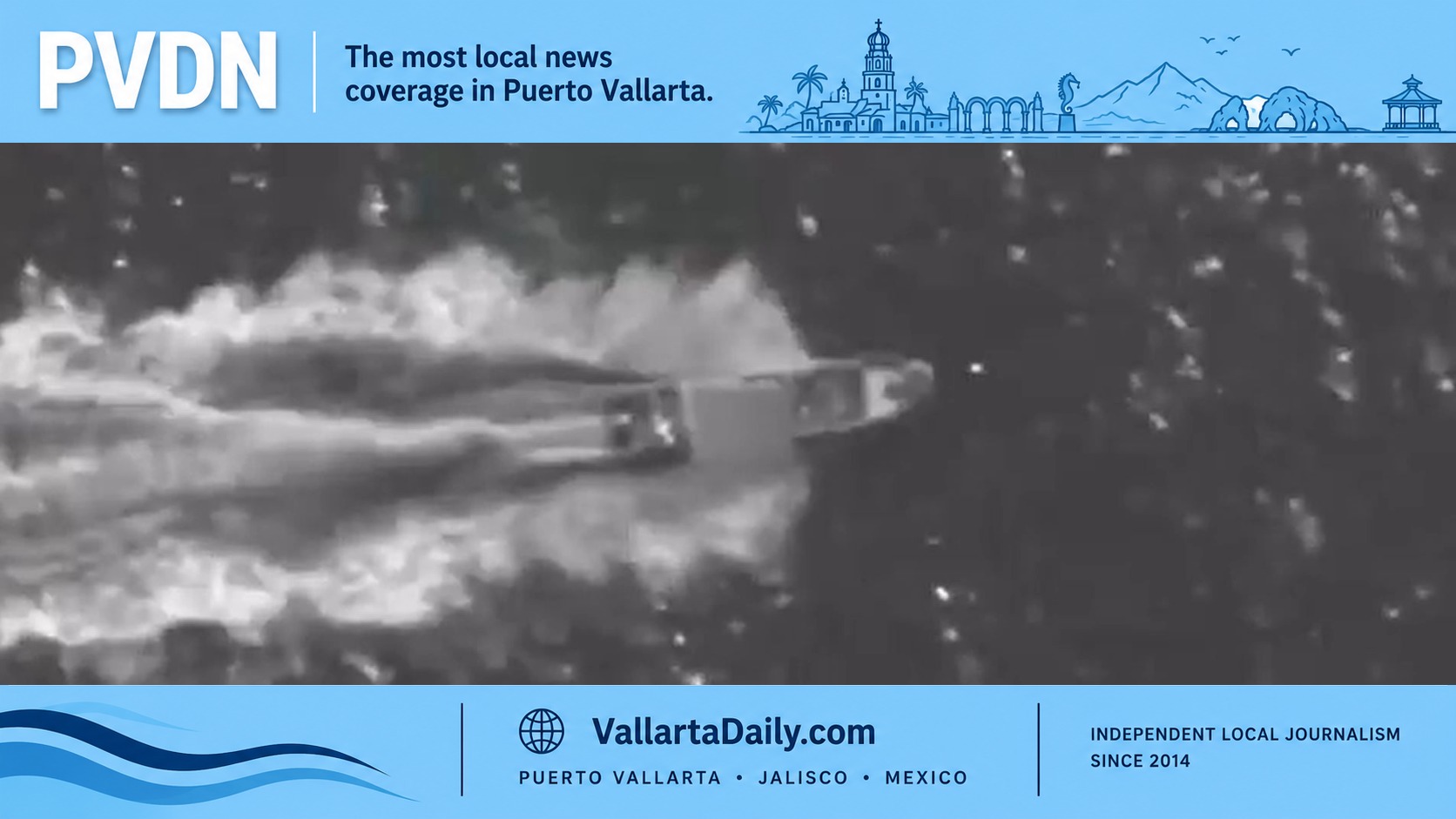
Puerto Vallarta, Mexico, July 24, 2026 – Seven men from La Cruz de Huanacaxtle are among eight Nayarit mariners reportedly killed in two U.S. military strikes on suspected drug-trafficking boats in the Eastern Pacific, according to an investigation that has exposed a months-long silence by both governments over Mexican casualties.
The Los Angeles Times investigation identified at least 13 Mexican citizens believed to have died during the Trump administration’s expanding maritime campaign. The other five were linked to separate operations involving men from Puerto San Carlos, Baja California Sur.
Mexico has not confirmed any of the deaths. The United States has not released the names or nationalities of those killed, the exact coordinates of the strikes, the organizations allegedly operating the boats, or the intelligence used to select individual targets.
The February record closely matches the disappearances
The most detailed case began before dawn on February 16, when eight men departed Punta Pérula on the Jalisco coast aboard two boats. Seven lived in La Cruz de Huanacaxtle, the fishing and marina community in Bahía de Banderas just north of Puerto Vallarta.
They never returned.
Later that day, U.S. Southern Command reported that American forces had attacked three vessels allegedly operated by designated terrorist organizations. Two boats were struck in the Eastern Pacific, killing four men on each. A third strike killed three men in the Caribbean.
The date, ocean region, number of boats, and eight reported deaths align with the disappearance of the Nayarit group. Southern Command said intelligence showed that the vessels were traveling along known trafficking routes and participating in narcotics operations, but its public statement offered no supporting evidence.
Relatives identified the missing men as Edgar Valerio Ramos, Pedro Torres Falcón, Luis Torres Jiménez, Carlos Torres Zamora, José Reyes García, Diego Ocampo González, Abel Ramos Jiménez and Braulio Cruz Joya.
Families and other residents later received word through people connected to the smuggling operation that the boats had been destroyed by American missiles, the Times reported. Memorial services were held at sea, including a July 7 gathering attended by mourners aboard dozens of boats.
No remains have been reported recovered. The publicly available case therefore rests on a strong convergence of dates, casualty numbers, community testimony and private notifications rather than formal identification by either government.
Interviews conducted in La Cruz indicated that the men sometimes earned money transporting gasoline into the Pacific, where fuel was transferred to speedboats moving cocaine north from South America. That alleged activity has not been established in court and does not by itself answer whether lethal force was legally justified.
Southern Command told the Times that everyone killed in its operations belonged to a designated terrorist organization and was moving illicit material. The command did not clarify whether gasoline was considered illicit material or release evidence tying the eight men to a specific organization.
Mexico says it has no casualty information
Mexico’s Navy said it could confirm only that no U.S. strikes occurred inside the country’s Exclusive Economic Zone, which extends 200 nautical miles from the coast. That statement does not address attacks farther into international waters or the nationality of those aboard the targeted vessels.
The Foreign Relations Secretariat told the Times that it had no information concerning Mexican citizens killed in the campaign. No federal agency has publicly announced a criminal investigation, a consular inquiry or a formal request seeking the identities of the dead.
President Claudia Sheinbaum had previously objected to the maritime campaign after strikes near Mexico in October 2025 killed 14 people. She said Mexico did not agree with the attacks and ordered diplomatic and naval officials to discuss the operations with the U.S. ambassador.
Her administration later said the two countries had agreed in principle to prioritize interception by the Mexican Navy when suspected vessels were detected near Mexican waters. The American strikes continued.
The five other Mexican deaths documented by the Times include Enrique Meza and his son, known as Kikín, who were reportedly killed in a March 8 strike. Jesús Rangel Romero and two companions disappeared after leaving Guatemala on May 26. Southern Command reported several Eastern Pacific strikes between May 26 and May 30, but did not identify the people killed.
Washington’s legal argument remains disputed
The Trump administration maintains that cartel designations place the United States in an armed conflict with drug-trafficking organizations and make their vessels legitimate military targets.
Human-rights organizations reject that position. Amnesty International argues that suspected maritime trafficking remains a law-enforcement matter. Under that standard, lethal force is permitted only when a person presents an imminent threat to life and capture is not reasonably possible.
The Washington Office on Latin America’s strike tracker counted 221 reported deaths across 63 attack events as of July 1. Only three survivors had been recovered. The organization classifies the deaths as extrajudicial executions, while Southern Command describes those killed as narco-terrorists.
The unanswered questions now extend beyond whether the missing Nayarit men were participating in smuggling. Neither government has explained what evidence identified them as military targets, why interception was not attempted, where the boats were struck, or why their families have received no formal accounting nearly five months after they disappeared.