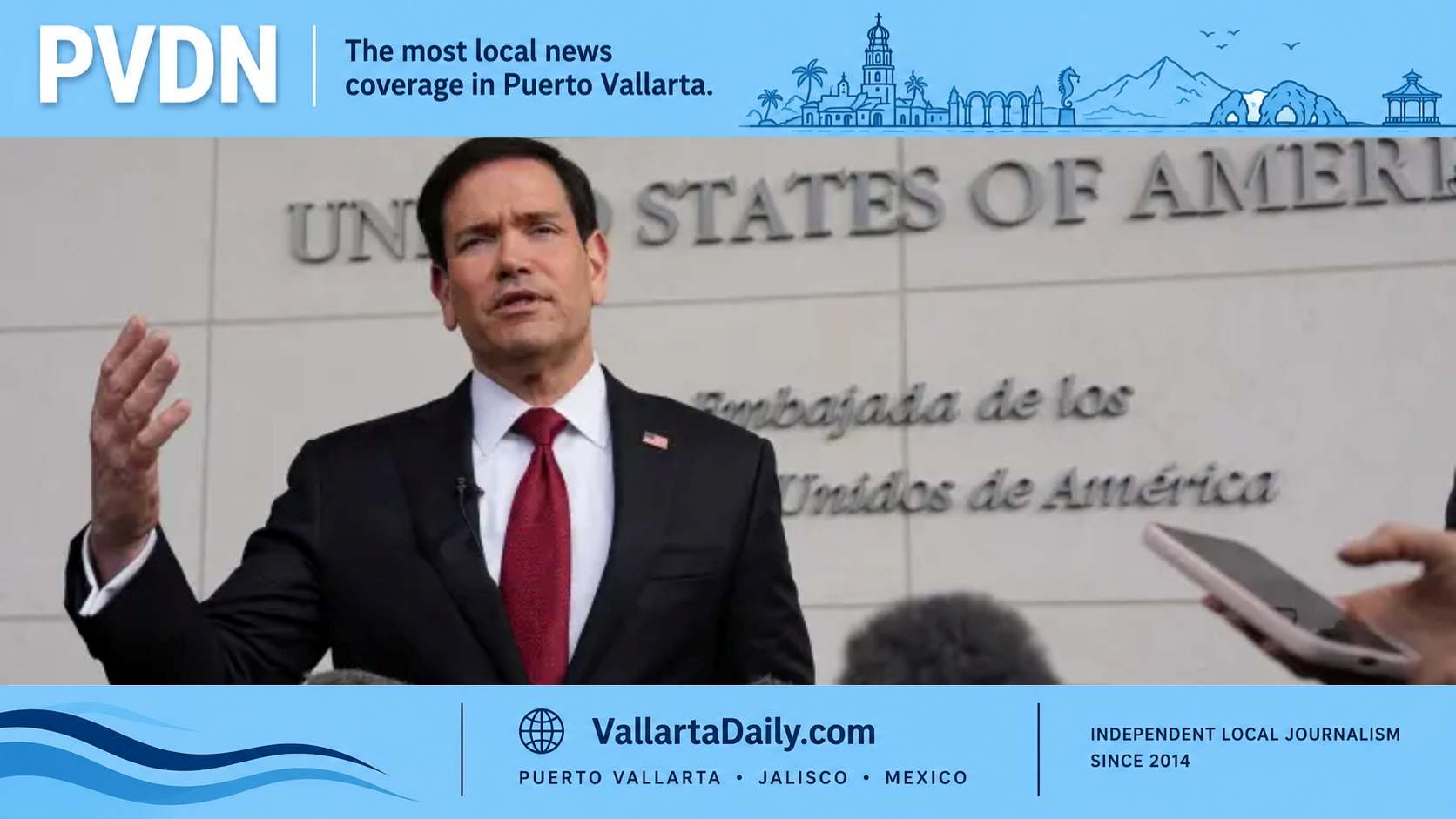
Mexico City, Mexico, Sept. 10, 2026 — U.S. Secretary of State Marco Rubio said Wednesday that Mexico’s intensified campaign against drug cartels remains insufficient.
During remarks to reporters in Quito, Ecuador, Rubio said Mexican authorities have done “more than they’ve ever done before” to pursue the organizations. He added that the effort was “still not nearly enough.”
Rubio said partnership with Mexico remains Washington’s preferred course. He also warned that the cartel threat would eventually be confronted “one way or the other.”
No operation against Mexico was announced
Rubio did not announce a military operation inside Mexico. He provided no deadline, operational plan or list of territories that could face U.S. action.
For people living or traveling in Mexico, the comments produced no immediate change to Mexican law, border procedures or travel guidance. Their immediate effect is diplomatic, increasing pressure on President Claudia Sheinbaum’s government to deliver further enforcement results.
Our review of Rubio’s remarks found that his warning stopped short of saying the United States would act unilaterally on Mexican soil.
That distinction matters because the United States is already using military force against suspected drug vessels elsewhere in the region. Reporting on the campaign put the toll at at least 230 people killed in 69 strikes since September 2025.
Rubio said Washington is now placing greater emphasis on joint operations with countries including Ecuador and Colombia. Those operations are conducted under the participating country’s laws and within its territorial waters, he said.
Nothing in his comments established that the same tactics would be used in Mexico.
Rubio challenges Mexico’s control of its territory
Rubio claimed there are “vast territories in Mexico” that are not governed by the state and are controlled by drug-trafficking organizations.
He did not identify those territories or present evidence supporting the claim during his remarks.
The secretary cited the killings of political candidates, judges and journalists as examples of cartels challenging government authority. He also said criminal groups are using drones and trafficking networks to move drugs and migrants across the U.S.-Mexico border.
“Because at the end, the head of the snake is these cartels in Mexico,” Rubio said.
The comments echoed previous assertions by President Donald Trump that organized crime controls parts of Mexico. Sheinbaum has rejected those claims, including Trump’s assertion that cartels run the country.
A sharper message than Rubio delivered last year
Rubio’s language marked a change from the public tone he used during a September 2025 visit to Mexico City.
At the time, he said no government was cooperating more with the United States than Sheinbaum’s administration. The two countries announced a security framework overseen by a high-level implementation group.
According to their joint security statement, the framework was based on reciprocity, respect for sovereignty, territorial integrity, shared responsibility and mutual trust.
Its priorities included disrupting fentanyl production and trafficking, improving border security and stopping firearms from moving south into Mexico.
Later that month, the implementation group launched a firearms initiative that expanded tracing tools and investigations across Mexico’s 32 states. The plan also called for more U.S. inspections aimed at intercepting weapons before they crossed the border.
Rubio did not say Wednesday that the framework had been canceled or replaced.
Mexico maintains its sovereignty limit
Sheinbaum’s government has accepted intelligence sharing and coordinated enforcement while rejecting foreign operations conducted without Mexican authorization.
That position was reinforced in February when Mexico denied that joint U.S.-Mexico cartel operations were taking place and paused new permits for U.S. agents.
Washington has continued applying other forms of pressure. The United States designated six Mexican cartels as foreign terrorist organizations in February 2025.
During Wednesday’s Ecuador visit, Rubio added the Ecuadorian gang Los Tiguerones to the terrorist list. He also announced plans to seek $45 million from Congress for Ecuadorian security programs and additional equipment for maritime enforcement.
Rubio’s remarks presented a harsher public assessment of Mexico’s campaign. They did not include a new bilateral agreement or a disclosed order for U.S. action inside the country.