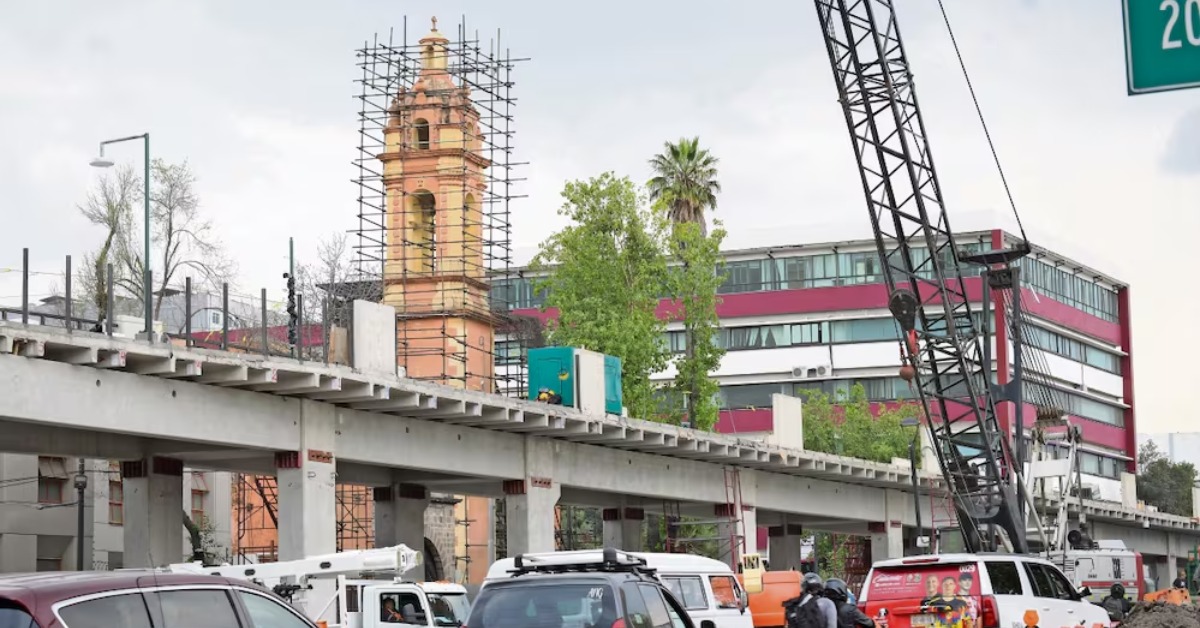
Mexico City is entering the final month before the World Cup opening match, with major upgrades already delivered, but several promised projects remain unfinished. The pending work includes parts of the Metro Line 2 renovation, the elevated park along Calzada de Tlalpan, trolleybus routes, Xochimilco dock upgrades, and last-mile improvements near the stadium. The countdown is now testing how much can be completed before fans arrive for the June 11 opener.
CDMX World Cup Projects Race the Clock Before Kickoff
Mexico City is less than a month from hosting the opening match of the 2026 FIFA World Cup, and several promised public works are still not finished.
At least eight projects connected to the tournament remain in progress. They include work tied to Metro Line 2, the elevated park along Calzada de Tlalpan, underpass improvements, Xochimilco docks, trolleybus routes, and last-mile infrastructure near Estadio Banorte.
The opening match is scheduled for June 11, 2026, when Mexico faces South Africa in Mexico City. That date gives local authorities a narrow window to complete works presented as part of the city’s World Cup mobility and public-space plan.
Mobility work remains under pressure
The most visible pending work is on Metro Line 2, especially the stretch between Hidalgo and Tasqueña. The city has said the project includes a major maintenance program with federal funding and a local investment of about 1.5 billion pesos.
The work is meant to improve stations, tracks, electrical systems, signaling, ventilation, escalators, and surveillance. City officials have also said the plan includes more trains and bilingual support staff during the tournament period.
For residents and visitors, Line 2 is important because it connects central Mexico City with the south side of the capital. It also links with areas used by people traveling toward Coyoacán, Tlalpan, and the stadium zone.
Tlalpan projects are still moving
Another pending project is the Parque Elevado de la Calzada de Tlalpan, formerly referred to as the floating walkway. The first stage is designed to create a pedestrian connection above the Metro Line 2 corridor between Plaza Tlaxcoaque and the Chabacano area.
The project is part of a broader transformation of Calzada de Tlalpan. That plan includes a cycle lane, lighting, safer walking areas, façade work, repaving, and public-space improvements.
City officials had said the elevated park was expected to be finished by the end of May. The timeline now places completion close to the World Cup opener.
Improvements to 13 underpasses between Plaza Tlaxcoaque and Metro Chabacano also remain pending. Earlier plans suggested seven would be ready before the tournament, but they had not been formally delivered as of the latest review.
Other World Cup works remain unfinished
In Xochimilco, the renovation of tourist docks is also still pending. That includes the Cuemanco dock, one of the most visited embarkation points in the area.
Two electric transport projects also remain on the list. The Trolleybus Line 14, planned from Huipulco to Universidad, and the Línea 0 Chapulín, planned from Chapultepec to Universidad, were both presented as part of the city’s World Cup mobility strategy.
Near the stadium area, some last-mile improvements have already been delivered. These include work around Huipulco, the light rail station serving the stadium area, and other public-space upgrades.
The Huipulco food market project is still pending. Authorities previously indicated it could be ready within weeks, but no formal inauguration had been announced in the latest available information.
Some upgrades have been delivered
Mexico City has completed several works tied to the tournament. The city reopened the renovated Tren Ligero El Ajolote, adding 17 new trains and improving stations.
The light rail project is meant to increase capacity in the city’s southern corridor, including the route between Tasqueña and Xochimilco. That corridor is expected to be important for both residents and World Cup visitors.
The city also delivered the Calzada de Tlalpan cycle lane, which opened in April. Cyclists have since reported operating problems in some areas, including motorcycles and pedestrians entering the lane near public transport stops.
A new Centro Histórico bus route also began operating in May. The route is part of a larger plan to move visitors and residents through central areas during the tournament.
A countdown with local consequences
The unfinished projects matter beyond the tournament. These works are not temporary structures for visitors. They affect daily commutes, public safety, neighborhood access, and the city’s ability to manage crowds during a major international event.
For foreign residents and travelers, the main issue is not only whether Mexico City will look ready for the opening match. It is whether transport routes, walking areas, and public spaces will function smoothly once fans, media, and extra security measures arrive.
The city still has several weeks to complete the remaining projects. The question now is how many of the promised upgrades will be fully operational before the first whistle.