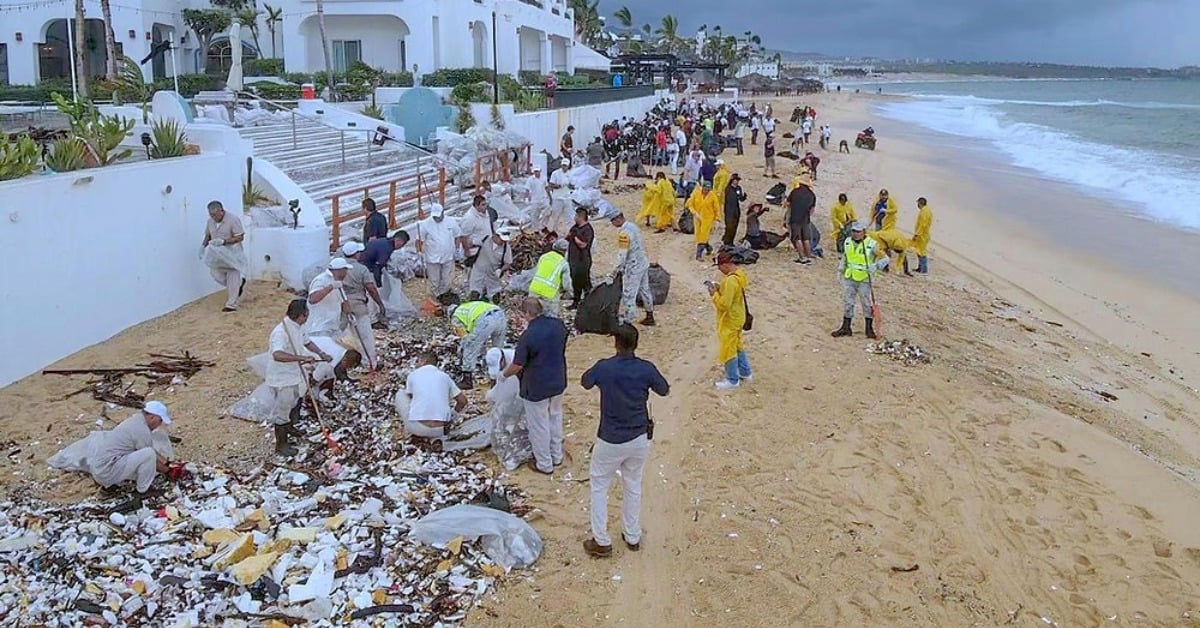
At first light, the shoreline at El Médano looked more like a landfill than the heart of Cabo’s bay. Locals showed up with gloves and trash bags anyway. By day’s end, they had filled well over a thousand bags with debris washed down by swollen arroyos after Lorena’s rains. Officials moved in with trucks and front loaders, while beach flags stayed black. What happened overnight, and what it will take to get Cabo’s busiest beach truly back, tells a larger story about how this coast lives with storms.
El Médano cleanup
Dawn crews met at 6 a.m. and fanned out from 8 Cascadas to the Breathless hotel, the section of shoreline where the bay’s currents concentrate debris—the city’s coastal authority, ZOFEMAT, coordinated with volunteers, hoteliers, and boat operators. By late morning, more than 1,000 trash bags had been filled on just a slight stretch of sand, according to on-site tallies and municipal reports.
The push followed a public call to action from Los Cabos’ government after the storm. Officials asked residents to bring gloves and closed-toe shoes, promising to supply bags and hauling. The appeal emphasized safety and rapid removal before tides could pull debris back into the bay.
Storm runoff turned arroyos into conveyors of trash
Lorena’s bands delivered hours of heavy rain over Baja California Sur, and forecasters warned of life-threatening flash floods and dangerous surf. The system weakened offshore but still wrung out 4–8 inches of additional rain in parts of the peninsula, a setup that flushes plastic, wood, and household waste through dry streambeds and into the sea.
Ahead of the cleanup, beaches across Los Cabos—including El Médano—were placed under black flags and closed for safety. High surf, fast currents, and contaminated runoff made swimming hazardous; access was restricted while crews worked and water quality stabilized.
Tourism, safety and a long cleanup ahead
El Médano is Cabo San Lucas’ economic front porch. Restaurants, tour operators, and hotels line the sand, and any closure ripples through day-workers and small businesses. City crews and volunteers moved quickly to reopen sections as soon as conditions allowed. Still, officials signaled this would be a multi-day effort given the volume arriving from inland drainages.
Los Cabos has been here before. After intense rains in 2024, authorities and volunteers cleared more than 140,000 pounds of trash from Cabo beaches. The pattern is familiar: a storm, a surge of debris, and then a community sprint to restore public space and protect the bay’s wildlife.
What residents can expect next
Municipal updates note that crews will continue to remove debris and monitor water quality; black flags will be removed from the beach as conditions permit. Officials have also reminded residents to follow flag advisories and avoid surf zones until lifeguards lift restrictions.
Beyond the immediate response, Mexico launched a National Beach and Coastal Cleanup Strategy this year, tying local campaigns like El Médano’s to a broader push against plastic pollution in all 17 coastal states. The strategy—led by the Environment and Navy ministries—aims to standardize cleanups and reduce sources of waste before storms strike.
The images from Thursday—pyramids of trash bags, muddy surf, neighbors passing debris hand-to-hand—are stark. They also show how fast Cabo can move when the sea is at stake. The job isn’t done yet, but the morning after Lorena, the city gave itself a fighting chance.