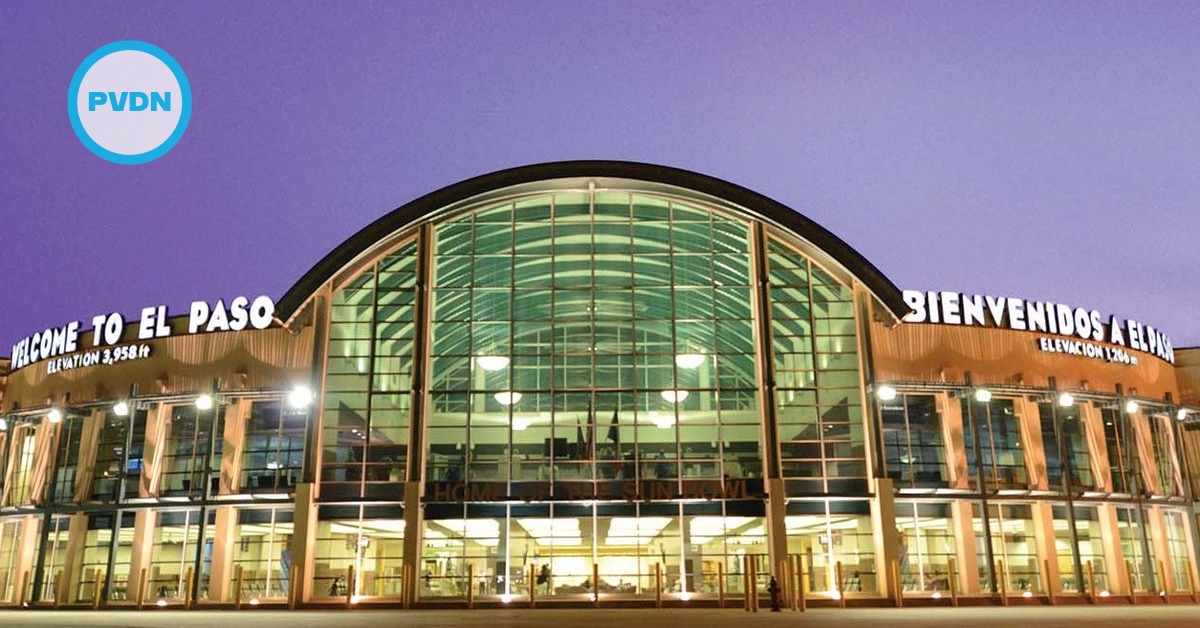
For the next ten days, the skies above El Paso, Texas, will be unusually quiet. All flights in and out of the city’s international airport have been abruptly grounded under a mysterious federal order citing only “special security reasons.” The unprecedented airspace lockdown has travelers stranded, officials scrambling for answers, and local businesses bracing for disruption. What prompted such an extreme measure, and what exactly does a “national defense airspace” designation mean for this border city and those who depend on its airport?
Flights Grounded Under Emergency Security Order
El Paso International Airport has been brought to an abrupt standstill by a highly unusual federal directive. The Federal Aviation Administration (FAA) announced that, effective late Tuesday night, all flights to and from the airport are suspended for a ten-day period. The notice came with no advance warning and cited only “special security reasons” for the shutdown. In practical terms, this means no passenger planes, cargo jets, or private aircraft are allowed to take off or land in El Paso through February 20, effectively silencing a normally busy air travel hub.
The restriction covers roughly a 10-mile radius of airspace around the city, extending into neighboring southern New Mexico, and even includes Biggs Army Airfield at the Fort Bliss military base. Notably, the FAA’s order explicitly warns that the airspace is now classified as national defense territory – any unauthorized aircraft could be intercepted by military or law enforcement, and the U.S. government “may use deadly force” if a violating plane is deemed an imminent threat.
Such stern language underlines the gravity of the situation, yet officials have provided no further detail about what prompted this extreme measure. Local authorities were left as startled as travelers; city leaders and even military officials at Fort Bliss say they received no prior notice of the flight ban. “Nobody local got advance notice – neither civilian nor military leadership,” one El Paso city representative revealed, highlighting how unprecedented and mysterious this intervention is. Seasoned observers note that shutting down a major American airport’s airspace for ten full days without public explanation is virtually unheard of outside of wartime or national emergencies. The vague rationale of “security reasons” has thus raised widespread concern and speculation, even as officials refrain from elaborating.
Impact on Travel and Trade
The immediate impact of the FAA’s order is being felt by travelers and businesses on both sides of the U.S.–Mexico border. With all commercial flights in and out of El Paso grounded, thousands of passengers face abrupt cancellations and lengthy delays. Travelers planning to visit family, return home, or conduct business through El Paso’s airport must now scramble for alternatives – whether rebooking through other cities like Dallas or Phoenix, or postponing their trips entirely.
The disruption is especially significant given El Paso’s role as a key gateway between the United States and Mexico. Many residents and expats traverse this route regularly; now, a routine cross-border journey that often relied on a short flight may turn into a long detour. Airlines serving El Paso are working to reroute customers, but seats on alternate flights are limited, and local hotels are suddenly housing stranded passengers.
Beyond the personal inconveniences, the shutdown is sending ripples through the regional economy. El Paso International is not only a passenger airport but also an important hub for freight and cargo. Daily air shipments – from express parcels to manufacturing components – have been halted. Some logistics companies are shifting shipments to trucks and other airports, but that quick pivot can only partially compensate. Cross-border trade, which often uses El Paso as a transit point for high-value or time-sensitive goods, is likely to experience delays. Warehouses and trucking firms are bracing for increased loads as more freight moves over land, which could cause bottlenecks at border checkpoints. Local businesses, from suppliers waiting on inventory to produce exporters trying to meet schedules, are nervously watching the calendar.
A ten-day interruption in air connectivity is more than an inconvenience; it threatens to dampen tourism revenue, stall supply chains, and cost the city and its neighbors millions in lost commerce. For a border community deeply tied together by travel and trade, the grounded flights underscore how critical the flow of air traffic has been – and how disruptive its loss can become, even if temporary.
What ‘National Defense Airspace’ Means
A central detail of the FAA’s directive is the designation of El Paso’s skies as “national defense airspace” for the duration of the restriction. In practice, this term signals that the government has invoked special authority to protect the airspace for security purposes. Under U.S. law, the FAA can declare any portion of the country’s navigable airspace as off-limits when required for national defense or security. This usually happens around sensitive locations or major events – for example, temporary flight restrictions are routine for events like the Super Bowl or when high-ranking officials travel. However, the scenario in El Paso stands out because of its scale and secrecy.
By classifying a broad area above a bustling city as national defense airspace, the FAA is effectively treating every incoming or outgoing aircraft as a potential threat unless explicitly authorized. Pilots have been unequivocally instructed not to enter the restricted zone, and any who violate these rules risk immediate interception by fighter jets or armed federal agents. The mention of “deadly force” is standard in these designations, intended to deter any would-be intruders by making the stakes abundantly clear. Normally, such flight bans are narrow in scope or brief in duration, and they often include exceptions for certain operations, such as law enforcement, medical flights, or military aircraft. In this case, even the typical carve-outs appear absent, indicating an extraordinary blanket lockdown of the skies.
The lack of an official explanation has left observers to only guess at what could justify this measure – whether it’s a sensitive security operation, an intelligence warning of a possible airborne threat, or something else entirely. What is clear is that the federal government is taking no chances in this airspace. For El Pasoans and their neighbors in Mexico, the phrase “national defense airspace” may have been unfamiliar before, but it now comes with real consequences: empty skies, grounded planes, and a community anxious for answers. As the days of this unusual no-fly order tick by, many are watching closely for any updates – hoping that normalcy in the air can return as swiftly and mysteriously as it was taken away.