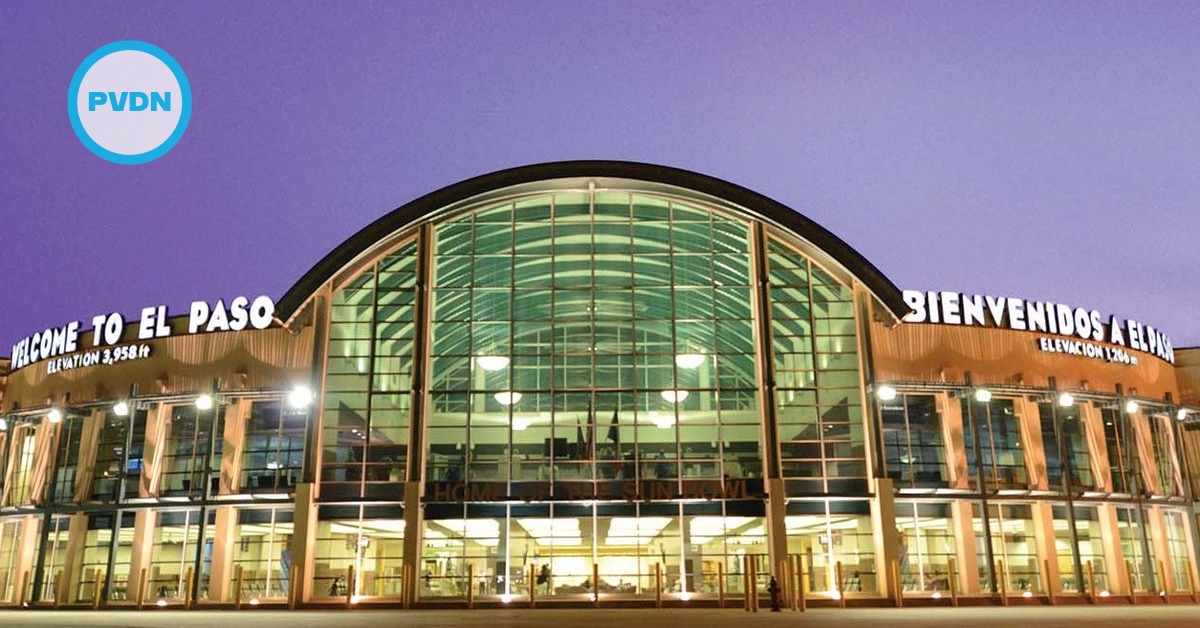
In a rare border security scare, flights at El Paso International Airport came to an abrupt halt. Officials say they detected drones — believed to be operated by Mexican cartels — breaching U.S. airspace near the busy Texas airport. The Federal Aviation Administration responded with an unprecedented shutdown of the skies, initially set to last ten days. Although flights resumed within hours after a swift military response, the move left local leaders demanding answers and underscored an evolving threat. For travelers and residents alike, the jarring incident had no modern precedent in this border city.
Cartel Drones Trigger an Unprecedented Shutdown
The trouble began late on a Tuesday night, when the FAA suddenly grounded all flights to and from El Paso International Airport. The agency announced a Temporary Flight Restriction that was supposed to last from February 10 at 11:30 p.m. until February 20 – a full ten days of no takeoffs or landings. It cited “special security reasons” but initially gave little detail. Planes were diverted, and outgoing flights were stopped, leaving many passengers stranded. The El Paso airport, a critical travel hub for west Texas and neighboring New Mexico, had never seen a closure of this scope. Even a small general aviation field in nearby Santa Teresa, NM, was included in the no-fly order. The blanket shutdown came with a stark warning that authorities could even use deadly force against any aircraft violating the restricted airspace. For a few tense hours, a busy metropolitan area’s skies went eerily quiet.
By Wednesday morning, federal officials revealed the extraordinary reason behind the alarm. Multiple drones originating from Mexico had reportedly breached U.S. airspace near El Paso. These were no hobbyist quadcopters gone astray – American officials linked them to drug cartels. In other words, it appeared that organized criminal groups from across the border had sent unmanned aircraft into U.S. skies. This startling incursion triggered immediate concern about public safety and possible threats to civilian aviation. As a precaution, the FAA effectively hit the emergency brakes on air travel in the area. One official described the decision as a swift response to an unfolding security issue. Still, the drastic measure of closing a major airport’s airspace for days on end raised eyebrows and anxiety in the community.
Swift Military Response Neutralizes the Threat
Once the cause of the shutdown became clear, U.S. defense authorities wasted little time in reacting. Transportation Secretary Sean Duffy announced on social media that the FAA and the Department of Defense “acted swiftly to address a cartel drone incursion.” In plain terms, the U.S. military stepped in to confront the rogue drones. According to officials, the drones that entered from Mexico were quickly disabled or downed before they could cause harm. The threat was neutralized within hours, and by daybreak, the FAA determined there was no ongoing danger to passenger flights. Normal operations were cleared to resume first thing Wednesday morning.
Air traffic gradually returned to the sky above El Paso as the unprecedented alert subsided. The FAA publicly confirmed that the temporary airspace closure had been lifted and that commercial flights were safe to fly. Airlines that had paused their El Paso routes, such as Southwest and American, were given the all-clear to restart service. For a city of nearly 700,000 people that relies on its airport, relief came swiftly once the unknown threat was under control. In the end, the disruption lasted only hours rather than days. But the incident left a slew of unanswered questions about how and why it happened.
Notably, authorities did not immediately disclose how many drones were involved or the specific tactics used to bring them down. It’s also unclear what the drones were carrying or what they were aiming to do. Their mere presence in restricted U.S. airspace was enough to set off alarm bells at the highest levels. The Pentagon’s involvement suggests that the drones might have been sophisticated or perceived as a serious risk. By Wednesday afternoon, officials reiterated that there was no remaining threat to El Paso or the surrounding communities. The quick resolution prevented any accidents or injuries, and radar surveillance showed no further unauthorized aircraft. Yet, the whole episode served as a stark reminder of new dangers creeping into American skies.
Local Leaders Demand Answers After Chaos
While the immediate threat passed, local leaders were left stunned by how the situation was handled. U.S. Representative Veronica Escobar, who represents El Paso, sharply criticized the FAA’s extreme measures and lack of communication. She noted that her office received no advance notice of the airspace shutdown. “The highly consequential decision by the FAA to shut down the El Paso Airport for 10 days is unprecedented,” Escobar said, explaining that it sparked intense concern across the city. After gathering information overnight, she was relieved that there was no ongoing danger, but she questioned why such a drastic move had been ordered without warning. Escobar urged the FAA to lift the flight ban as soon as it was clear the threat had been dealt with, which it ultimately did by that morning. She has promised to seek greater transparency about exactly what happened to ensure the community isn’t blindsided again.
El Paso’s mayor, Renard Johnson, echoed the frustration. He called the lack of coordination “unacceptable,” pointing out that you cannot simply close the sky over a major city without working with local authorities. The sudden shutdown had real consequences on the ground. For example, emergency medical flights that night had to be diverted to Las Cruces, New Mexico, delaying critical care. Law enforcement and border patrol aviation units were also briefly grounded. “That is not a minor disruption. That is a public safety issue,” Mayor Johnson said, emphasizing that lives could be at risk when key services are interrupted. City officials are now demanding a seat at the table if federal agencies ever consider such an action again. El Paso, they stress, is not just a dot on the map but a bustling border community with hospitals, businesses, and international trade – all of which depend on a functioning airport. The consensus among local leaders is that they expect much better communication and justification if something like this is ever considered.
Cartel Drone Threats Are Becoming More Common
This dramatic incident may have been the first of its kind for El Paso’s airport, but the use of drones by Mexican cartels is no longer a rarity. Along the U.S.-Mexico border, officials have seen a surge in illicit drone activity in recent years. Cartels use unmanned aircraft for everything from smuggling small packages of drugs to scouting the positions of U.S. Border Patrol agents. It’s a cat-and-mouse game that has escalated with technology. Federal authorities say drones operated by criminal groups now buzz near the border on a near-daily basis. In fact, in just a six-month span last year, U.S. agents detected roughly 60,000 drone flights south of the border – involving an estimated 27,000 individual drones. This works out to hundreds of drone incursions per day, an astonishing volume that underscores how common the tactic has become.
Most of these “narcodrones” are small, commercially available models repurposed for illegal ends. They can quietly fly across the border, drop contraband to waiting accomplices, or hover to monitor law enforcement patrols. Because they are hard to detect and can be operated remotely, drones present a tough challenge for authorities. Border agents have reported finding crashed drones with taped packages of narcotics, indicating the devices are often used as high-tech drug mules. More troubling, some cartels have experimented with weaponizing drones in Mexico – attaching explosives or engaging in kamikaze-style attacks against rivals. U.S. security officials worry that it’s only a matter of time before such violent tactics could be directed across the border.
The brief shutdown in El Paso’s airspace shows how a drone threat can disrupt major infrastructure, even if unintentionally. This time, the drones were swiftly intercepted, and no harm was done. But the incident has heightened awareness of the evolving dangers from above. It has prompted calls for stronger counter-drone measures and better intelligence-sharing to prevent surprises. As drone incursions become more frequent, U.S. agencies are under pressure to adapt. Technologies that can detect, track, and, if necessary, disable rogue drones are being tested along the southern border. Lawmakers, too, are paying closer attention – looking at whether current laws and resources are sufficient to combat this high-flying new dimension of cartel activity. For residents of border communities like El Paso (and their neighbors across in Ciudad Juárez), the episode was a wake-up call. The frontlines of the drug war may now extend into the sky, and even the safe passage of a commercial flight can unexpectedly be put at risk by unseen actors. After this week’s scare, one thing is clear: vigilance against cartel drones is now part of the reality of life on the border.