PUERTO VALLARTA, Jalisco, Sept. 17, 2026 — Jalisco Gov. Pablo Lemus has proposed adapting Estero El Salado as a managed refuge for crocodiles removed from Puerto Vallarta’s beaches and urban areas.
The plan is not approved. State Civil Protection and the federal environment ministry, Semarnat, were scheduled to review management and relocation options Thursday.
Officials announced no construction timetable or immediate change to beach patrols, captures or public warnings.
No immediate change for residents and beachgoers
For residents and visitors, crocodile sightings will continue to be handled individually while agencies consider the proposal.
State Civil Protection Director Sergio Ramírez López asked people not to approach or kill crocodiles. Sightings near homes, streets or crowded beaches should be reported to 911.
Puerto Vallarta Civil Protection also lists 322-178-8000 and 322-241-0283 for its operational offices on Avenida Las Américas in Colonia Lázaro Cárdenas.
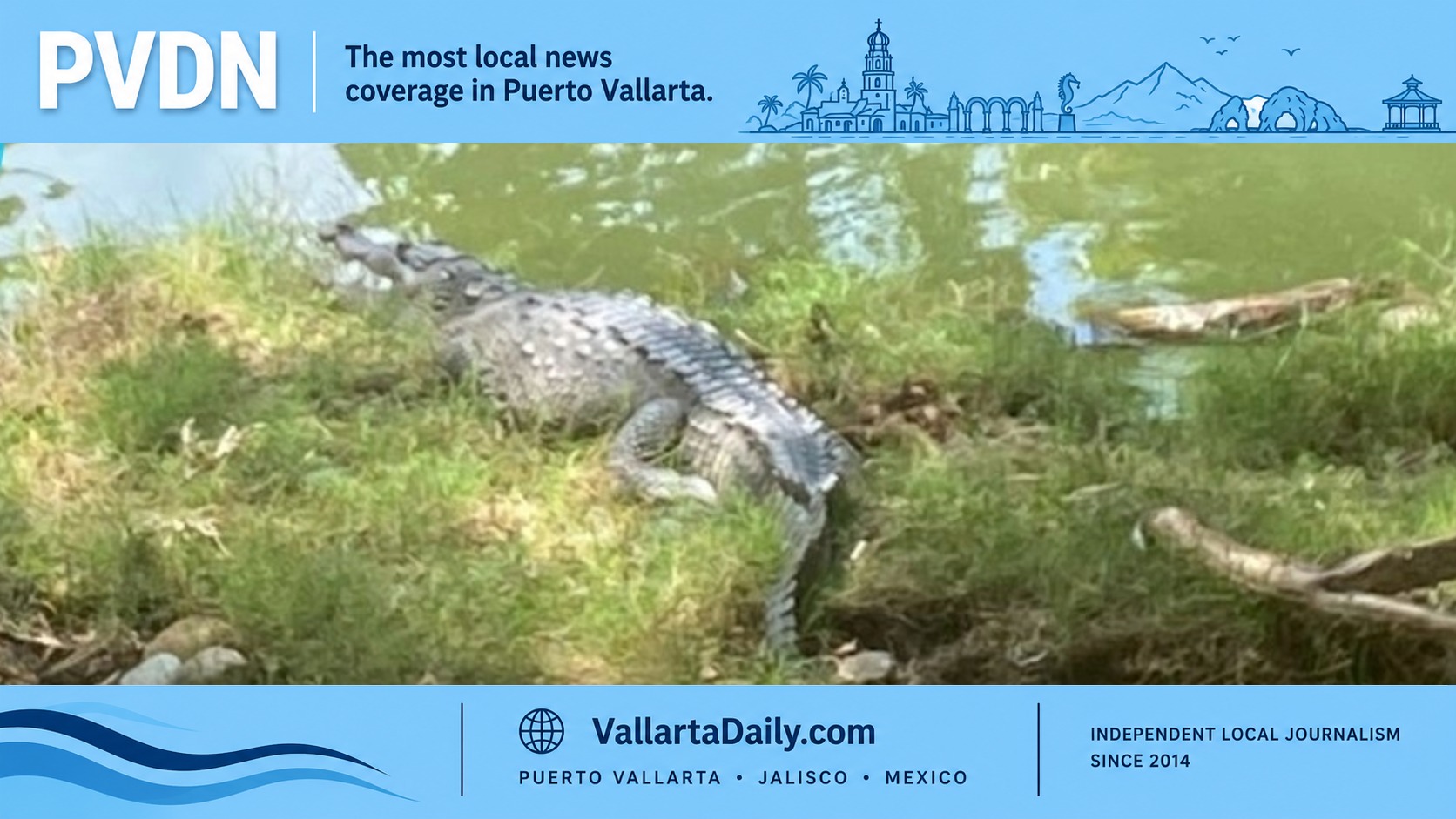
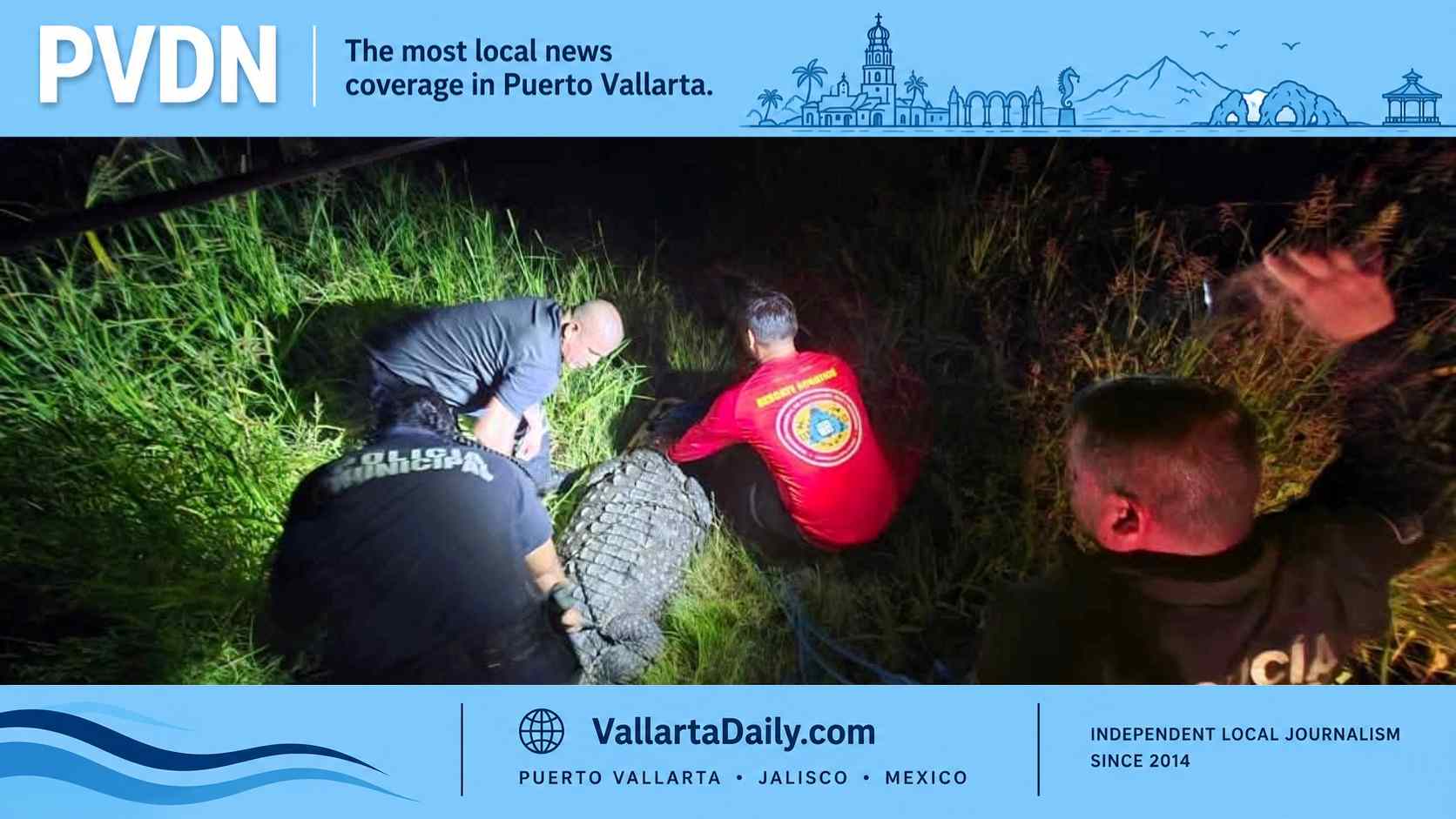
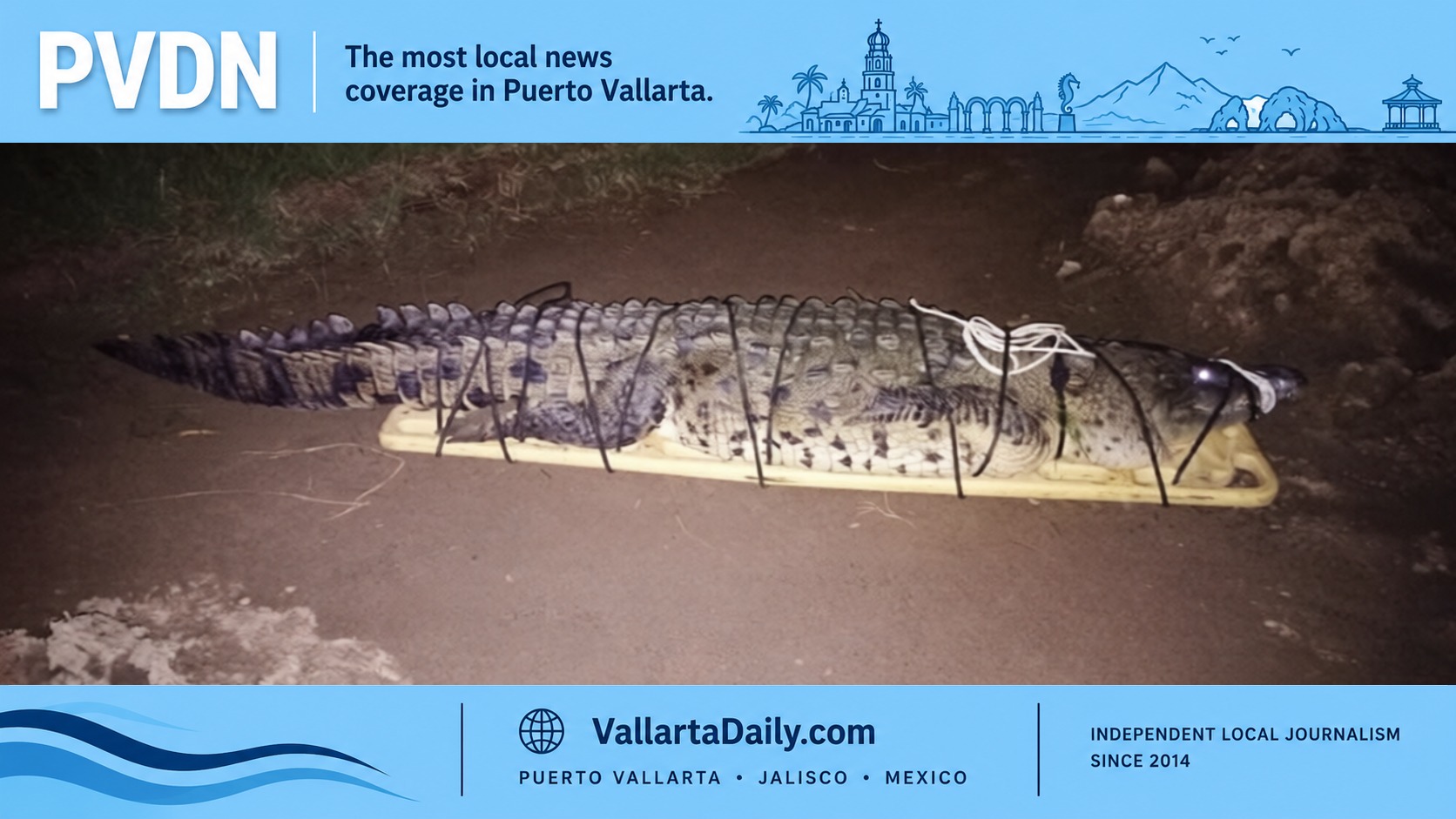
The proposal follows several encounters around Marina Vallarta, including three crocodiles captured in one day on Sept. 9. Two were found near the Marina boardwalk.
However, Lemus did not propose removing every crocodile from the bay. His comments referred to displaced animals appearing in the sea, tourist areas and other public spaces.
“What we are offering is for El Salado to become a rescue area for those crocodiles,” Lemus said.
Lemus attributed the animals’ displacement to construction that reduced their habitat. He said he had discussed the issue with federal Environment Secretary Alicia Bárcena during a recent reforestation visit.
El Salado would need more than a release point
El Salado is an urban mangrove estuary along Avenida Francisco Medina Ascencio. Its visitor entrance is at Puerta 4, across from the Hospital Naval and near Marina Vallarta.
The state expanded the protected area from 168 hectares to 208.2 hectares. Its management documents divide the estuary into conservation, restoration and public-use zones.
Those documents also include scientific monitoring of the American crocodile population. That existing work does not remove the need for a new technical assessment before adding animals.
Ramírez said earlier releases into El Salado had not always kept crocodiles inside the estuary.
“You capture an animal, take it to El Salado, it competes with other males and ends up leaving,” Ramírez said.
He said the estuary would require adaptations to reduce territorial conflict among adult males. He also said El Salado has enough space to receive additional animals.
In our review of the available proposal and public documents, officials had not provided an animal capacity, construction plan, budget or operating agency.
Federal authorization remains necessary
The American crocodile, Crocodylus acutus, is listed under special protection in Mexico’s NOM-059 environmental standard.
Ramírez said any broader relocation agreement would require federal approval. Lemus also said the project must proceed under Semarnat’s direction.
That federal role includes reviewing how animals would be captured, transported and managed. State and municipal crews can respond to immediate public-safety risks, but they cannot establish a permanent relocation program alone.
The proposal follows Jalisco’s recent rejection of indiscriminate mass relocation. State environmental officials instead supported evaluating animals and locations individually.
Lemus’ proposal retains that distinction by focusing on crocodiles already displaced into populated or heavily visited areas.
The policy discussion also comes amid concern over crocodile killings. Ramírez reported 11 dead crocodiles in the Puerto Vallarta area as of Sept. 15.
Local lawmakers have separately sought stronger federal oversight of crocodile management, including reviews of capture and relocation permits.
Until an El Salado plan receives technical and federal approval, crocodile responses in Puerto Vallarta will remain case by case. Residents should report sightings, maintain their distance and wait for trained personnel.