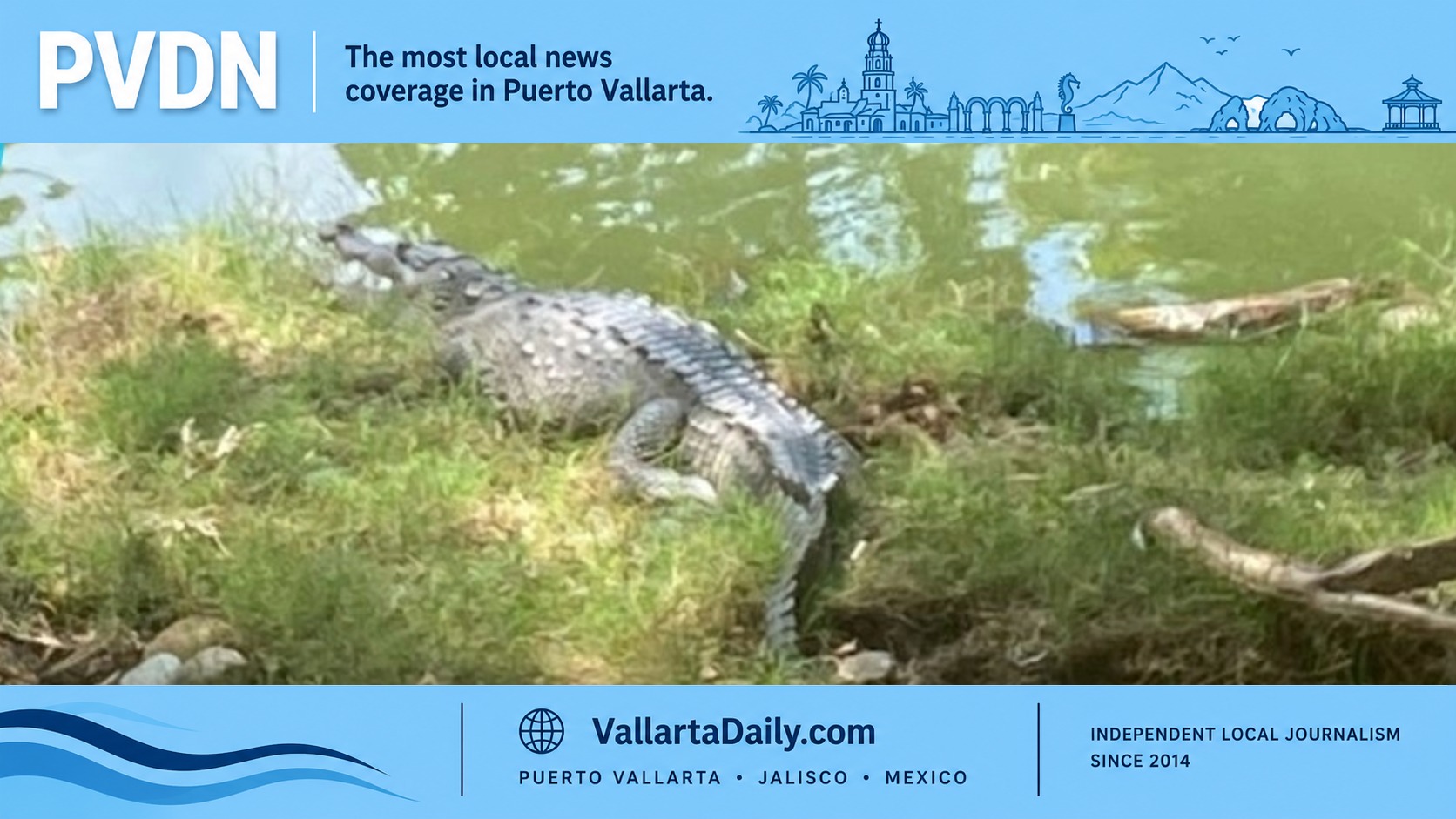
PUERTO VALLARTA, Jalisco, Sept. 14, 2026 — In remarks reported Sept. 7 and again Monday, Jalisco Environment Secretary Paola Bauche Petersen rejected mass relocation of Puerto Vallarta crocodiles.
Her position leaves targeted captures available. Bauche said crews should move an animal that repeatedly presents a public risk, using natural habitat suited to its development.
Under that case-by-case policy, sightings in Marina Vallarta or near Estero Boca Negra and Estero El Salado will not trigger an automatic, regionwide removal.
Targeted removals and beach warnings remain
The policy does not prevent municipal crews from responding when crocodiles enter pedestrian, residential, or heavily used beach areas.
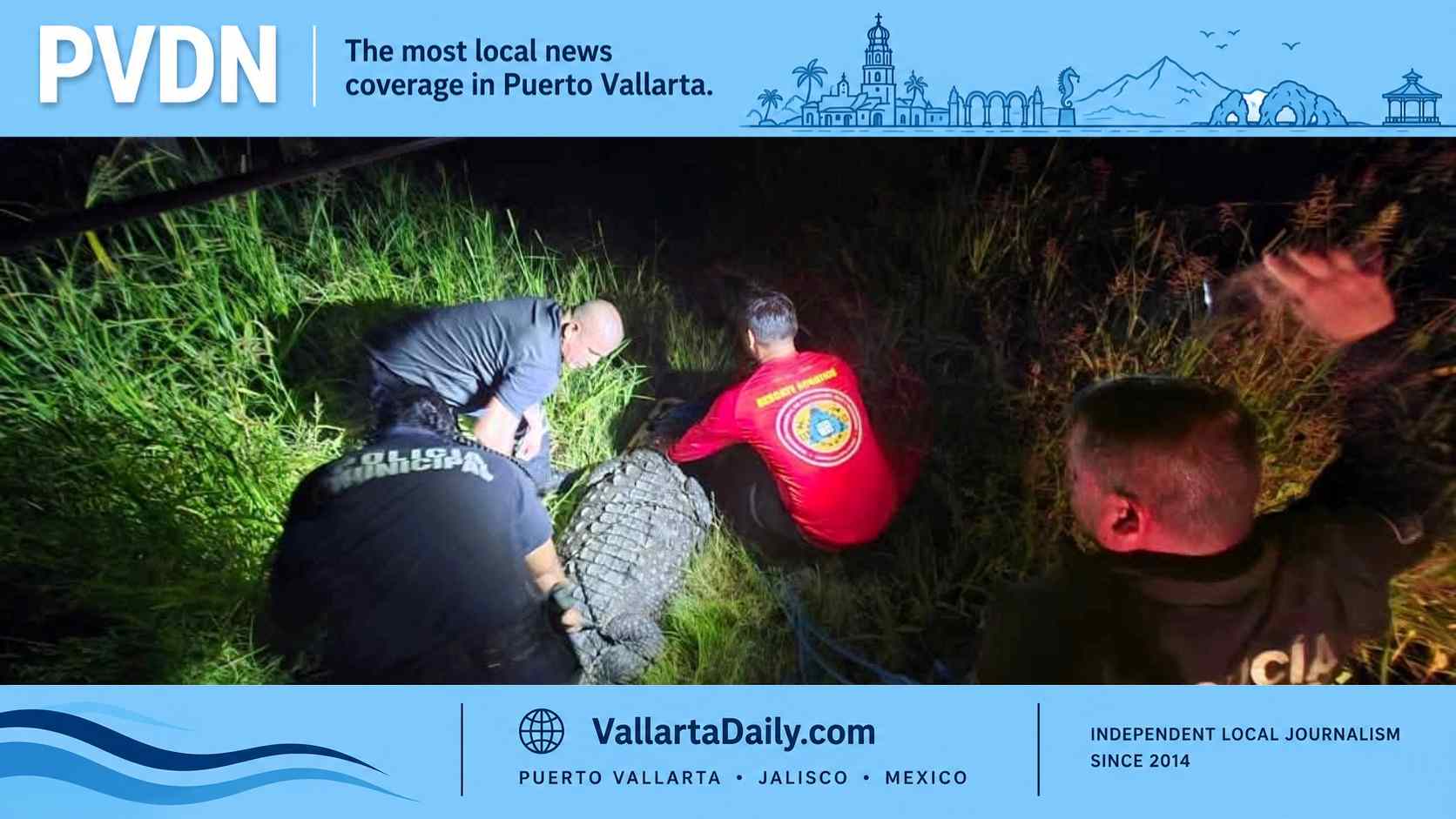
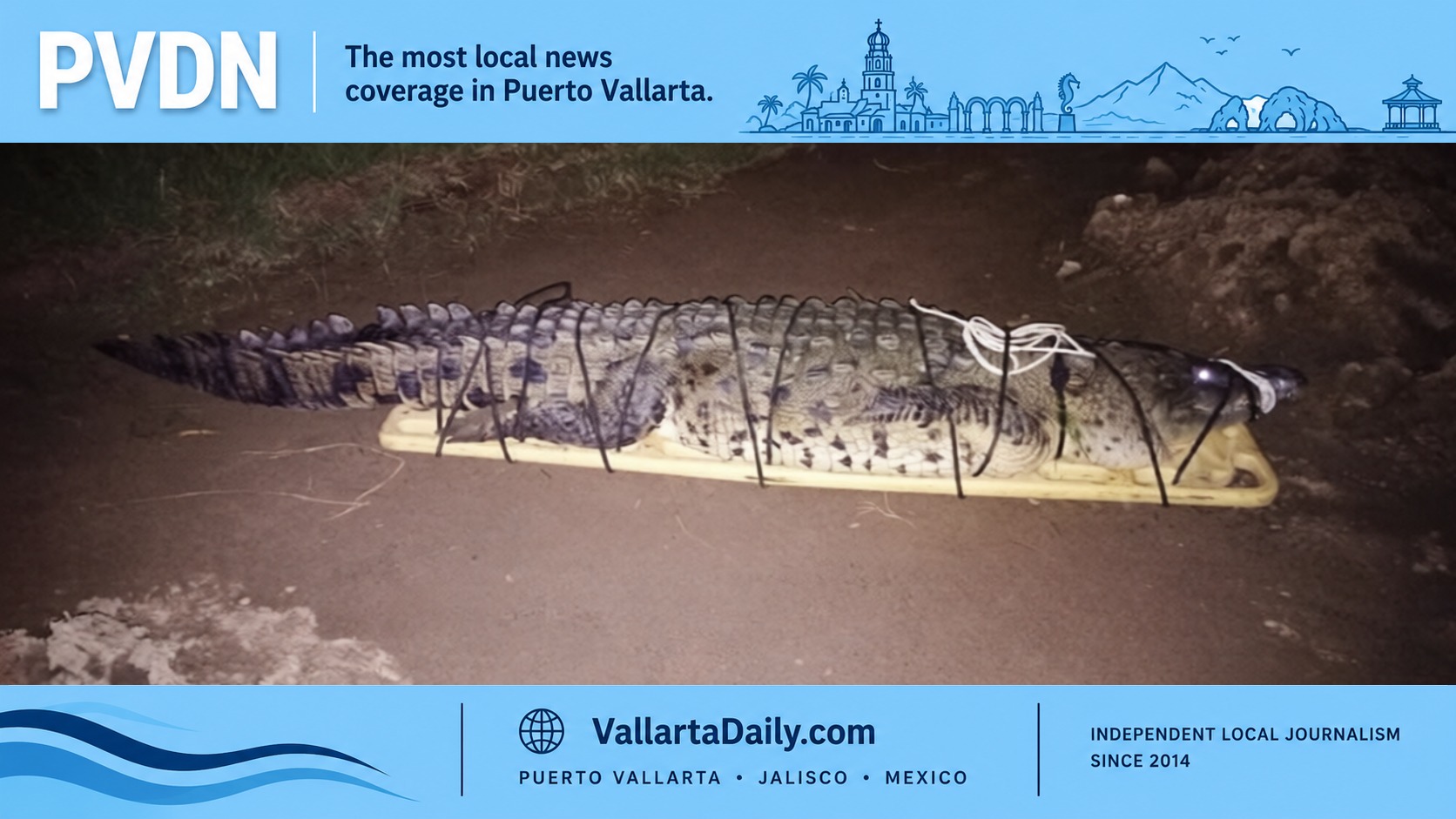
PVDN documented three same-day crocodile captures in Marina Vallarta this month. Those operations appear consistent with Bauche’s case-specific approach.
During one response, Patrulla Verde officers removed a 2.78-meter female near Calle Boca Negra and Calle Albatros. Specialists examined the animal at the Estero El Salado protected area.
The state’s public guidance also remains in effect. Semadet advises people to avoid swimming near river and estuary mouths, particularly around sunrise and sunset.
Residents and visitors should follow purple wildlife flags and report sightings to 911. The agency says people should not approach, feed, touch, or harass crocodiles.
State and federal proposals differ in scope
Federal Environment Secretary Alicia Bárcena announced a broader proposal in early September. It included common warning signs and possible transfers to sanctuaries or crocodile facilities.
According to an account of Bárcena’s announcement, federal officials also planned to review hotel expansions near federal land, riverbanks and river mouths.
Bauche’s position narrows relocation to individual animals presenting a recurring danger.
“The fewer we relocate, the better,” Bauche said in Spanish during recorded remarks. She added that a repeat-risk animal may still need to be moved.
Bauche said crocodiles often return to their territory after relocation. If one does not return, she said, younger males can occupy the vacant territory and fight over it.
“Our government’s approach is to move them to natural places with suitable habitat conditions,” Bauche said, according to another report of her comments.
Public reports give conflicting death totals
The relocation dispute follows a series of crocodile deaths, several attributed to deliberate human actions. PVDN previously reported on the ecological concerns raised by the killings.
We compared recent public accounts and found that their totals do not match.
An Aug. 14 report citing federal environmental officials said 12 crocodiles had died through human actions.
A Sept. 4 account placed the number at 14. Three days later, Bauche said 11 animals had been killed, and a 12th death remained under investigation for possible natural causes.
Urban growth forms part of the policy debate
The current debate intensified after the June 26 fatal crocodile attack in Marina Vallarta. State Civil Protection reported that a 28-year-old tourist was attacked off the beach near the Marriott hotel.
The Mexican Navy recovered the tourist’s body the following day. Authorities found the crocodile near Estero Boca Negra, according to the state account.
Pablo Hernández Hurtado, a crocodile specialist at the University of Guadalajara’s Centro Universitario de la Costa, has described Puerto Vallarta as a transit zone for the animals.
Hernández said urban and tourism development reduced former wetland corridors. Crocodiles now travel through the ocean or developed areas when moving between the Río Ameca, Boca Negra and El Salado, he said.
Semadet estimates that the wider Puerto Vallarta and Bahía de Banderas region has about 300 American crocodiles. Bauche said roughly 40 exceed two meters in length and rejected claims of overpopulation.
The American crocodile, Crocodylus acutus, is subject to special protection under federal regulations. Article 420 of the Federal Penal Code provides penalties of one to nine years in prison for illegally harming protected wildlife.