Mexico’s long-running effort to update its agreement with the European Union just cleared an important step. The move comes days before leaders meet in Mexico City for their first bilateral summit in 11 years. The updated framework goes beyond tariffs and trade. It also reaches into security, climate policy, digital commerce, public procurement, investment, labor rights, and human rights. But the agreement is not yet fully in force, and several approval steps remain.
EU countries move Mexico pact forward
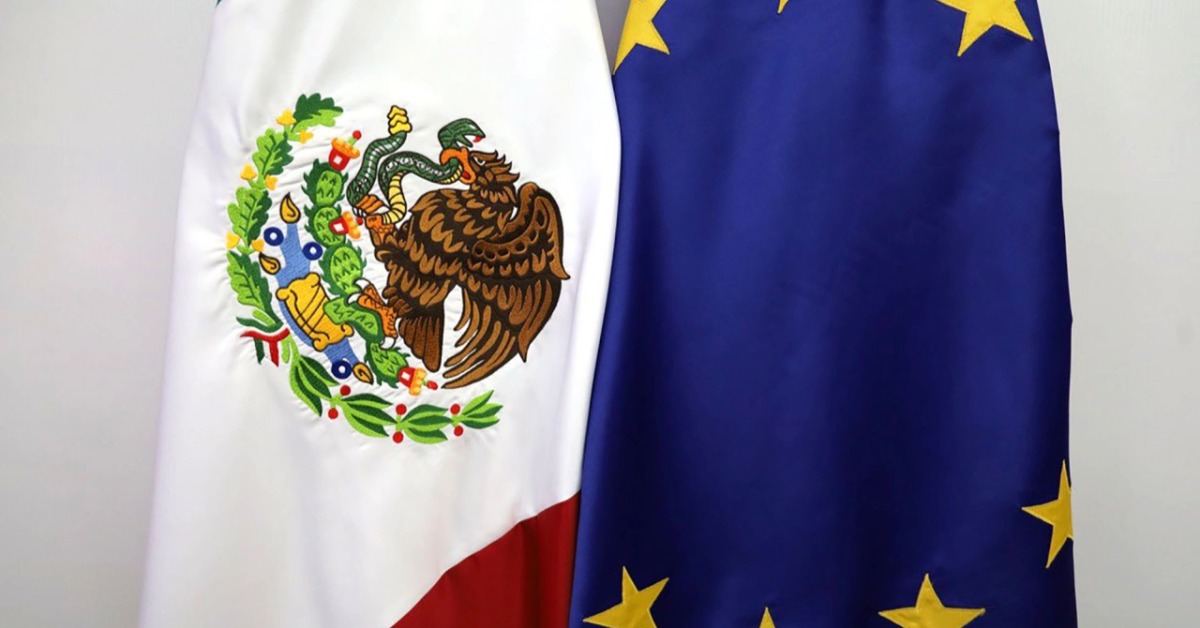
The 27 countries of the European Union have approved moving ahead with an updated agreement with Mexico. The decision clears the way for the formal signing of two agreements covering trade, cooperation, and political relations.
The approval comes before the EU-Mexico summit scheduled for May 22, 2026, in Mexico City. It will be the first bilateral summit between Mexico and the European Union since 2015.
The agreements are expected to be signed by Mexican President Claudia Sheinbaum, European Council President António Costa, and European Commission President Ursula von der Leyen.
The move does not mean the full agreement is already active. It means the EU has completed a key internal step needed before signing can take place.
What the updated agreement covers
The broader agreement is known as the Modernized Global Agreement. It is designed to replace the framework that has guided EU-Mexico relations since 2000.
The new framework covers political dialogue, cooperation, trade, and investment. It also includes areas such as security, justice, climate change, digital transformation, and human rights.
The agreement also includes anti-corruption measures and regular high-level dialogue on human rights, security, and justice.
For Mexico, the update is part of a wider effort to strengthen trade ties beyond North America. The United States remains Mexico’s largest trade partner, but the European Union is one of its most important commercial relationships outside the USMCA region.
Trade changes could affect several sectors
The trade portion of the deal is meant to remove many remaining customs duties and improve access to public procurement markets. It also aims to open more opportunities in services and investment.
The interim trade agreement is designed to move faster than the full partnership agreement. It would apply trade-related parts of the deal while the broader agreement goes through the full ratification process.
The trade provisions include agriculture, machinery, pharmaceuticals, transport equipment, raw materials, intellectual property, and digital trade.
The deal also protects hundreds of European geographical indications. These rules cover products tied to specific regions, such as certain foods and drinks.
Approval steps still remain
The two agreements still need the consent of the European Parliament before they can be formally concluded.
The broader Modernized Global Agreement also requires ratification by all EU member states and Mexico before it fully enters into force.
The interim trade agreement does not require ratification by individual EU countries because it covers areas under EU authority. It would remain in effect until the full agreement replaces it.
That means the signing in Mexico City would be an important step, but not the final step for the entire agreement.
A wider relationship than trade
The updated pact comes at a time when governments are rethinking supply chains, investment rules, and trade alliances.
EU-Mexico trade in goods was valued at more than 86 billion euros in 2025. The European Union was Mexico’s third-largest trading partner after the United States and China.
The EU was also Mexico’s second-largest export market after the United States. Its investment stock in Mexico was more than 206 billion euros in 2024.
For residents and business owners in Mexico, the agreement is not likely to cause immediate day-to-day changes. Its effects would be more gradual, tied to trade flows, investment rules, procurement access, and business conditions between Mexico and Europe.
The agreement also signals that Mexico is trying to keep more doors open amid growing global trade uncertainty.