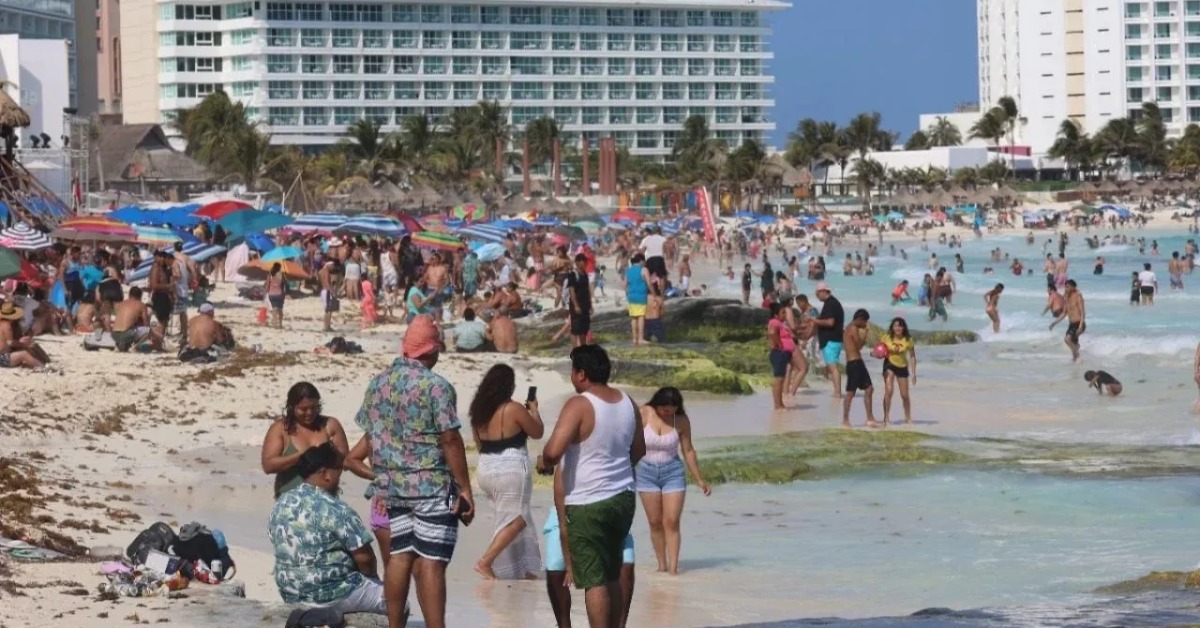
Quintana Roo’s tourism engine depends heavily on air travel, and recent airline disruptions are starting to test that system. Industry leaders say route cuts, higher fares, and carrier issues are now affecting hotel occupancy and visitor flow. The concern is not that Cancun or the Riviera Maya has stopped drawing travelers. It is that fewer affordable flight options can quickly change vacation plans, especially for families, retirees, and visitors watching travel costs.
Airline problems add pressure in the Mexican Caribbean
Tourism leaders in Quintana Roo are warning that flight cancellations and airline route cuts are beginning to affect the state’s visitor economy.
The concern centers on Cancun International Airport, the main gateway to the Mexican Caribbean. The airport connects travelers to Cancun, Playa del Carmen, Tulum, Isla Mujeres, Cozumel, and much of the Riviera Maya.
Recent problems at airlines serving the region have added uncertainty for travelers. Spirit Airlines ceased operations in early May, leaving passengers to rebook trips and seek refunds. Magnicharters also suspended flights in April, creating problems for travelers on package vacations and forcing officials to coordinate support with travel agencies and consumer authorities.
For Quintana Roo, the issue goes beyond stranded passengers. When airlines reduce routes or leave the market, travelers often face fewer options and higher fares. That can weaken demand, especially among budget-conscious tourists.
Cancun airport numbers show softer traffic
The pressure comes as airport traffic in Cancun has already shown signs of slowing.
In April 2026, Cancun airport recorded fewer passengers than in April 2025. Domestic passenger traffic fell more sharply than international traffic, according to recent airport data. That matters because Cancun depends on both Mexican travelers and visitors from the United States, Canada, and other international markets.
The airport remains one of Mexico’s busiest tourism gateways. Still, even a modest drop can affect hotels, transportation companies, tour operators, restaurants, and small businesses that depend on a steady flow of visitors.
Hotel occupancy in the Mexican Caribbean remained above 65 percent at the start of May, but tourism leaders are watching the trend closely. A strong destination can still feel pressure when air access becomes less reliable or more expensive.
Tourism leaders push for a broader strategy
Business leaders are calling on Quintana Roo to reduce its dependence on the traditional sun-and-beach tourism model.
The state has long marketed Cancun and the Riviera Maya around beaches, resorts, nightlife, and all-inclusive vacations. That model still brings millions of visitors. But airline disruptions show how vulnerable the region can be when too much depends on one travel pattern and a limited set of air routes.
Tourism leaders have pointed to cultural tourism, food tourism, medical tourism, wellness travel, and regional experiences as areas that could help diversify demand. These segments may not replace beach tourism, but they can help attract visitors with different travel habits.
For foreign residents in Mexico, the issue is also practical. Fewer flights can mean more expensive travel for visiting family, fewer direct connections, and longer routes through Mexico City or other hubs.
Officials look to protect connectivity
State tourism officials have said the Mexican Caribbean continues to operate normally. They have also pointed to efforts to open new routes and support passengers affected by cancellations.
Those steps are important because air connectivity is one of Quintana Roo’s biggest economic advantages. Cancun airport not only serves tourists staying in Cancun. It also feeds much of the broader region, including communities where many foreign residents live part-time or full-time.
If route cuts continue, the impact may be gradual. Hotels could adjust prices. Tour operators may see fewer advance bookings. Travelers may delay plans or choose destinations with cheaper flights.
For now, Quintana Roo is not facing a collapse in tourism. The sector’s warning is more measured. The region remains busy, but the air travel system supporting it is under pressure.
The next test will come as summer travel approaches. If airlines replace lost capacity and fares stabilize, the impact may be limited. If not, the Mexican Caribbean may need to work harder to keep its visitor numbers steady.