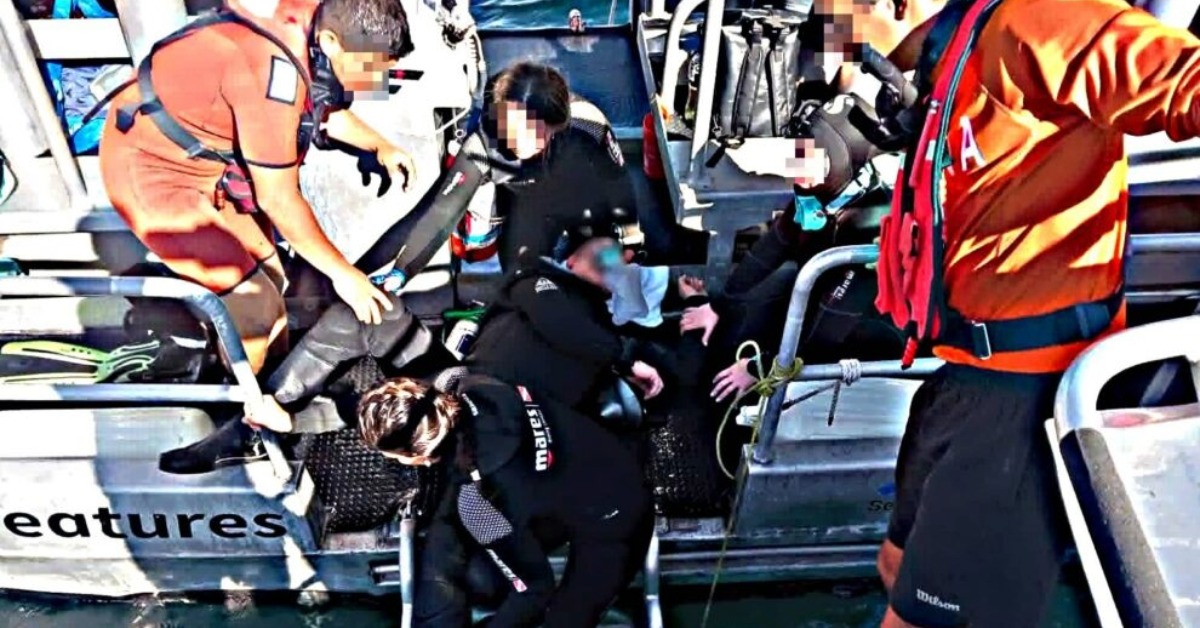
A dive near Cabo San Lucas’ Arch turned into a medical emergency. A 55-year-old German diver had to be pulled from the water and rushed ashore. Officials say Navy crews stabilized him before transferring him to a hospital. The public report leaves key questions unanswered. It does not explain the diver’s later condition. It also stops short of confirming a final diagnosis, making the wording around a suspected pulmonary collapse especially important. Here is what officials confirmed about the rescue off the Arch.
Rescue near the Arch
Authorities in Cabo San Lucas said a 55-year-old German diver was rescued after showing respiratory distress near the Arch. The public report described his symptoms as compatible with a probable pulmonary collapse. The operation happened on March 4. The Mexican Navy carried it out in its Coast Guard role. ENSAR Los Cabos and the naval medical staff took part. Officials said the emergency report triggered an immediate response. A Defender boat was sent to the area with rescue personnel and medical support on board. Once the crew reached the diver, they gave first aid and worked to stabilize him in the water. He was then moved to the naval command pier, where paramedics were waiting. From there, he was taken by private ambulance to a local hospital for specialized care. The public report did not identify the diver by name. It also did not release a later medical bulletin on his condition. What officials made public was the rescue sequence and the fact that the diver was stabilized before reaching shore.
The case drew attention because it unfolded in one of Los Cabos’ best-known marine activity areas. The waters around the Arch are used for sightseeing, snorkeling, and diving. They also sit inside a busy boating corridor. That matters for residents and visitors alike. A fast response can depend on several factors. It matters how quickly a distress call reaches the right authority. It also matters how close rescue teams are to the scene. In this case, officials said the maritime rescue station responded immediately upon receiving the alert. They also repeated the emergency numbers used for incidents at sea in Cabo San Lucas. The rescue followed a standard chain. There was a distress call, a deployment, first aid, stabilization, a shore transfer, and then hospital transport. For readers who spend time on boats or in the water around Los Cabos, that sequence shows how a marine emergency is handled when every minute counts.
Why the wording matters
The official wording is also important. Authorities described the diver’s condition as symptoms compatible with a probable pulmonary collapse. That is not the same as a confirmed diagnosis. Field responders can identify signs of respiratory distress and begin treatment. Hospital staff determines the exact cause. A pneumothorax, often called a collapsed lung, happens when air enters the space between the lung and the chest wall. Medical references note that pressure changes linked to scuba diving can contribute to lung overexpansion injuries and, in some cases, pneumothorax. That helps explain why breathing problems underwater are treated with urgency. Even so, the public information released after the rescue remained limited. Officials did not say whether the diver had a prior condition. They did not say how deep the dive was or what hospital findings later showed. Those missing details leave the episode as a narrowly described rescue rather than a full medical case report.
For Los Cabos, the incident is a reminder of how much local infrastructure supports everyday tourism. Headlines often focus on beaches, hotels, and cruise traffic. Dive trips, charter outings, and water sports are also routine here. They shape daily life between Cabo San Lucas and the bay. Most end without incident. But when something goes wrong, the response depends on trained crews. It also depends on transport access and quick coordination between marine and land-based emergency services. That matters in a tourism-heavy port. That system is easy to overlook until it is tested. In this case, the diver reached shore alive and stable enough to be transferred to a hospital. That is the key fact in the official account. What remains unknown is his later medical status. Unless authorities or family members provide an update, the public record ends with the rescue itself and the confirmation that he was handed over for specialized care.