Gray whales swim from the Arctic to Baja lagoons each winter. Here’s where to watch them, why they approach boats, and how to do it right, safely.
Every winter, the Pacific goes quiet in the far north, and the Baja gray whales begin moving south. They hug the coastline like they’ve done for centuries, trading ice and darkness for warm, shallow lagoons in Baja California Sur. This is where calves are born, where mothers rest, and where some whales do something that still catches scientists off guard. They approach small boats on their own terms, close enough to see barnacles, whiskers, and blinking eyes. It feels personal. It should also feel earned.
At first, the gray whale migration sounds like a statistic. Twelve thousand miles, give or take, from Arctic feeding grounds down the Pacific coast and back again.
Then you see the route on a map and realize what it means in human terms. Storms. Currents. Predators. Shipping lanes. And newborn calves that start life by swimming.
Eastern North Pacific gray whales time their southbound movement from roughly November into mid-February, then turn north and keep moving through spring. For Baja travelers, that’s the sweet spot. Cold, clear mornings. Wind that smells like salt and desert. The feeling that the season is built around one returning animal.
Baja’s best-known gray whale nurseries sit on the Pacific side of the peninsula, inside sheltered lagoons that protect mothers and calves from open-ocean swell. Two of the most famous, Ojo de Liebre and San Ignacio, are part of the Whale Sanctuary of El Vizcaíno, a UNESCO World Heritage site.
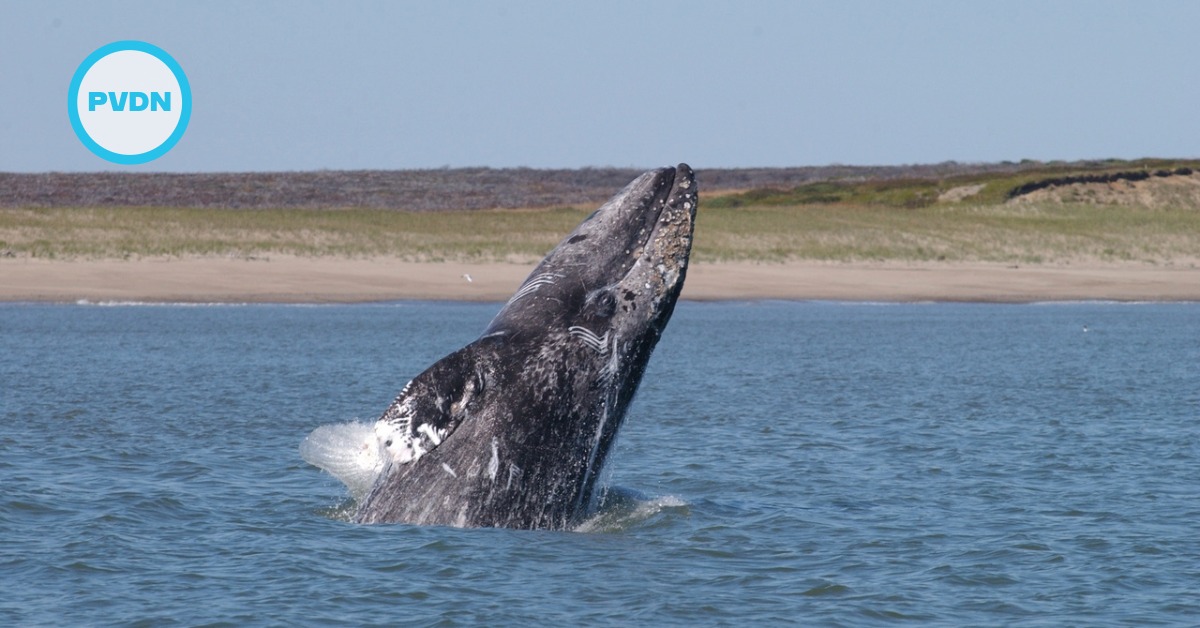
This is also where the story gets weird in the best way. Unlike many whale species that keep their distance, gray whales in Baja sometimes choose closeness. They surface beside pangas. They roll. They lift their heads. In the right conditions, they’ll hover near a boat as if they’re waiting for you to notice.
Baja gray whales and their 12,000-mile migration
Gray whales don’t migrate because it’s charming. They migrate because the ocean makes them.
In summer, they feed in northern waters, including the Arctic and subarctic. They build energy reserves for a long journey. Unlike humpbacks that often feed midwater, gray whales are famous for bottom-feeding. They rake the seafloor for small prey and filter it through baleen. That feeding style also explains their look. Many carry barnacles and whale lice, and their mottled gray skin reads like a travel log.
By late fall, they begin moving south, often along the West Coast, close to shore. It’s one of the longest annual migrations of any mammal, and NOAA puts the round trip at about 12,000 miles.
Baja’s lagoons serve a specific purpose. They’re warm, shallow, and calmer than the open Pacific. That matters for calves. Females give birth and nurse their young through the winter season. If you visit at the right time, you’ll see the family dynamic up close. A mother stays tight to her calf. The calf surfaces a beat late. It exhales in a small burst. Then it learns to breathe like something built for distance.
So where should an expat or winter traveler aim?
San Ignacio Lagoon is the name that comes up again and again, partly because it sits inside a protected sanctuary and partly because of the encounters people talk about for years. It’s widely promoted as a place where gray whales sometimes approach boats on their own, and where any close interaction is framed as whale-led, not human-led.
Bahía Magdalena, farther south in Baja California Sur, is another classic base. It’s not a single lagoon experience. It’s a bay system with channels, barrier islands, and wide-open sky. In season, whales use these protected waters too, and tours often describe encounters that can feel intimate when the whales choose it.
Here’s the honest part. Not every trip delivers a “friendly whale” moment. Even in the best lagoons, the whales set the tone. A San Ignacio operator puts it plainly: “The whales are the ones to make contact and it is always up to the whale.” That mindset is the difference between a meaningful wildlife experience and a stressful one.
The friendliness itself remains a scientific question. Researchers and guides have theories, but no single clean answer. The lagoons are calm. The whales are no longer being hunted there. The mothers may be more relaxed. The boats move slowly. The environment is predictable. Whatever the mix, the pattern is real enough that it has become part of Baja’s winter identity.
And it’s also why this story can’t be told as pure adventure. It has to include the rules.
Responsible whale watching in Baja
If you’re going to sell this as “the whales let you touch them,” you also have to explain what Mexico considers harassment.
Mexico regulates whale watching under NOM-131-SEMARNAT-2010, which sets limits on speed, time, and distance around whales. The standard allows up to four boats to be around a whale or group at one time. It also sets a required waiting distance of 240 meters for boats that are in line to observe.
For gray whales specifically, the minimum observation distance listed is 60 meters for small boats and 80 meters for medium or larger vessels. The rules also address behavior in the moment. If a whale approaches the boat, the guidance is to keep the engine in neutral, wait for the whale to move off, and depart slowly.
That matters because “friendly” can turn into pressure fast. The best operators don’t chase. They don’t crowd. They don’t promise contact. Some even spell out a hard line: outside designated zones, interaction is illegal, and within the zone, they don’t coerce whales to approach.
This is where travelers have absolute power. Choose a licensed operator. Ask how they follow NOM-131. Listen for specifics, not slogans. If the pitch is all adrenaline and no respect, walk away.
The conservation context is also changing. NOAA says the eastern North Pacific gray whale unusual mortality event that began in 2018 ended in 2023, after years of elevated strandings. Scientists tied much of that crisis to changes in subarctic and Arctic feeding conditions, which can affect body condition, births, and survival.
Population estimates move year to year, and methods differ. One NOAA page notes that the 2024–2025 abundance estimate was among the lowest in its time series. That doesn’t mean Baja’s lagoons are “empty.” It does mean the migration you’re watching is not a guaranteed success story. It’s an ongoing test of endurance in a warming ocean.
There’s still hope in the record. The eastern North Pacific population was removed from the U.S. endangered species list in 1994 due to recovery. And even after the die-off years, a NOAA researcher told the Seattle Times, “It’s nice to be able to report some good news the last couple of years.”
For an expat wintering in Mexico, this is the best frame. Go to Baja because it’s one of the rare places where a wild animal sometimes chooses contact instead of flight. Go because the desert meets the Pacific in a way that feels stripped down and true. Go because a calf learning to breathe beside its mother will reset your sense of scale.
Then do the part that actually protects the experience. Please keep your hands to yourself unless a whale closes the distance and the guide signals it’s safe. Stay quiet. Stay steady. Let the panga drift. Let the animal write the ending.
Because the most unforgettable detail is not the touch, it’s the choice.