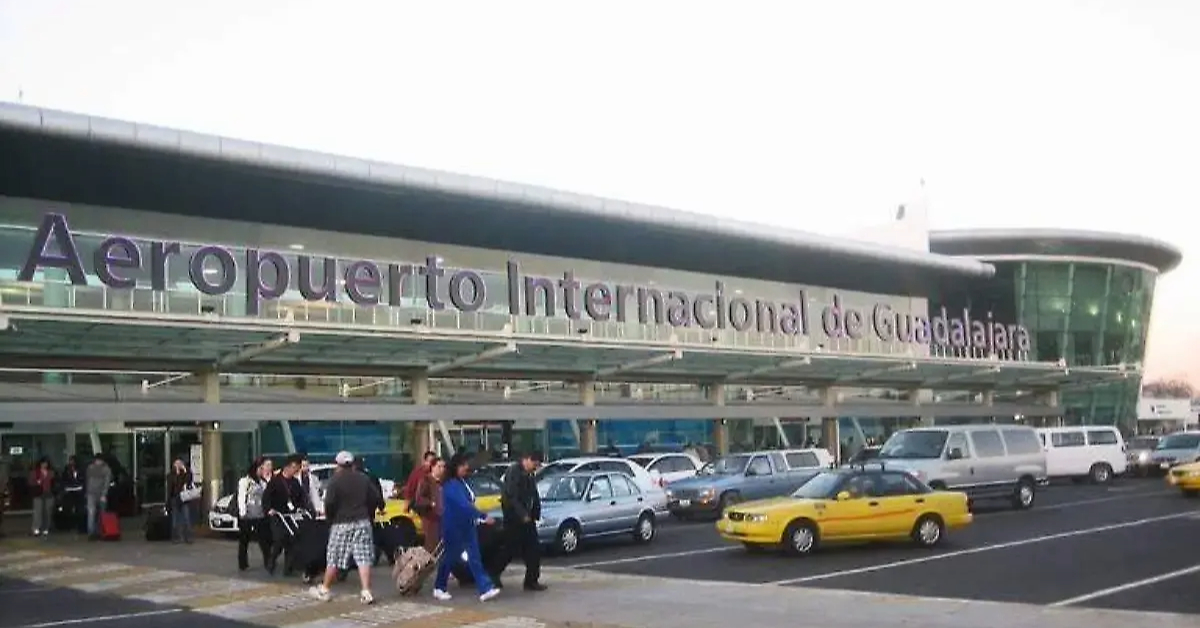
Guadalajara International Airport will be ready for the 2026 World Cup, with Terminal 2 and a new access road in progress. Learn how Jalisco is preparing for the event.
Guadalajara International Airport, 2026 World Cup, Jalisco, Terminal 2, Adolf Horn Avenue, Grupo Aeroportuario del Pacífico, Mexico airport infrastructure
Guadalajara, Jalisco – With just under a year remaining before the world’s biggest sporting event arrives in Mexico, local authorities have confirmed that Guadalajara International Airport (GDL) will be fully operational for the 2026 FIFA World Cup.
Cryshtian José Amador Lizardi, the newly appointed administrator of the Guadalajara airport, assured the public that the airport is on track to meet the demands of international travelers arriving for the event. “The operation of Guadalajara International Airport is guaranteed for the 2026 World Cup,” he stated, despite the airport still undergoing major upgrades.
The city of Guadalajara, one of Mexico’s three World Cup host cities, is preparing to welcome tens of thousands of fans for several key matches. Ensuring efficient airport operations is a top priority for both local and federal officials as the countdown to kickoff accelerates.
Terminal 2 and New Access Road Among Key Priorities
Amador Lizardi outlined the two biggest infrastructure priorities: the construction of Terminal 2 and the development of a new access road via Adolf Horn Avenue. These projects aim to alleviate congestion, modernize facilities, and expand capacity at one of the busiest airports in Mexico.
“My commitment is to promote the key projects that will define the airport’s future,” said Amador Lizardi. “Both Terminal 2 and the new road will be essential to improving the passenger experience and supporting long-term growth.”
Guadalajara International Airport is currently Mexico’s third-largest airport in passenger traffic, serving roughly 18 million travelers annually. With World Cup matches expected to drive an even greater influx of international and domestic visitors, the airport’s expansion is seen as critical.
Backed by Long-Term Vision and Major Investment
The infrastructure improvements are part of the 2025–2029 Master Development Plan, which includes a projected investment of 22.377 billion pesos. The goal is to create a safe, efficient, and high-quality travel experience aligned with global standards.
Amador Lizardi brings over 20 years of experience in the aviation and airport management sector, having previously worked at the airports of Guanajuato, Hermosillo, Aguascalientes, and Puerto Vallarta. His academic background includes studies in aeronautics and senior airline management, positioning him to lead Guadalajara’s airport into a pivotal moment in its history.
He replaces Martín Zazueta Chávez, who recently took on a new role as Director of Airports and Regulated Business at Grupo Aeroportuario del Pacífico (GAP), the company that operates GDL and 11 other airports across the Pacific region of Mexico.
Ride-Share Access Still Under Review
While the airport’s expansion is moving forward, access for ride-share platforms remains unresolved. Currently, vehicles from platforms such as Uber and Didi are not permitted to pick up or drop off passengers directly at the airport terminals—a restriction that has generated frustration among travelers.
Asked about the issue, Amador Lizardi clarified that the matter lies in the hands of federal regulatory authorities, not airport administrators. “We hope the situation is resolved before the 2026 World Cup,” he said, noting that the airport would be ready to comply with any legal changes that allow for a broader range of transportation options.
A Gateway to the World Stage
As Jalisco prepares to take the global spotlight, Guadalajara International Airport stands as a critical piece of infrastructure that must meet international expectations. From fans arriving to cheer on their teams to journalists, officials, and support staff, the airport will be the first point of contact with the city and the country.
Officials say that construction timelines are being closely monitored, with contingency plans in place to ensure seamless operation regardless of potential delays. With Terminal 2 and the new Adolf Horn Avenue access road forming the core of expansion efforts, airport leaders say they are confident the facility will rise to the occasion.
“The World Cup is not just a sporting event,” said Amador Lizardi. “It’s an opportunity to show the world what Guadalajara and Jalisco have to offer—and our airport will be ready to deliver.”