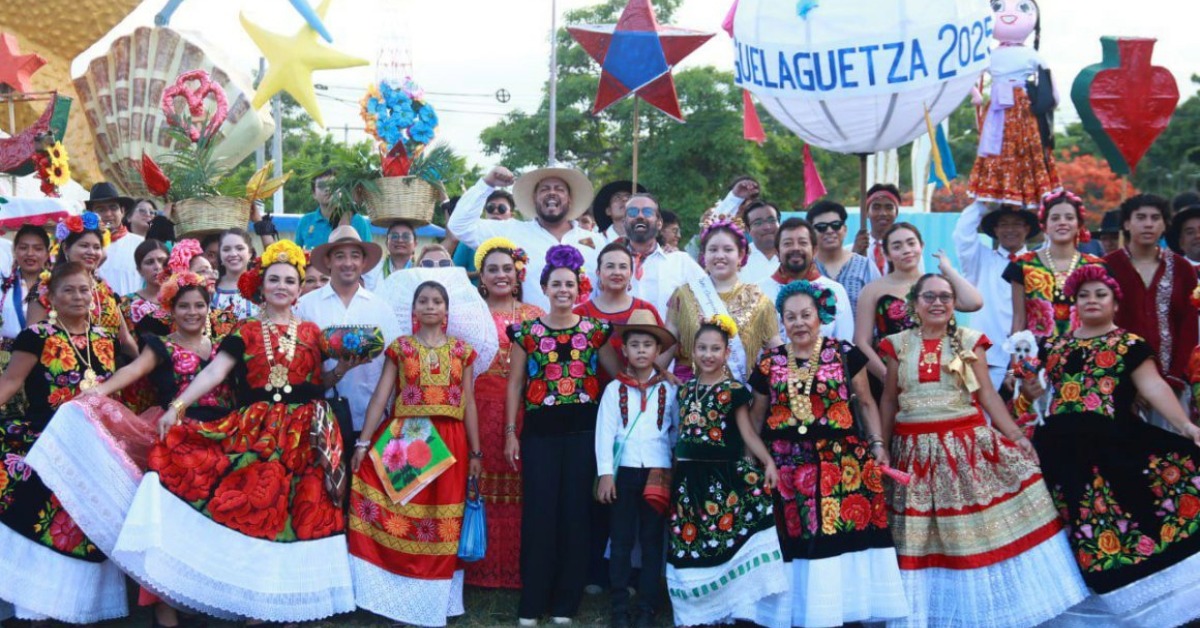
Cancún, QR – Guelaguetza celebration in Cancún unfolded for a second day with a crowd filling the city center to honor Oaxacan traditions through music, dance, and food. Thousands followed the lively Calenda procession from the Ceviche Roundabout to Palapas Park, led by Municipal President Ana Paty Peralta and supported by visiting performers from Oaxaca. The event, now in its third consecutive year in Cancún, reinforced cultural ties and highlighted the role of heritage in the state’s tourism mix.
The Guelaguetza has its roots in Oaxaca, where it began as a pre-Hispanic festival of reciprocity among indigenous communities. The name comes from the Zapotec word meaning “offering” or “share,” a ritual where communities brought their regional foods, dances, and music to honor the gods and each other, especially during the rainy season when agricultural cycles demanded cooperation. Over time, the celebration evolved, blending indigenous and colonial influences, becoming a statewide cultural showcase that draws visitors from across Mexico and beyond. Cancún’s version adapts that spirit of mutual exchange, turning the city center into a temporary extension of Oaxacan plazas.
The Calenda, a traditional street parade that is a hallmark of Guelaguetza festivities, kicked off with drums, brass, and the rhythm of folk dancers. The Tlaxiaco Folk Dance Company brought regional choreography and costumes, while the Santa Cruz Xoxocotlán Philharmonic Band supplied the live music that kept the procession moving. Residents and visitors joined in, carrying banners, clapping, and dancing alongside the performers, turning the route into a moving expression of shared identity.
At Palapas Park, the mood shifted from procession to gathering. Peralta addressed the crowd and singled out the Oaxacan residents of Cancún. She thanked them for bringing their culture to the city and for making the event possible. “Cancún is their home and they will always welcome them with open arms,” she said, framing the celebration as both inclusion and recognition. Her words underscored a broader agreement among state and municipal officials: culture is not a side attraction but a pillar of the local tourism offering that differentiates Quintana Roo beyond beaches and resorts.
A central feature of the day was the food and craft showcase. Local entrepreneurs shared space with women from the “Ellas Facturan” program, which supports female-led small businesses through training and access to markets. The booths offered traditional Oaxacan dishes—moles, tamales, tlayudas, and mezcal tastings—alongside handmade textiles, wood carvings, and pottery. Visitors sampled flavors while learning about the ingredients and techniques that traveled with the community from southern Mexico. The setup intentionally mirrored the Guelaguetza’s original concept of sharing and economic reciprocity, giving artisans direct access to customers and building awareness of cultural production.
Organizers emphasized the event’s dual purpose: celebration and economic inclusion. The presence of the “Ellas Facturan” entrepreneurs, many of whom are women balancing family obligations and business development, added a local layer to the festival’s exchange model. Their participation offered visibility and commerce in a public, festive setting, linking Oaxacan cultural pride with the broader goal of empowering women in Quintana Roo’s economy.
State and municipal leaders used the occasion to signal a longer-term cultural strategy. They agreed that events like Guelaguetza do more than entertain; they deepen roots between communities, attract culturally minded travelers, and create year-round tourism value. Officials noted that integrating regional traditions into Cancún’s calendar also helps counter the narrative of the city as solely a resort destination and builds a reputation for diversity and authenticity.
As the day wound down, dancers performed a final set while guests lingered over plates, photos, and conversations. The shared spaces—music stages, food aisles, and the park’s shaded benches—felt like a temporary plaza from Oaxaca, transplanted and thriving in the Yucatán. The repeated staging of the Guelaguetza celebration in Cancún now signals that the city is not only borrowing culture but becoming a place where new, hybrid traditions take hold.
The event closes with a promise: cultural exchange will continue, and with each year, the ties between Oaxaca and Cancún deepen, carried forward by the people who show up, perform, serve food, and welcome others.