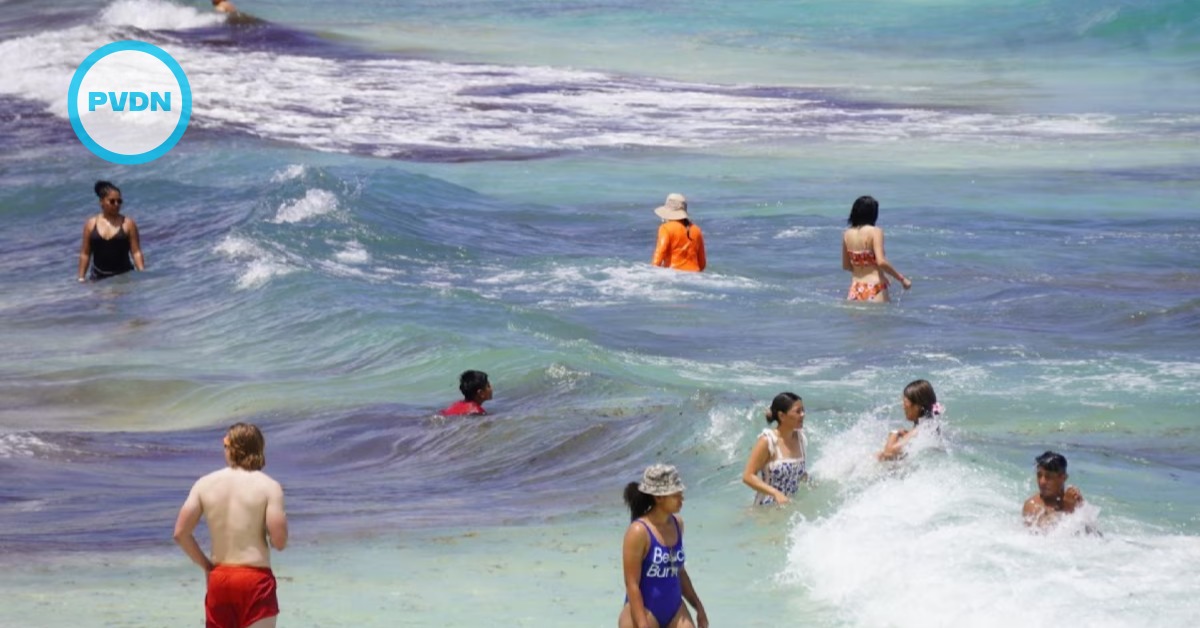
Mexico’s Senate Tourism Commission backs reforms to ensure all beaches remain free and open, after Tulum’s access fight exposed gaps in current rules.
Mexico’s Senate has taken a key step to reinforce the long-promised idea that every beach in the country should be open to everyone.
On Tuesday, the Senate’s Tourism Commission unanimously approved a package of reforms that would guarantee free, permanent and non-discriminatory access to the nation’s beaches. The vote, backed by six senators, amends the General Law of National Assets and the General Law of Ecological Balance and Environmental Protection to spell out that coastal access cannot be blocked, monetized or subjected to arbitrary conditions.
Commission president Eugenio Segura, a senator from Quintana Roo, told colleagues that the move responds directly to the recent conflict in Tulum, where residents and visitors have faced new barriers and fees to reach the shoreline. That controversy turned a long-running legal debate into a national political issue and pushed beach access to the top of the tourism agenda.
What the Mexico beach access law would change
The bill approved by the committee would enshrine several specific guarantees in federal law. It states that access to maritime beaches and the adjoining federal maritime-terrestrial zone must be free, permanent and available to all people, regardless of origin, nationality or social status. It also reiterates that this access cannot be inhibited, restricted, obstructed or conditioned, except in clearly defined cases established in other laws or administrative regulations.
One of the most concrete changes is a ban on charging entrance fees or imposing commercial conditions as a prerequisite to stepping onto the sand. Under the reform, concessions and permits in the federal zone must guarantee a corridor for public access. If a concessionaire fails to do so, it risks losing that concession entirely, reinforcing the sanctions already contemplated in the General Law of National Assets and clarifying when they apply.
The initiative also strengthens the role of environmental authorities. The Environment Ministry would be required to monitor compliance and carry out regular inspections of beach access points. At the same time, it recognizes that authorities may temporarily limit access in specific situations, such as environmental protection, public safety or reasons of national interest. Those exceptions must be grounded in law, not in the commercial interests of hotels or developers.
Another notable element is the order to create a National Register of Beach Accesses. Federal and municipal governments would have to identify and record pathways to the coast and inscribe them in property registries and cadastral records. The idea is to prevent these corridors from disappearing when land changes hands, and to give residents and visitors a clear map of where they can legally reach the sea.
The reform also touches protected natural areas. Authorities that manage national parks and reserves would be obliged to guarantee free entry at least one day a week, with the understanding that visitors must follow rules designed to protect local ecosystems. Lawmakers argue that this balances the right to enjoy Mexico’s natural heritage with the need to shield fragile coastlines from damage.
Mexico has already recognized beach access in law before. A 2020 amendment to the General Law of National Assets established that beaches are national assets for common use and that people have the right to move along them. In practice, however, residents and tourists in major destinations have continued to report gates, security checkpoints and informal payments imposed by private operators. The new bill aims to close the gap between that earlier promise and the reality on the ground.
From Tulum conflict to enforcement on the sand
Nowhere has that gap been more visible in 2025 than in Tulum. In August, the town’s mayor publicly accused the military-linked company that operates the Jaguar National Park area of restricting local residents’ access to nearby beaches, despite prior agreements for free entry with proof of residence. Locals, tour guides and small business owners complained of high package fees that bundled park access with the archaeological zone, putting their usual work routes and family outings out of reach.
Weeks later, a new municipal announcement offered “free” access to beaches but barred visitors from bringing food, coolers, drinks or umbrellas, effectively pushing anyone who wanted shade or a meal to spend money inside private establishments. Videos of empty beaches and closed restaurants circulated widely, and the situation became a symbol of how rules can be used to keep lower-income residents away even when the shoreline is technically open.
The national government responded. In October, President Claudia Sheinbaum publicly called it illegal to limit access to beaches based on people’s economic capacity. She criticized any arrangements that leave control of entry in the hands of hoteliers and restaurateurs. The Tulum dispute, layered onto years of similar complaints in Cancún, Playa del Carmen and other resorts, gave fresh urgency to calls for a stronger legal framework.
Against that backdrop, the federal bill has moved quickly. The Chamber of Deputies approved the reforms by unanimity at the start of October and sent the minutes to the Senate. With the Tourism Commission’s vote this week, the project advances to the next stage in the upper house, where the full Senate still needs to discuss and approve it before it can be published and enforced.
Even once it becomes law, the real test will lie in enforcement. Municipal governments will need to open and signpost access corridors, update maps and registries, and resist pressure from powerful investors who prefer fenced-off beachfronts. Environmental authorities will have to carry out the inspections the text demands, and be willing to recommend revoking concessions when operators simply ignore the rules.
For coastal communities, the stakes are personal. Free access to the shoreline is not just a matter of tourist convenience; it shapes whether local families can continue long-standing traditions of fishing, gathering, celebrations and simple weekend swims. If the Mexico beach access law is fully approved and applied as written, it could finally give those families stronger tools to defend a right that Mexico’s Constitution and previous laws have already promised them for years.