A bowl of toasted corn, a honey harvest, the quiet work of a loom—these aren’t museum reenactments. They’re living scenes that a new INAH photo contest asked specialists to document, then explain, as clues to Mexico’s pre-Hispanic past. The winning images don’t just look good; they argue something about continuity, change, and what survives in everyday practice. The surprise is in the judges’ saying the real craft lies there, and why a short caption mattered as much as the light.
A camera as an archaeological tool
The contest, organized by INAH’s archaeology coordination under the guiding question “How do we know what we know?”, is built on a simple idea with big implications: to understand ancient societies, researchers sometimes look closely at the present. Ethnoarchaeology does not treat living communities as “time capsules,” and the judges were careful about that. Instead, it studies how specific practices—food preparation, ritual sequences, craft techniques, the handling of materials—can help interpret traces that survive in the archaeological record.
That framing is why the contest isn’t open to general photography submissions. It invites specialists in fields such as archaeology, anthropology, and related disciplines to pair field photography with interpretation. This edition drew 50 proposals from around the country, and the jury stressed that the evaluation could not be purely aesthetic. A strong photograph had to do more than stop your thumb on a screen; it had to make a case.
The winners rooted in daily practice
Several of the awarded images land on the kinds of scenes many Mexico-based expats encounter indirectly—through festivals, artisan markets, or day trips—yet rarely see with this level of intimacy.
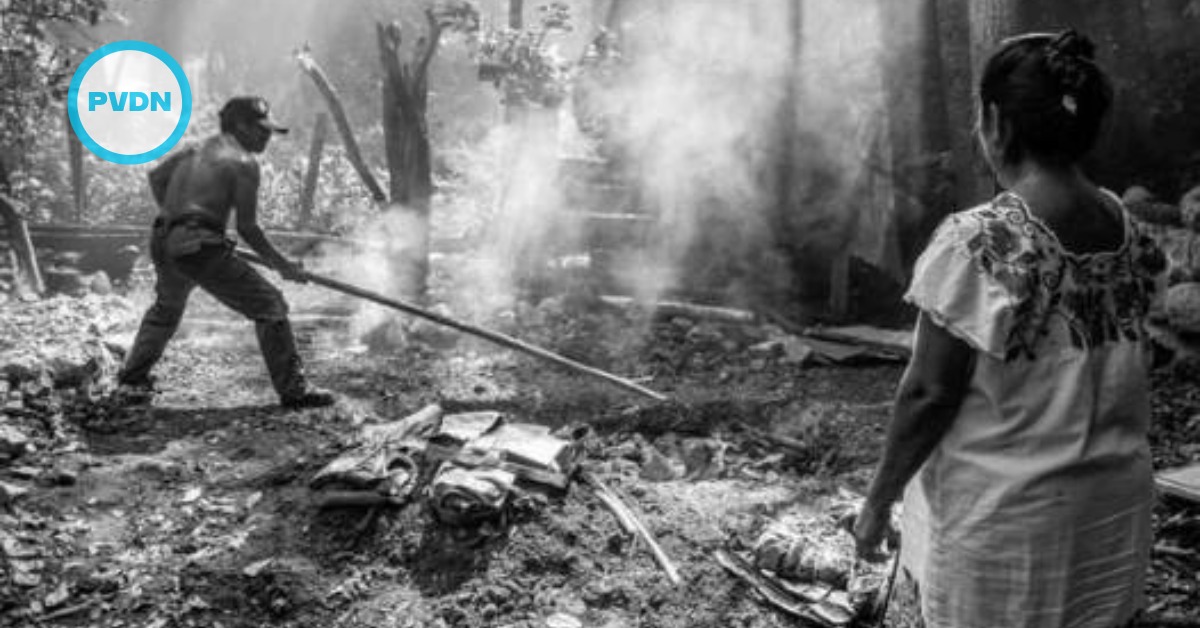
One top prize went to an image titled “Tostando maíz,” photographed during the Wixárika ceremony known as the fiesta of toasted corn, or Xarikíxa, in Nayarit’s Mesa del Nayar. The frame centers a couple preparing maize, but the story behind it is what elevates it: the practice is tied to a sacred seasonal cycle and to petitions for successful planting. In another awarded photo by the same photographer, a couple prepares pibipollo, linking contemporary foodways and communal labor to deeper histories of cooking methods and festive obligation.
Another winning scene follows the thread of ritual preparation rather than the spectacle of the ritual. A photograph connected to the voladores tradition focuses on the return from selecting the tree that will become the ceremonial mast, after a permission-seeking rite and before the public performance most outsiders recognize. It’s a reminder that what tourists often experience as a “show” is, for communities, a chain of steps, rules, and responsibilities—some of them occurring far from any plaza.
Daily work and technique also stood out. Awarded images documented craft and production in ways that speak directly to archaeology’s material obsessions: how hands shape tools, how fibers become textiles, how grinding and milling transform raw ingredients, how a technique leaves a signature. One image, “Joben-Herencia viva Yokot’an,” was recognized in the tools and materials category, while other winners in that track turned attention to processes like molienda and weaving—small actions that, repeated across generations, become the kinds of patterns archaeologists try to reconstruct from fragments.
In the everyday life category, one awarded photograph captured the careful extraction of honey from melipona bees in Yohualichan, in the Sierra Norte of Puebla. The image is visually striking, but its deeper pull is methodological: it documents a relationship between people, environment, and a valued substance that has long histories in Mesoamerica, and it does so with enough specificity to be useful to interpretation.
Why the text mattered as much as the image
This contest quietly flips a common assumption about photography prizes. Here, the caption is not an afterthought; it is part of the evidence. Entrants were required to include a very short explanatory text describing why the activity shown helps illuminate Mexico’s ancient societies. Judges emphasized that they were reading for intention and for the logic connecting a contemporary practice to archaeological questions, not simply rewarding the most dramatic scene or the most polished composition.
That distinction matters, especially in Indigenous contexts where images can slide into the decorative or the extractive. By demanding explanation, the contest pushes photographers to show their work: to locate the moment, clarify what is being done, and argue why it matters. In other words, it rewards photographs that behave like good reporting—specific, contextual, and accountable—rather than photos that merely borrow beauty.
A useful lesson for newcomers to Mexico
For expats, the takeaway is not “go photograph Indigenous life.” It’s to pay attention to what everyday practice can reveal, and to approach living cultures as living cultures, not as shortcuts to the past. The contest’s best images don’t flatten time; they show continuity alongside rupture, and they underline how much knowledge sits in routine gestures—stirring, grinding, weaving, carrying, preparing—when those gestures are understood within their community meanings.
In a country where the pre-Hispanic past is often packaged as stone and spectacle, this contest brings the focus back to people and practice. It suggests a different kind of respect: not only admiration for ancient monuments, but curiosity about the living worlds that still hold languages, rituals, techniques, and relationships to land—worlds that, when documented responsibly, can help explain what archaeology alone cannot.