You’re scrolling YouTube when a song called Vidas Mayas appears. It sounds familiar, yet different. You click.
A young voice bursts through—rapping in Mayan, weaving stories about farmers, countryside life, and cultural pride. He’s not just singing—he’s reclaiming identity through sound. Beats echo with cumbia, electronic, and hip-hop. An ancient language over a modern rhythm.
It’s music you didn’t expect, but can’t forget.
The sound of living memory
Music in Mexico has always been more than just background noise. It’s a mirror of identity, a tool of resistance, and now, a way to keep native languages alive.
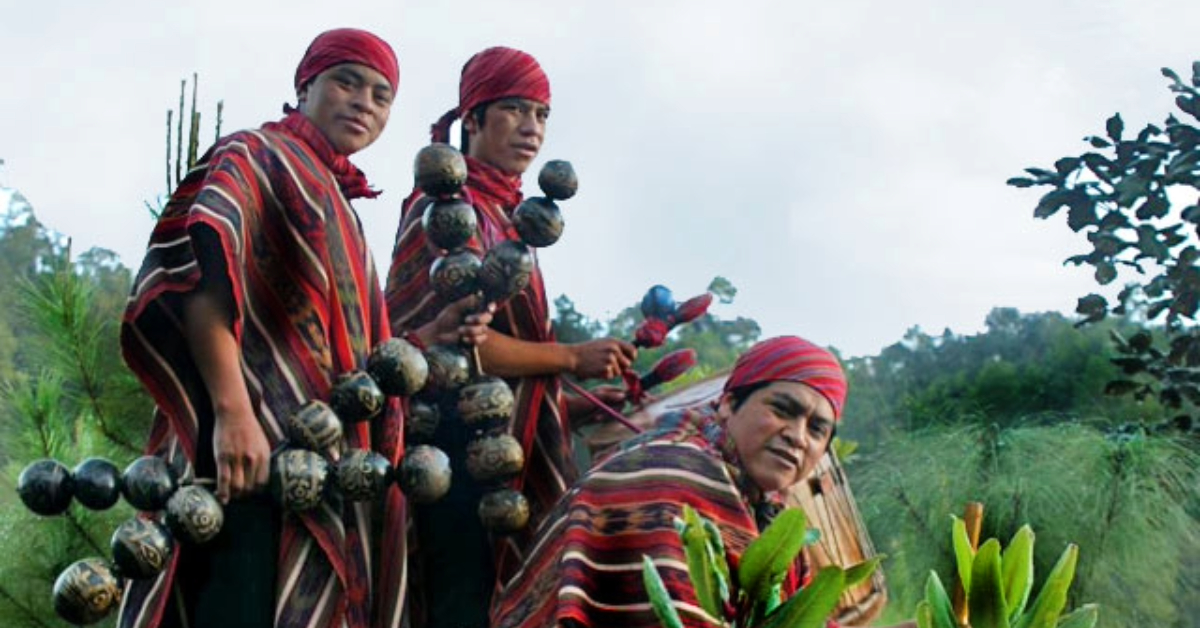
In home studios across the country, a movement is surging. Artists and collectives are creating fusions that stretch from ritual chants to trap beats. Instruments like jaranas, quenas, and zampoñas are layered with samples and synths.
It’s not about nostalgia. It’s about evolution. These musicians are saying: Indigenous people are not gone. They’re here—and they’re remixing tradition for today’s world.
Cultural survival through sound
According to INALI (National Institute of Indigenous Languages), 282 languages have disappeared in Mexico over the past century. Today, only 68 remain, with 264 linguistic variants.
With that urgency, music becomes a lifeline. Zapotec rap. Tzeltal cumbia. Otomi trap.
These aren’t curiosities—they’re the voice of a generation reconnecting. Young Indigenous artists are reclaiming their mother tongues, wearing them like armor, and broadcasting them globally.
Pat Boy: A voice from Quintana Roo
One of the clearest voices in this growing movement is Jesús Pat Chanblé, known as Pat Boy.
Born in Pino Suárez, Felipe Carrillo Puerto, he grew up immersed in Mayan and raised on hip-hop. But he noticed something was missing—his own story.
So, with a friend and a humble home studio, he started creating rap in Mayan. His lyrics explore culture, language, resistance, and connection to the earth.
His mission? To make Mayan a part of the present—and the future.
From Oaxaca to CDMX: A country-wide revival
This shift isn’t just happening in one place. All across Mexico, regions are tuning into their roots and plugging into modern culture.
In Oaxaca, July’s Guelaguetza festival is no longer just traditional—it’s a showcase where dancers, musicians, and DJs blend ancient and urban.
In Chiapas, rock bands like Vajiyel play in Tzotzil, electrifying ancestral stories with guitars and amps.
In Mexico City, musicians from across the country gather, performing in Nahuatl, Mixtec, and Zapotec before packed urban crowds. This isn’t just for local pride—it’s for global ears.
Mexican Andean cumbia refuses to fade
An earlier example of this fusion is Mexican Andean cumbia. It surged in the ’90s and 2000s, mixing traditional South American instruments with synth-heavy production.
Groups like Los Askis and Illapu continue the tradition today, keeping the sound fresh and relevant for both Indigenous communities and city dwellers.
Even as trends shift, this genre endures—because it’s more than a sound. It’s a cultural bridge.
Government support for Indigenous musicians
Preserving cultural heritage isn’t just a grassroots effort. The Support Program for Traditional Mexican Musicians, run by the Ministry of Culture and SACPC, provides up to $12,000 pesos per month to artists working in native languages or traditional musical forms.
Genres like son jarocho, mayapax, and wind bands are supported—whether preserved in pure form or fused with the modern.
Rather than boxing tradition in amber, this program encourages artists to revive, remix, and evolve.
A culture heard loud and clear
For too long, Indigenous cultures in Mexico have been viewed as relics. This music movement changes that.
By putting native languages into rap verses and dance beats, artists are shifting perception. They’re proving that heritage is not a costume for the past—it’s a beat that pulses in the now.
Streaming platforms and social media have removed barriers. These songs now travel far beyond villages and pueblos. They reach earbuds in cities, clubs, and classrooms around the world.
And in doing so, they shape a new Mexican identity—one that is diverse, proud, and constantly reinventing itself.
So the next time your playlist throws something unfamiliar your way—listen closely.
It might be the future speaking in an ancient voice.
Mayan rap, Indigenous music Mexico, Pat Boy, Mexican cumbia, native language preservation, modern traditional fusion, SACPC, music and identity, Zapotec rap, Mexican culture