More than half of commerce in Los Cabos now operates off the books, squeezing formal shops that pay taxes and calling local rules into question.
In Los Cabos, the balance of the local economy has tipped. Business leaders report that informal trade Los Cabos now accounts for more than half of commercial activity, measured by the number of stands and establishments operating without full permits. They warn that this quiet shift is eroding sales for formal shops that carry tax, rent and compliance costs every month.
Vicente Ruiz Piña, president of the local Chamber of Commerce (Canaco), has become the most visible voice of that concern. He says the main complaint from merchants is simple to describe and hard to ignore. Informal vendors set up directly outside established businesses, often selling exactly the same products, from food to seasonal goods. For shop owners who pay licenses, utilities and payroll, watching customers turn to a stand on the sidewalk feels like a stacked game rather than healthy competition.
Ruiz Piña stresses that the problem is not limited to Los Cabos. He argues that, both locally and nationwide, more than half of commercial units are now informal, reflected in the proliferation of unregulated stalls in tourist corridors and residential neighborhoods alike. That impression is consistent with national surveys showing that informal labor still covers a majority of Mexico’s workforce, even after several years of economic recovery.
At the same time, official labor data for Baja California Sur paint a more nuanced picture. The state has one of the lowest informal labor rates in the country, at about 37 percent of the employed population in the second quarter of 2025, compared with a national rate of 54.8 percent. Even so, that still translates into tens of thousands of workers without complete social security or formal contracts, many of them concentrated in commerce and services linked to tourism.
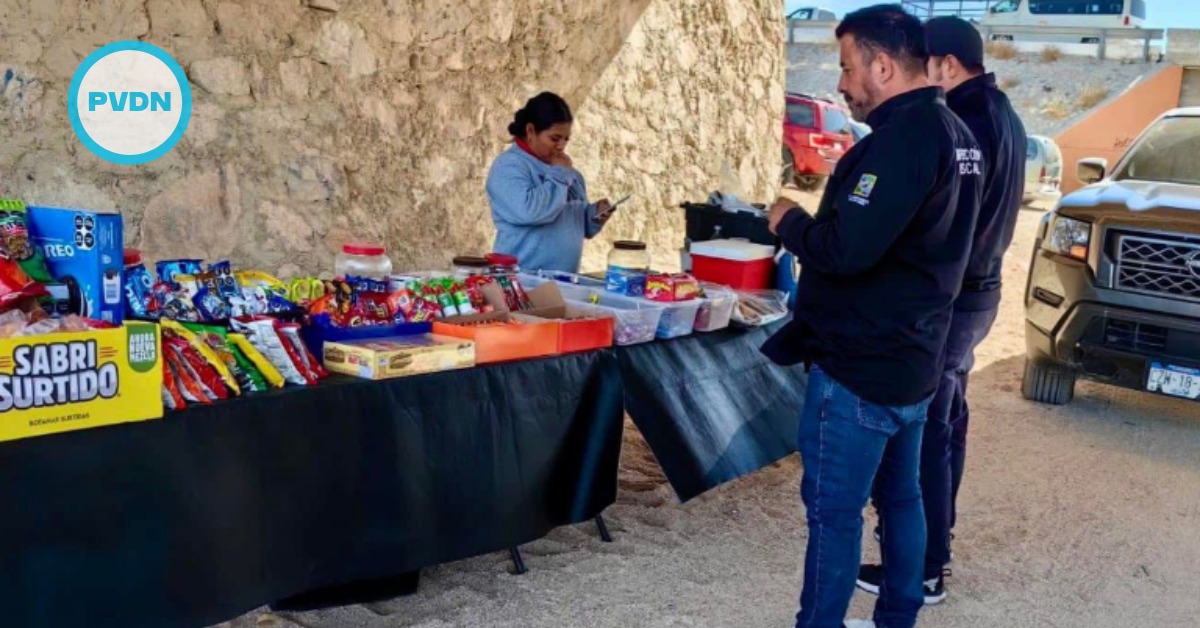
For merchants in Los Cabos, the conflict is less about statistics and more about what happens on the street. They describe restaurants whose entrances are crowded with food stands, and retail stores competing with tables stacked with similar merchandise a few steps from their doors. When informal sellers do not face the same inspections, safety checks or tax burdens, formal merchants see any price difference as subsidized by that regulatory gap.
What higher informality means for Los Cabos
The tensions in Los Cabos are coming to a head just as the winter high season begins. Canaco expects formal businesses to see roughly a 10 percent boost in sales this December. Yet its leaders warn that the impact could be muted if authorities allow new informal stands to spread through the busiest areas, capturing tourist spending without feeding back into the tax base that funds local services.
Municipal officials appear to recognize that pressure. In recent days, inspection teams have launched targeted operations on popular beaches such as El Médano and the marina area of Cabo San Lucas. There, authorities say they have counted at least 300 vendors working without permits, on top of a formal register of nearly 700 authorized sellers. The goal is to reduce saturation and bring some order back to the main tourist corridor without cutting off livelihoods overnight.
Business groups argue that enforcement alone is not enough. They want local government to consult nearby shop owners before granting new street permits in front of existing businesses, so that public space rules do not turn sidewalks into direct extensions of a competitor’s sales floor. They also call for clear limits in the densest parts of the city, where visitors already thread their way through waiters, tour hawkers and mobile vendors to reach the beach or the marina.
The debate in Los Cabos mirrors a broader national struggle over informality. Across Mexico, economic censuses show that nearly two-thirds of business units operate outside the fully formal system, representing about 3.5 million establishments. National commerce chambers warn that many of these businesses sell goods of unknown origin, ignore safety and quality rules and weaken public finances by operating off the tax radar. They also point out that workers in these jobs usually lack basic protections such as social security, written contracts and stable schedules.
Yet for many families in Los Cabos, informal trade is not a strategy but a survival plan. Street vending, home-based sales and small unregistered stands often provide the first or only source of income when formal jobs dry up or wages fall short of rising living costs. This reality makes the political calculus more complicated: cracking down too hard risks pushing vulnerable households deeper into poverty, while doing too little fuels resentment among merchants who feel they are carrying the cost of regulations alone.
What emerges is a difficult balance for a destination that depends on tourism but also aspires to long-term stability. Business chambers insist on a “floor of legality” where anyone can compete, but under shared rules. Municipal authorities say they want to regularize more vendors, not simply chase them away, while still protecting public spaces and the image of one of Mexico’s flagship beach resorts.
The way Los Cabos resolves this tension over the coming months will say a lot about the kind of growth model it chooses. If regulators, merchants and vendors manage to build clearer rules and realistic paths to formality, the city could preserve both its economic dynamism and a sense of fairness on the street. If not, the sight of informal stalls clustered outside struggling formal shops may become an even sharper symbol of who wins and who loses in one of the country’s most famous tourist destinations.