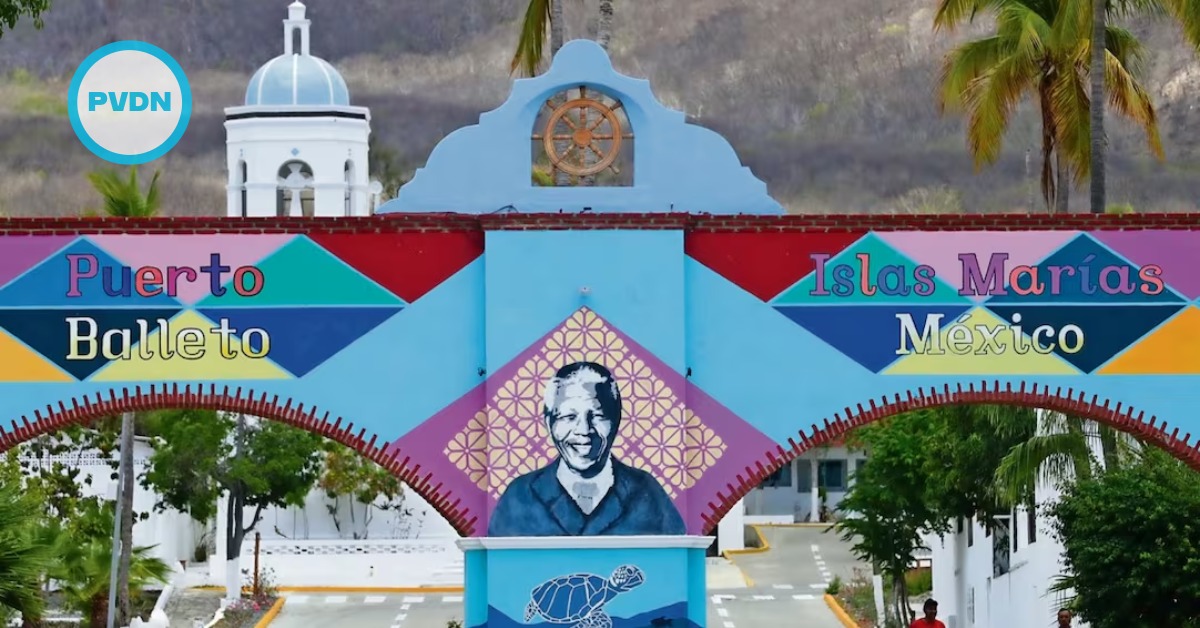
In 2022, Mexico’s government unveiled Islas Marías as a unique ecotourism destination, promising an affordable paradise experience on the site of a former island prison. Fast forward three years: visitor numbers are only a fraction of original projections, and trip costs have surged dramatically. What went wrong? High prices and logistical hurdles have left this remote Pacific gem struggling to live up to its promise, raising concerns about whether this ambitious project can sustain itself.
From Prison to Paradise
When Mexico’s government transformed Islas Marías from a notorious island prison into an ecotourism destination, the vision was grand. President Andrés Manuel López Obrador inaugurated the revamped site in December 2022, promising a new paradise open to all. The archipelago’s largest island, Isla María Madre – once home to a legendary penal colony (1905–2019) – now hosts nature lovers and history buffs rather than inmates. Officials set a daily limit of 640 visitors to protect the island’s fragile ecosystems, envisioning up to 20,000 tourists a year enjoying its unspoiled beaches and historic sites. “Imagine the joy of resting and waking up in this paradise that was once hell,” López Obrador proclaimed, as he and his wife spent the first night there to signal a new beginning.
Visitor Numbers Far Below Expectations
Three years on, the reality looks far more modest. Islas Marías is averaging only about 80 tourists per week – a tiny fraction of its capacity and initial projections. In the first full year of operation, 2023, roughly 5,300 people visited the island, barely a quarter of the anticipated annual visitors. Instead of growth, the second year saw a further drop: just over 4,100 tourists came in 2024 (about 20% of the original target). There was a slight uptick in 2025 to around 4,340 visitors, but numbers remain well below the levels needed to fulfill the project’s ambitions. Ferry trips have been cut back in response to the weak demand – initially, a ferry departed from the mainland every weekend, but now service runs only about twice a month. Even then, the boats often sail at less than half capacity.
Soaring Costs Limit Access
A major factor dampening interest is the cost of visiting. At the inauguration, López Obrador had touted that a two- to three-night stay would cost between 5,000 and 8,000 pesos (roughly $250–$400 USD), framing the island escape as affordable for working families, teachers, and professionals. But since then, prices have nearly doubled. As of early 2026, the most basic tour package – including ferry transport from the mainland, two nights of lodging on the island, buffet-style meals, travel insurance, and park access – runs about 10,740 pesos (around $600 USD) per person. Just a year earlier, it was 9,220 pesos, and at launch, it was 5,455 pesos.
That’s just for the package itself. Travelers must also get to the departure port in Nayarit or Sinaloa on their own. For someone starting in Mexico City, for example, flights to the coast, an overnight hotel before the early-morning ferry, and other expenses can easily push the total trip cost above 17,000 pesos (nearly $1,000 USD) for a single traveler. What was meant to be an accessible getaway has become a pricey expedition beyond the reach of many domestic tourists.
Low-Impact Tourism, Limited Amenities
Part of the appeal – and challenge – of Islas Marías is its remoteness and protected status. The archipelago is a designated biosphere reserve, so tourism there is deliberately low-impact and tightly regulated. There are no luxury resorts or private restaurants; visitors stay in refurbished former prison dormitories and dine at a single canteen run by the Navy. No new structures can be built; only renovations to the old penal colony facilities, which give the island an authentic yet spartan charm. Activities follow a fixed itinerary managed by the naval-run tour operator (Turiimar), with early wake-up calls and guided tours to the old prison, lighthouse, and natural sites. This regimented, back-to-basics experience appeals to some adventurers and history enthusiasts, but it also means that conventional vacationers expecting a leisurely beach-resort vibe may come away disappointed.
Some past visitors have reported that beyond the scheduled tours, there is little to do on your own – no shops, no nightlife, and limited recreation options. A small beach club and pier exist but see little use, and an artisan market promised to support local communities remains largely empty. The lack of flexibility and amenities has particularly made it a tough sell for families with children or younger travelers seeking variety. One recent tourist remarked that kids and teens would likely get bored on the island, noting “it really needs more activities” to feel like a true vacation destination.
On the other hand, those who come for nature and history often describe the trip as powerful and unique. Walking through the quiet village of Puerto Balleto – once a penal settlement – and sleeping in the simple houses that once housed inmates can be an unforgettable experience for visitors who appreciate the island’s unusual blend of wild beauty and poignant history. Some travelers from mainland Mexico admitted they hadn’t even realized the islands were open to tourism, or thought the prison might still be operating, until word-of-mouth or a chance recommendation informed them. For these visitors, discovering the “Mexican Alcatraz” turned out to be a pleasant surprise, albeit one that could benefit from better promotion and a bit more polish in its facilities.
Uncertain Future and Renewed Efforts
The stark gap between Islas Marías’ promise and its reality has raised questions about the project’s long-term viability. The federal government invested heavily – reportedly around 1.7 billion pesos – in purchasing modern ferries and converting the island’s infrastructure for tourism. Yet annual visitor revenue has only been on the order of 20–25 million pesos, a tiny sum relative to the costs. With such low turnout, the site is far from financially self-sustaining, and it relies on continued government support and subsidies. The political winds have also shifted. Since taking office in late 2024, President Claudia Sheinbaum’s administration has given this high-profile project far less attention, suggesting it may no longer be a national priority.
In response to the lagging numbers, those managing Islas Marías are trying to course-correct. The Navy-operated company Turiimar has enlisted more travel agencies and tour operators to market island packages, expanding from a few initial partners to around ten major tour operators. They are also looking to broaden the island’s appeal by introducing new attractions and activities. Officials say the goal is to make Islas Marías a more compelling destination in time for the 2026 FIFA World Cup, when an influx of international visitors to Mexico could provide an opportunity to showcase the “hidden gem” of the Pacific. Additionally, efforts are underway to improve the visitor experience on the island itself – finishing construction projects like the expanded dining hall and renovated guest houses, and generally tidying up facilities that have suffered from underuse.
Whether these measures will be enough to turn the tide is still uncertain. The concept of a sustainable eco-tourism paradise on former prison grounds remains compelling, but it faces an uphill battle. High costs, limited accessibility, and the delicate balance between conservation and tourism continue to constrain growth. For now, Islas Marías stands at a crossroads: a captivating, remote paradise that has yet to find its footing as a viable tourist destination. The coming years will determine if this ambitious project can reinvent itself and finally deliver on its promise, or if it will serve as a cautionary tale about the challenges of turning a prison island into an accessible getaway.
With information from Animal Político, Ladevi, TV Azteca Noticias