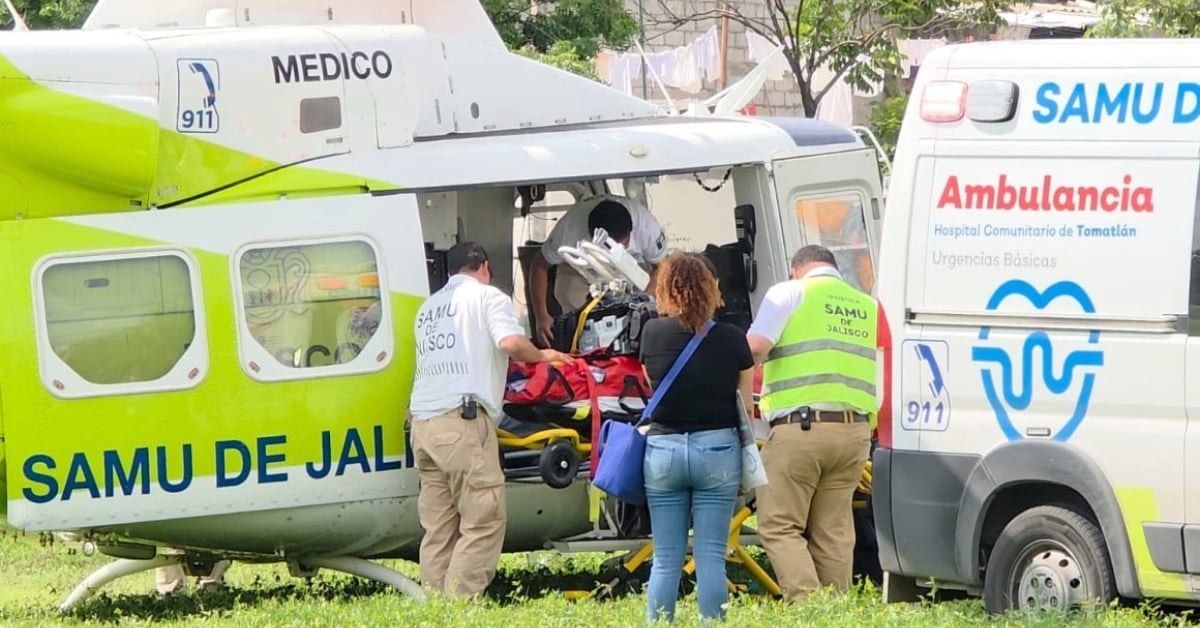
An 11-year-old was flown from Puerto Vallarta to Guadalajara on Monday on the Jalisco air ambulance after doctors detected life-threatening intracranial bleeding. State emergency teams deployed a medevac helicopter near the Regional Hospital. They stabilized the child and initiated a rapid transfer to the New Civil Hospital of Guadalajara. This hospital is a tertiary care center equipped with pediatric intensive care and neurosurgery services. The operation relied on Jalisco’s air medical unit, which coordinates inter-hospital transfers when every minute matters. Officials did not release identifying details, in keeping with protections for minors.
The Jalisco air ambulance landed in a secured area next to the Puerto Vallarta Regional Hospital on Monday afternoon. Medical staff stabilized the patient and quickly loaded the child for the flight to the metropolitan area of Guadalajara. Then they proceeded to the New Civil Hospital, where advanced pediatric care is available. Aircraft registration provided on scene matched XC-HGF, the state’s Bell 412 medical helicopter.
Jalisco air ambulance
Jalisco’s air medical service is operated through the state health system’s emergency arm, SAMU de Jalisco. This service handles both ground and air transfers for “urgencia absoluta” cases. State records indicate the service conducts aeromedical evacuations to transport patients from regional hospitals to tertiary-level centers. This happens when local capacity or subspecialty services are limited. In 2022 alone, SAMU reported that 127 patients were transported by air. This underscores how often the helicopter bridges long distances in time-critical cases.
The helicopter itself, tail number XC-HGF, is a Bell 412 configured for medical missions and owned by the Government of Jalisco. Recent images and procurement documents confirm the registration and ongoing maintenance work on the aircraft. State agencies converted it for medevac roles and continue to service for readiness.
How the transfer protocol works
When a child presents with a suspected stroke or intracranial bleed in Puerto Vallarta, local clinicians initiate stabilization. They then request a regulated transfer through 911/SAMU. For the Puerto Vallarta Regional Hospital, the helicopter typically uses designated landing zones near the facility. In past operations, SAMU has landed at the Loma Bonita soccer field, located across from the hospital, or at the city’s convention center helipad. The choice depends on conditions and mission needs. Monday’s operation followed that established pattern of a secure landing zone beside the hospital.
These steps aren’t ceremonial—they cut precious minutes. Once onboard, the aircrew functions as a flying intensive-care unit. They continue to manage airway, breathing, and circulation, and maintain blood pressure targets that reduce the risk of secondary brain injury en route to Guadalajara. SAMU’s doctrine emphasizes getting patients to a facility that can deliver the exact intervention they need, rather than the nearest available bed.
Why Guadalajara is the destination
The New Civil Hospital of Guadalajara “Dr. Juan I. Menchaca” is one of Jalisco’s main tertiary referral centers and a pediatric powerhouse. Hospital documents and academic records indicate that it offers pediatric emergency services, pediatric intensive care, neonatology, and neurosurgery programs. All are supported by the University of Guadalajara. That mix of subspecialties is why aeromedical transfers for complex pediatric cases often route there.
The hospital’s public guidance also notes that admissions to pediatric emergencies depend on both the child’s condition and the availability of specialized beds. This is another reason SAMU coordinates before a rotor ever spins.
Pediatric stroke urgency
Pediatric stroke is rare but devastating, and delays can cost function or life. In hemorrhagic cases—like the intracranial bleeding reported on Monday—rapid control of airway and blood pressure, neurosurgical consultation, and neurocritical care are key. Jalisco’s recent investments in prehospital and interhospital transfer capacity mean a child in Puerto Vallarta can reach a neurosurgical team in Guadalajara in the same afternoon. This is instead of waiting until the next day. That is the difference families and clinicians count on when a brain is in danger.
What we know about Monday’s mission
Authorities did not release the child’s identity, in line with protections for minors. Local outlets documented the helicopter’s arrival in the secured landing area next to the Regional Hospital and the immediate preparation for the flight. The state aircraft identified as XC-HGF has been photographed and cataloged in recent months. This is consistent with its role as Jalisco’s primary medevac platform. The receiving facility is the New Civil Hospital of Guadalajara, which confirms the case is being escalated to a center with the right pediatric services.